While this feature usually delves into modest-sized gardens, a few people are lucky enough to own something a little larger. So, what can you do for nature if your ‘back garden’ is a whopping 44ha?
That was the opportunity facing Alwyn Craven when he returned to his Yorkshire family farm in 2014. His dad had retired in the 1990s, and for about 20 years the land was managed intensively. In that time, much of the nature Alwyn remembered from his childhood had disappeared.
But he had a vision that revolved around two things: trees and wildflowers. So, in 2015, he boldly ploughed up the land to begin the process of turning it back to nature. I joined one of the guided tours led by Alwyn and his partner, Tom, to see the results.
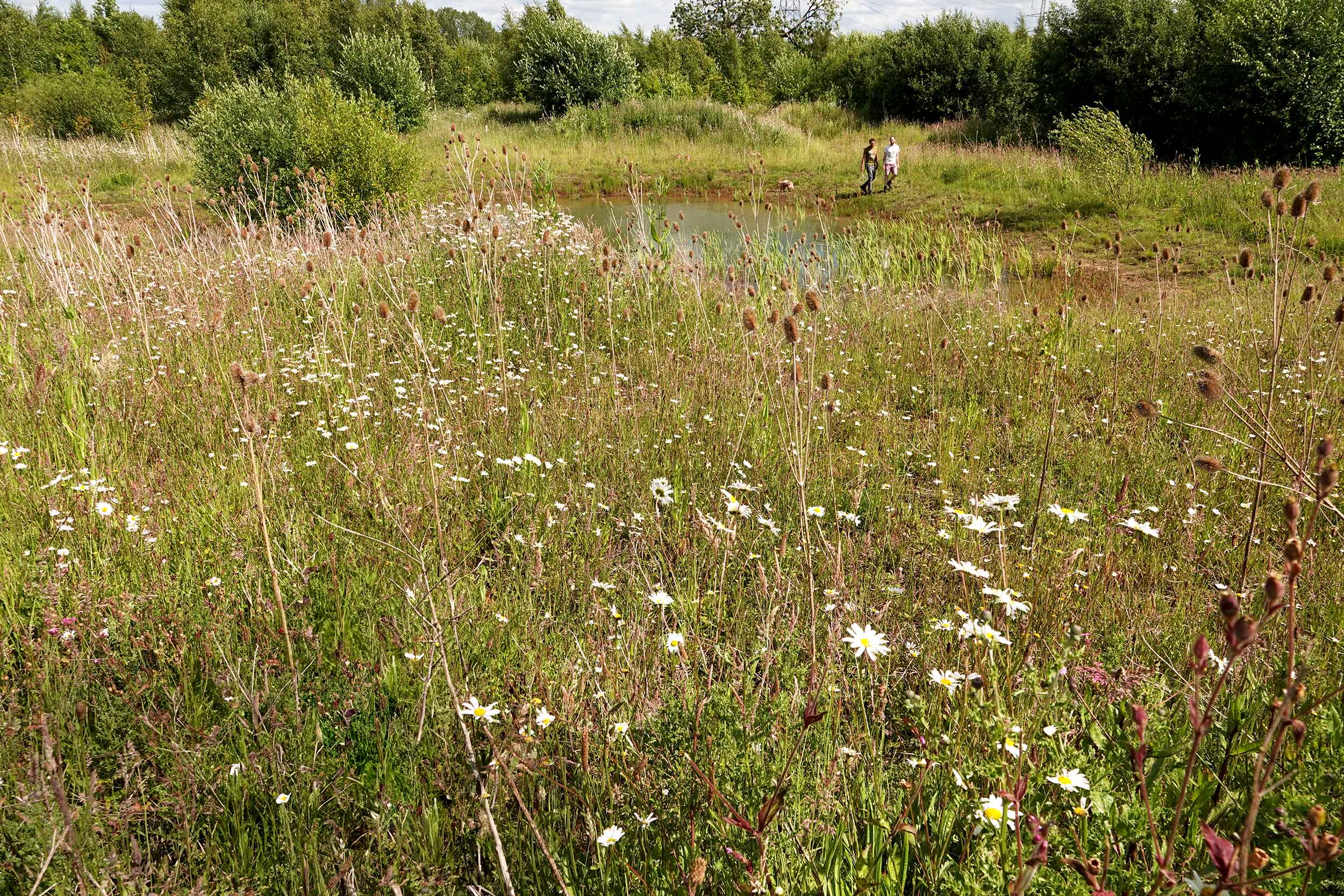
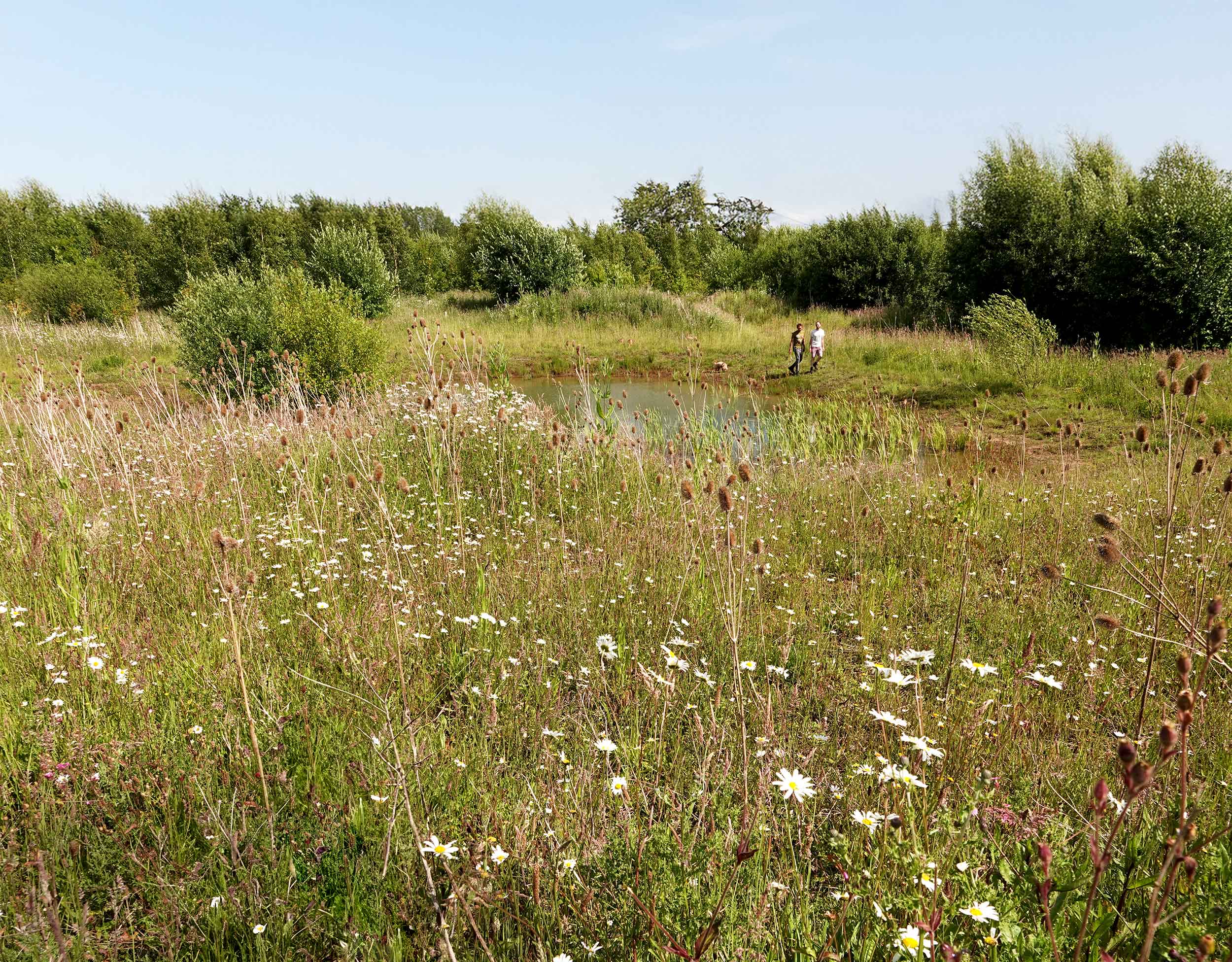
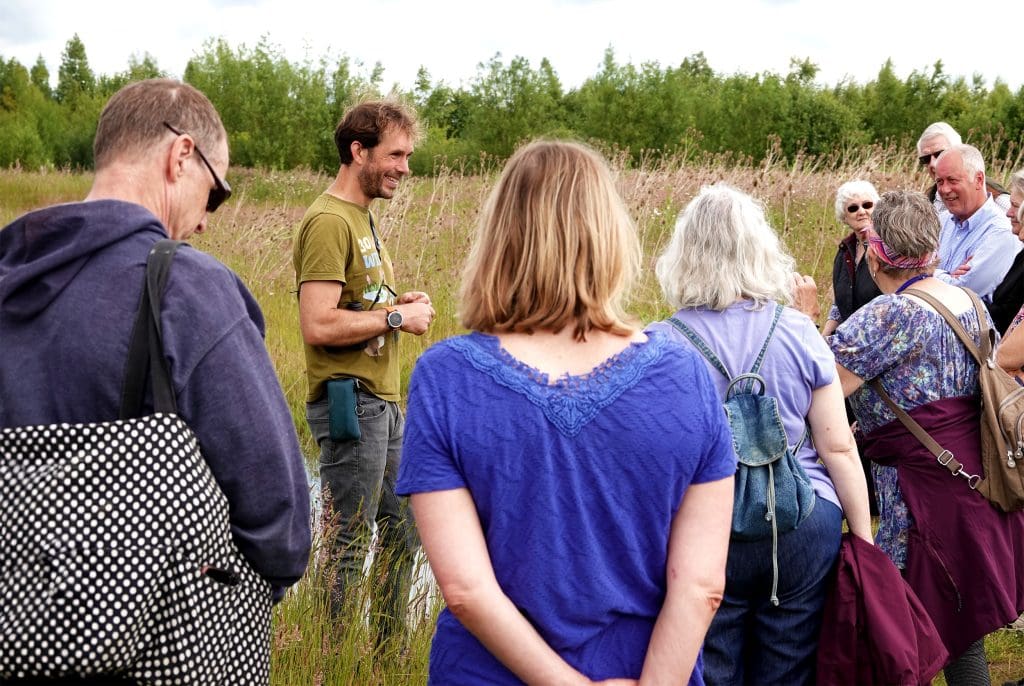
Alwyn and Tom walking beside one of their 18 ponds. Photo: Adrian Thomas (rspb-images.com)
One of the biggest challenges was getting wildflowers to flourish on the enriched topsoil. When nutrient levels are high, grasses soon dominate. Alwyn’s solution? “I decided to do topsoil inversion,” he says. “That is where a tractor and plough bury the upper layers and bring the poorer subsoil up to the surface.” Into this blank canvas, he then planted 42,000 trees and shrubs of 27 native species. “All the trees were planted in little groups of the same species to give the woodland structure,” he explains.
It was also important to design open spaces into the woodland. A pure wildflower mix was sown, allowing grasses to come in of their own accord, and the name ‘Forest of Flowers’ was born. In a bid to encourage even more diversity, Alwyn and Tom started digging ponds. “We’re a bit addicted to them – there are now 18!” Alwyn says. “The main target was Great Crested Newts, but of course plenty of other wildlife benefits from all these wetland features.”
So, has nature returned? The answer is “in droves”! “We’ve recorded over 450 species of moth,” says Tom. “There are six species of bat using the site, including Whiskered and Daubenton’s. And the dawn chorus is full of Willow Warblers, Blackcaps, Whitethroats and Reed Buntings.”
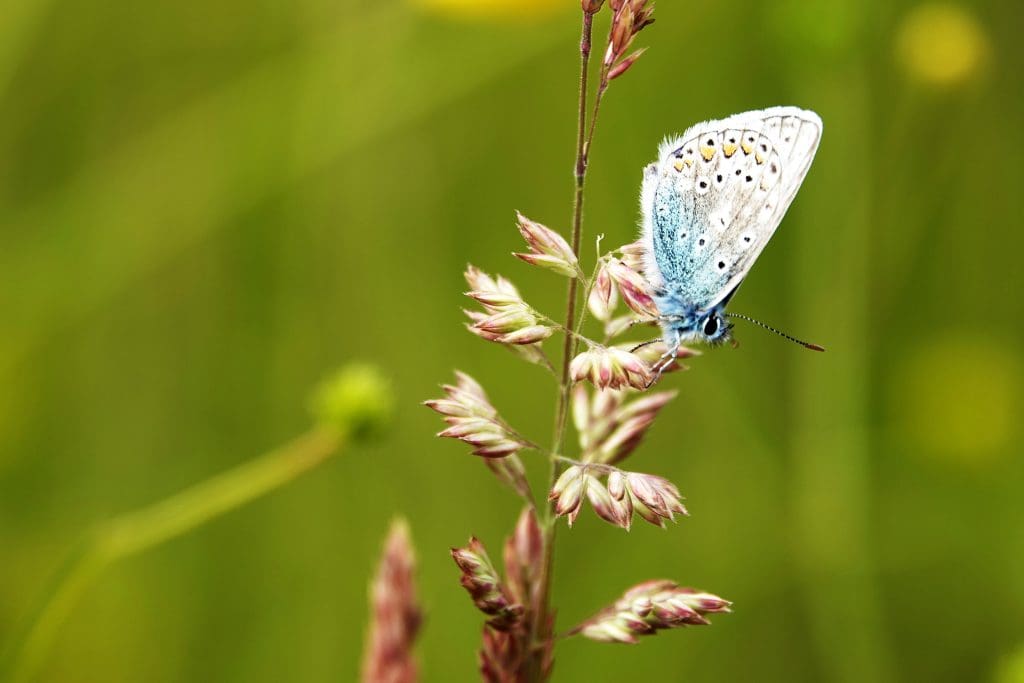
Perhaps most impressive is the uplift in butterfly numbers. Of all 100 sites that are officially monitored across Yorkshire, the Forest of Flowers has the greatest abundance, including White-letter Hairstreaks in the elm trees.
With the creation phase largely complete, thoughts turn to management, such as the cycle of coppicing of trees such as Hazel, but it is relatively light touch. As we wander through the young woodland and meadows, you wouldn’t guess that it was covered with wheat and cattle barely 10 years ago – it looks like nature has been here forever. “The abundance of species spurs you on,” Alwyn says. “You see results and then you want more – that’s the joy of it all.”
Follow @forestof flowersuk or visit forestofflowers.co.uk for more info, events and even wildflower seeds.
Alwyn and Tom’s tips for large-scale wildlife habitats
1. Research what habitats and wildlife would have been there previously.
2. Be ambitious! The larger the area you dedicate to nature, the better the habitats you’ll create and the more species will benefit. You could get your neighbours involved, too!
3. When making meadows, reduce the soil fertility if you can. Soil inversion is easiest on lighter, sandy soils, but repays the effort.
4. If you have hay meadows, you will need to cut the hay at the end of the season and ideally introduce some winter grazing, but you can usually find a friendly local farmer to help.
How to…
Create large ponds
Invite a wider diversity of wildlife into your green space
If you have the space, a large pond – like the one above in the Forest of Flowers – can be among the most wildlife-rich habitats you can create. It can also be surprisingly quick to make with a digger. Here are some golden rules to follow:
- Avoid existing nature-rich habitats
- Choose a site that is naturally damp and low-lying rather than trying to line it
- Avoid places into which fertilisers or pesticides can run
- Decide in advance what you are going to do with the spoil
- Check whether the pond will require planning permission
- If in doubt, get advice!
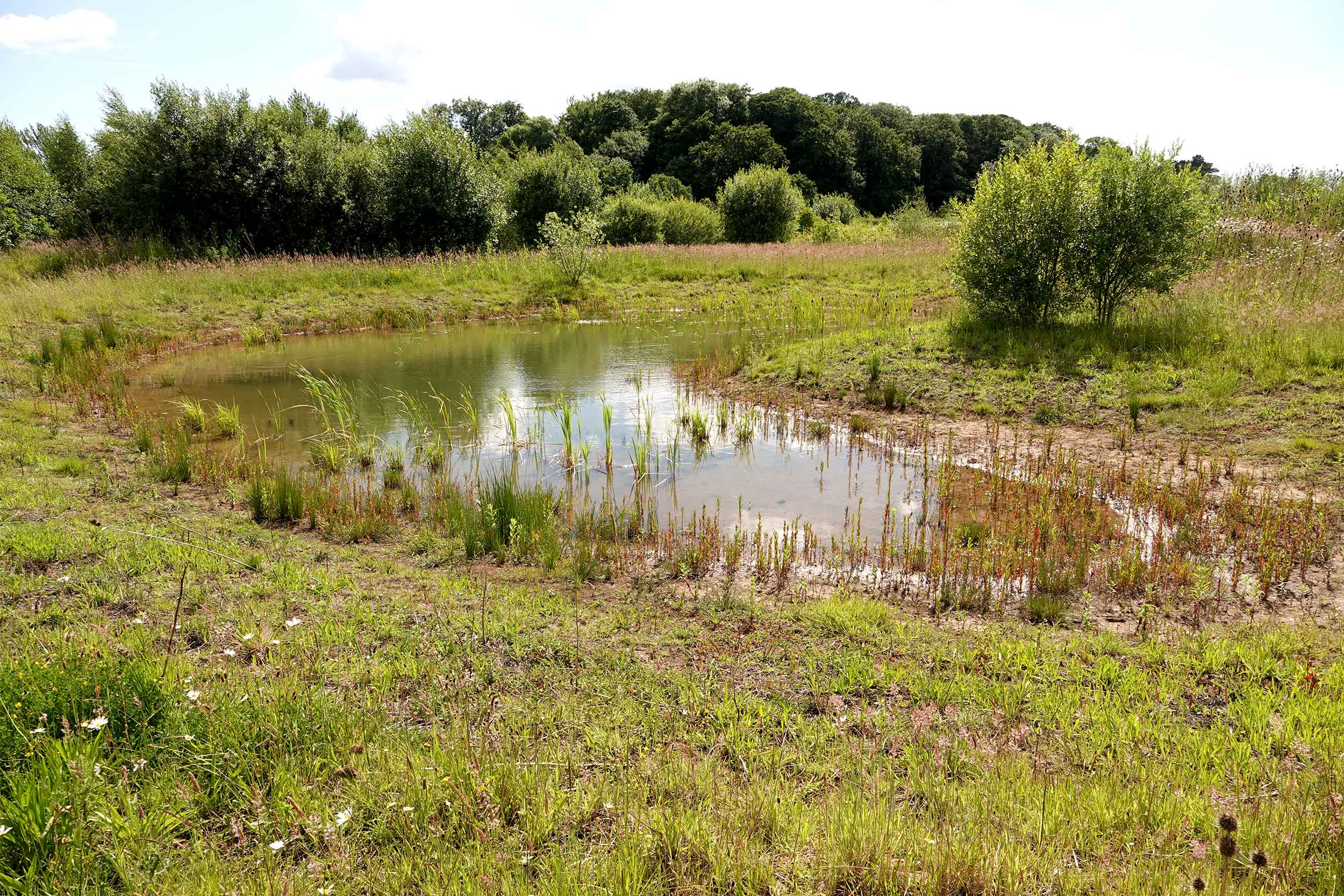
Alwyn and Tom added ponds to bring in more diversity. Photo: Adrian Thomas (rspb-images.com)
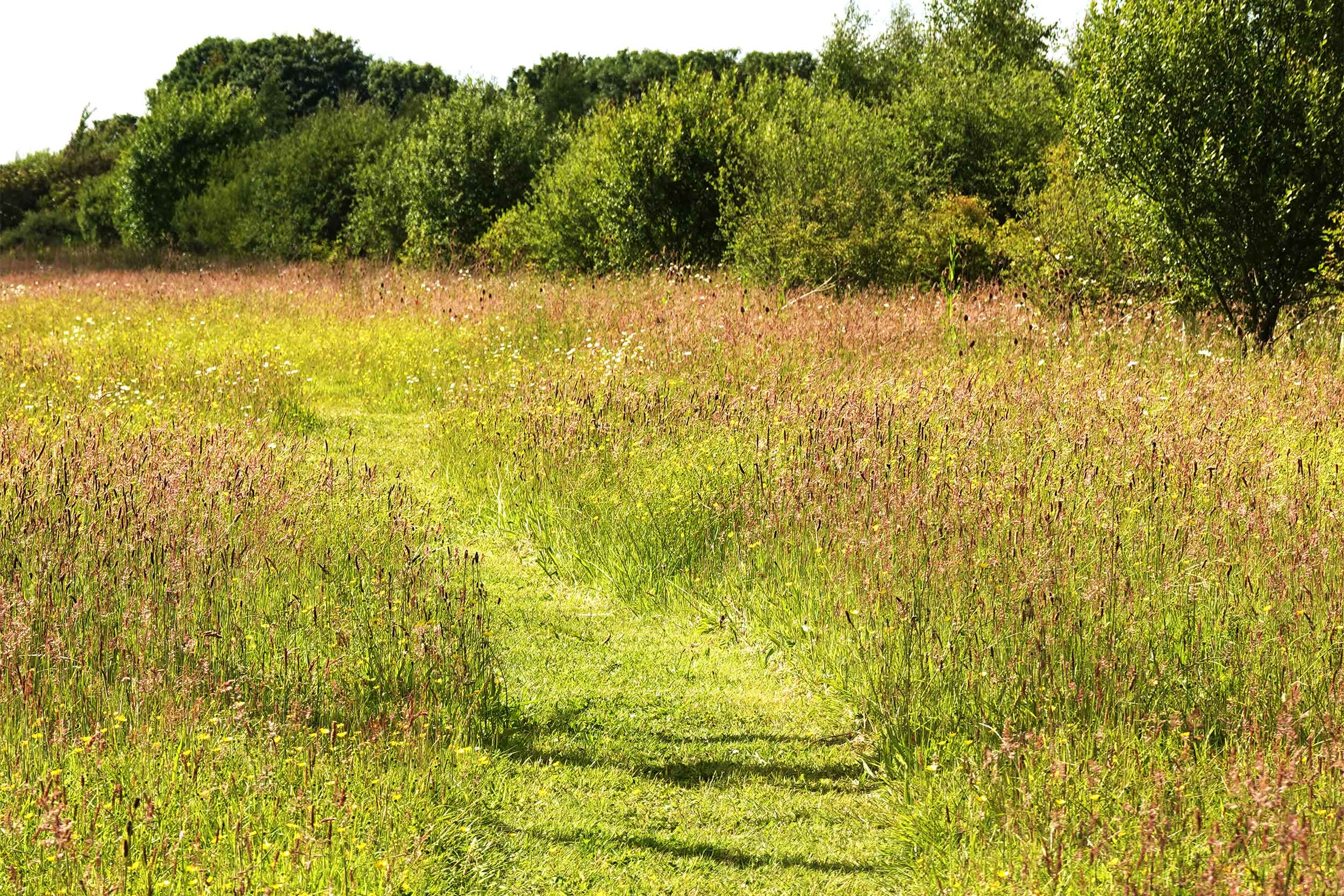
For a wider range of wildflowers in your meadow, bring subsoil with poorer nutrients to the surface. Photo: Adrian Thomas (rspb-images.com)
Wildlife gardening ideas: meadow making
Meadows are great for wildlife. It is something that can be done on any scale, from a couple of square metres through to full-size fields. Here are some tips for getting started:
- If you can bury the topsoil and bring the subsoil to the surface, it will help you maintain more diverse populations of wildflowers and will also give you a clean seedbed to start.
- Sow seed in March/April or September/October. The seed mix you need is a perennial meadow mix, not an annual cornfield mix.
- Remember that this will become a permanent habitat you will manage by mowing, usually at the end of summer.
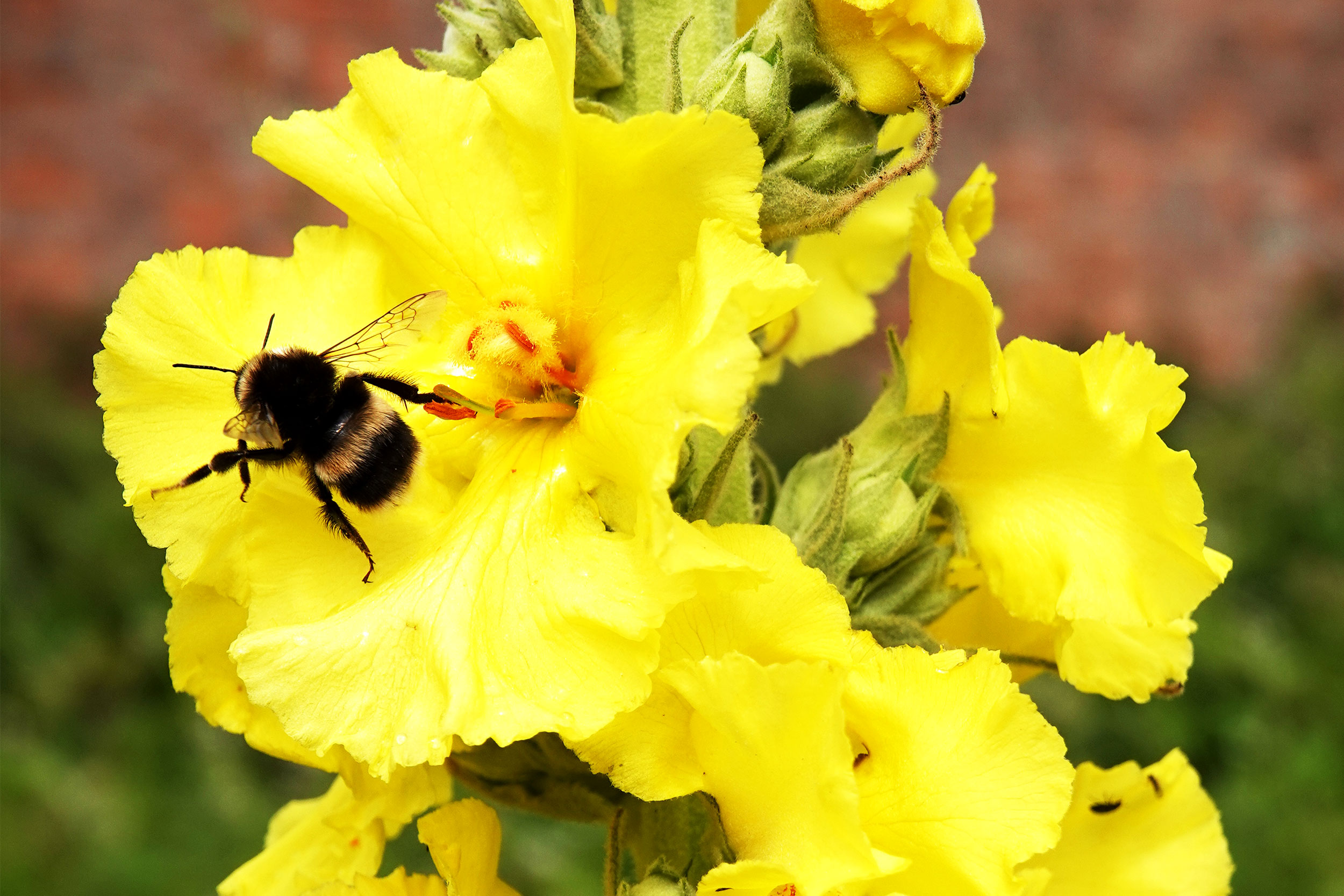
A Great Mullein in the Forest of Flowers. Photo: Adrian Thomas (rspb-images.com)
What to grow
Mulleins:Verbascum
This Great Mullein was flowering in the old farmyard at the Forest of Flowers, where it was busy with bumblebees and was being munched by the caterpillars of the aptly named Mullein Moth.
- It is usually pronounced ‘MULL-in’ or ‘MULL-ayn’, either will do!
- Four species of mullein are native to the UK but only Great Mullein and Dark Mullein are widespread.
- A number of garden varieties are also widely grown, including several species from southern Europe.
- Mulleins are dramatic plants, usually biennial (flowering in the year after germination and then dying). They throw up tall, thick flower spikes with the flowers seeming to bloom straight out of the stem.
- Great and Dark Mulleins have yellow flowers, but some mulleins are white, and Verbascum phoeniceum is purple.
- The seedheads of Great Mullein can persist for over a year after the plant dies, a great hibernation site for ladybirds and other insects.
- Mulleins tend to self-seed freely and are easy to transplant to preferred locations or weed out.
- Easy to grow from seed, the rosette of leaves at their base is often dinner-plate sized and is great for suppressing unwanted plants.
Spotlight on: Dragonflies
The Four-spotted Chaser (pictured) – which confusingly has eight wing spots – is just one of nine dragonfly species that have colonised Alwyn and Tom’s ponds. Big ponds are likely to attract the most species, but even smaller ponds in sunny positions can still be effective for more common garden dragonflies.
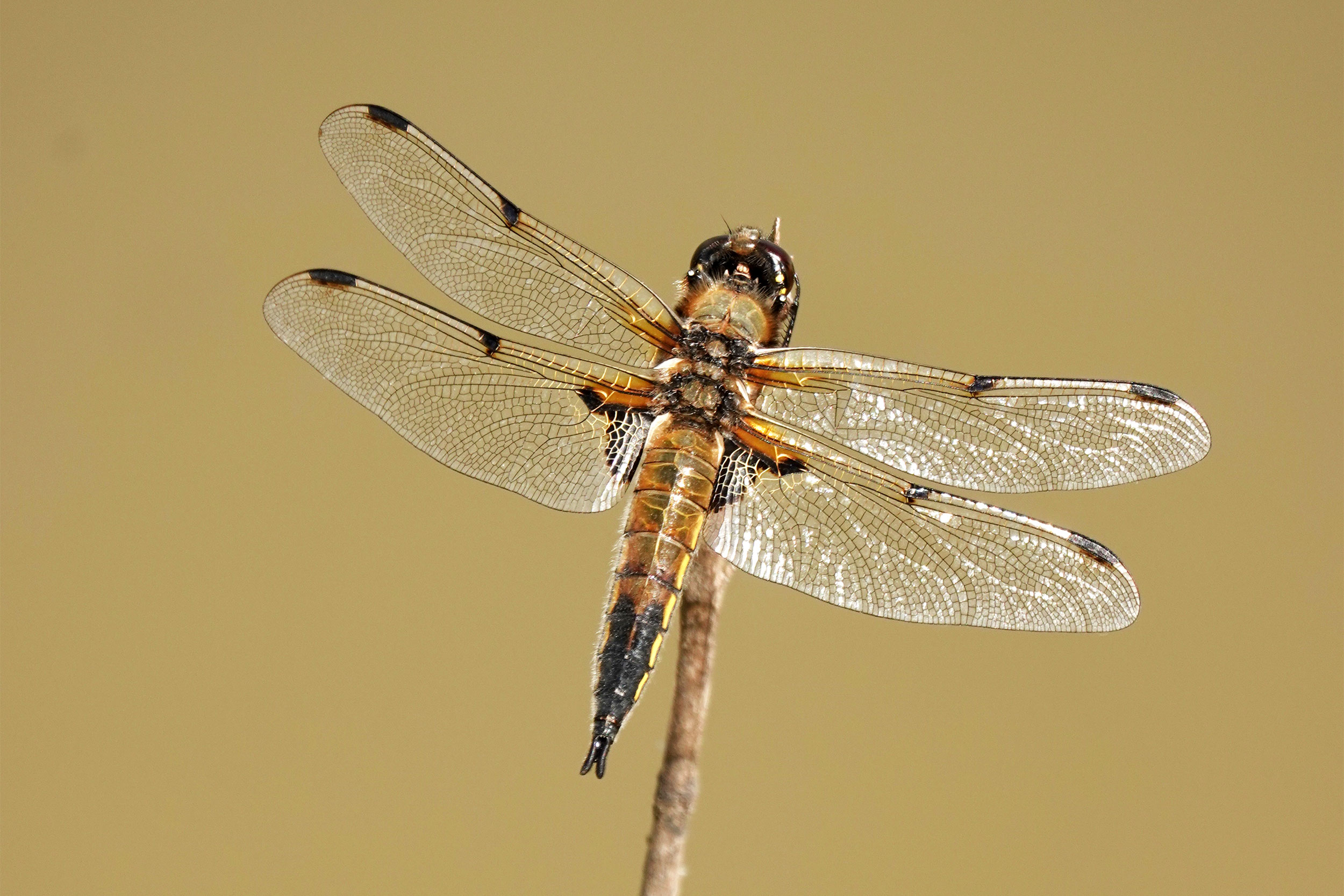
Four-spotted Chaser, a dragonfly species at Alwyn and Tom’s ponds. Photo: Adrian Thomas (rspb-images.com)
Your letters: garden joy
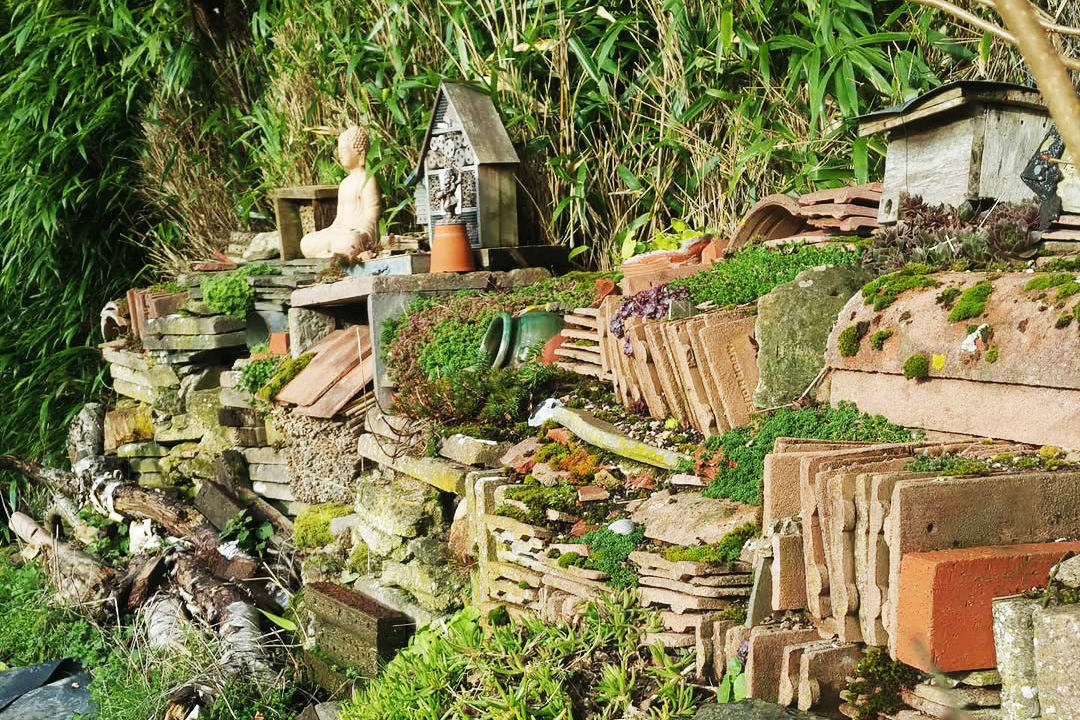
John’s wildlife wall habitat. Photo: Adrian Thomas (rspb-images.com)
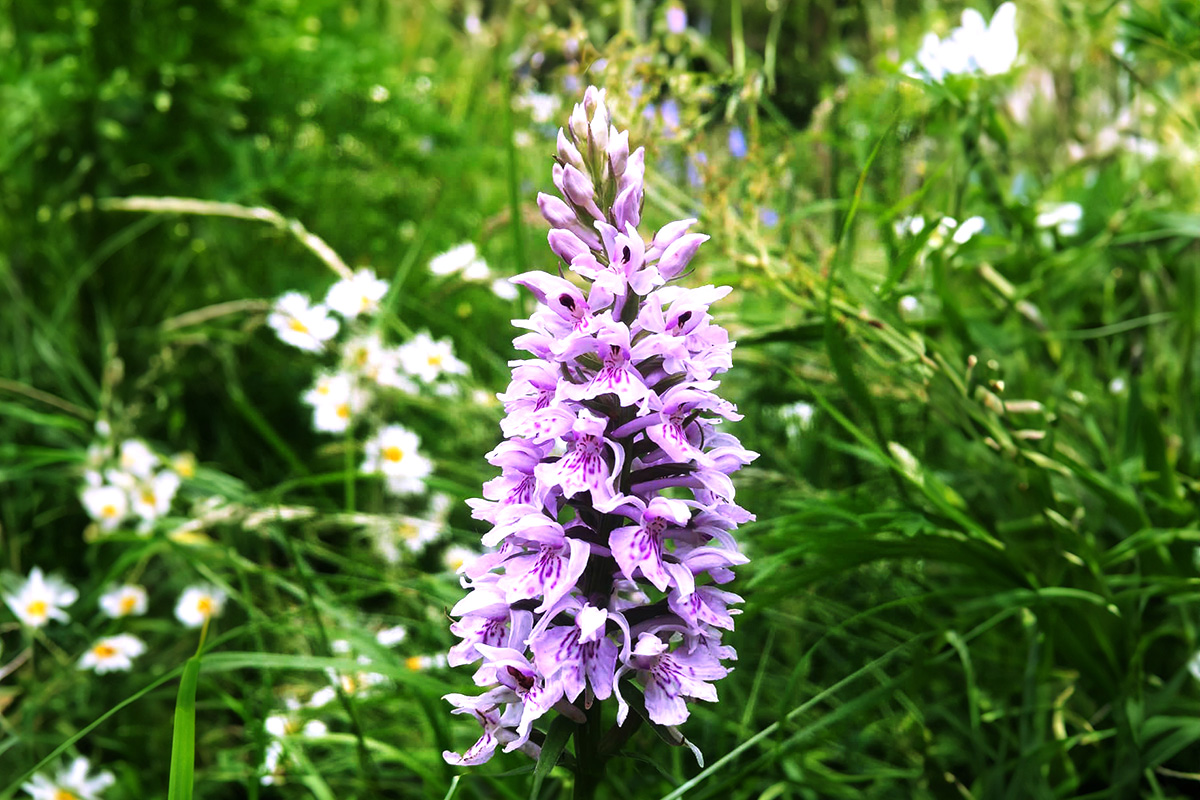
Common Spotted Orchids in John’s garden. Photo: Adrian Thomas (rspb-images.com)
My garden is a quarter of an acre and backs onto open countryside. I’ve been gardening for wildlife ever since we arrived here in 1994, having been inspired as a boy by Tony Soper’s Bird Table Book.
The garden has a variety of habitats: mini meadows, a mature oak, fruit trees, blowy hedges, ponds, flower beds of sorts, shrubs, plus compost heaps, a wildlife wall, brash piles, bee hotels, and stacked deadwood.
What lawn I have is restricted to access paths snaking down the garden with shrubs and hedges either side. I have religiously cut and collected the grass clippings all the years I have been here to reduce the fertility of the soil – almost anywhere you can count at least 20 species of wildflower.
My favourite area is the spring woodland meadow under my apple trees, which is a riot of Snake’s-head Fritillaries, Snowdrops, Primroses, Bluebells, Wild Daffodils and more. Every year I spot more Common Spotted Orchids (pictured above) and now have between 50–100 flowering spikes.
I have recently become fascinated with solitary bees and am delighted with the Hairy-footed Flower Bees, which love my drifts of cowslips, and the Red Mason Bees in my bee hotels.
Last year, I collected dead wood to make all sorts of upright structures and was delighted with the arrival of jewel wasps. My wildlife highlights have been Great Crested Newts, Slow-worms, Grass Snakes, nesting Tawny Owls, Weasels and Bullfinches. The garden and its wildlife have been a delight.
John Madden, Surrey
Adrian says: What an inspiring account, and that ‘wildlife wall’ made of old roofing tiles looks incredible! John’s 20-year programme of ‘cutting and collecting’ his grass clippings shows how long it can take to reduce the nutrient levels in soils, but how that effort can be rewarded with an incredible diversity of wildflowers – including orchids.

Share your story
We’re looking for more gardens to visit in 2026! Do you have a wildlife-friendly garden with a story, either your own or a community garden? It doesn’t have to be big – it just needs to be special, for you and for wildlife. We’re particularly interested in stories of people bringing their cultural heritage to their gardens. Tell us about it, ideally with a couple of photos showing the garden.
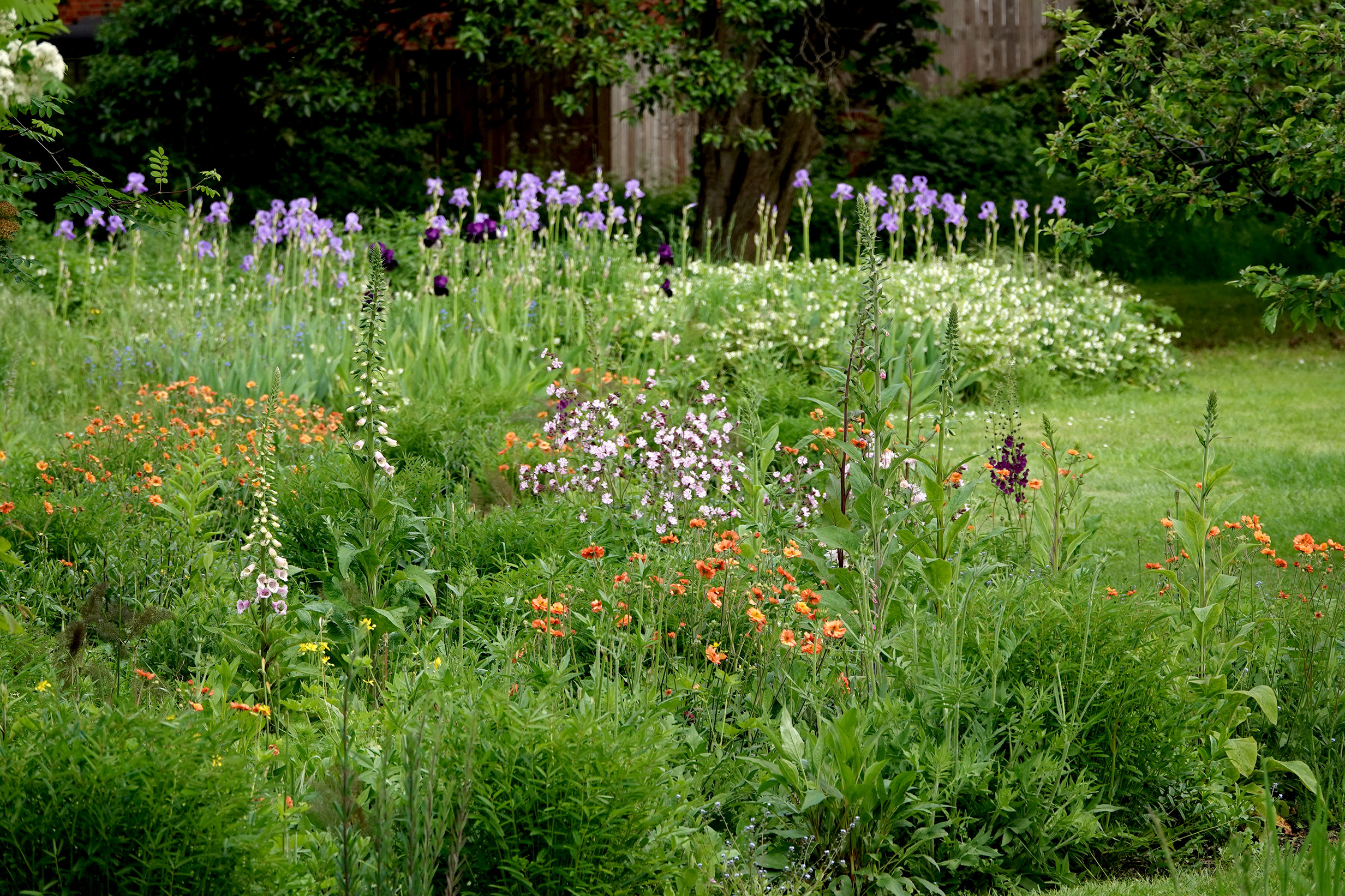
Share your nature-friendly garden with us. Photo: Adrian Thomas (rspb-images.com)
You might also like
Panels and pollinators
Identifying moths