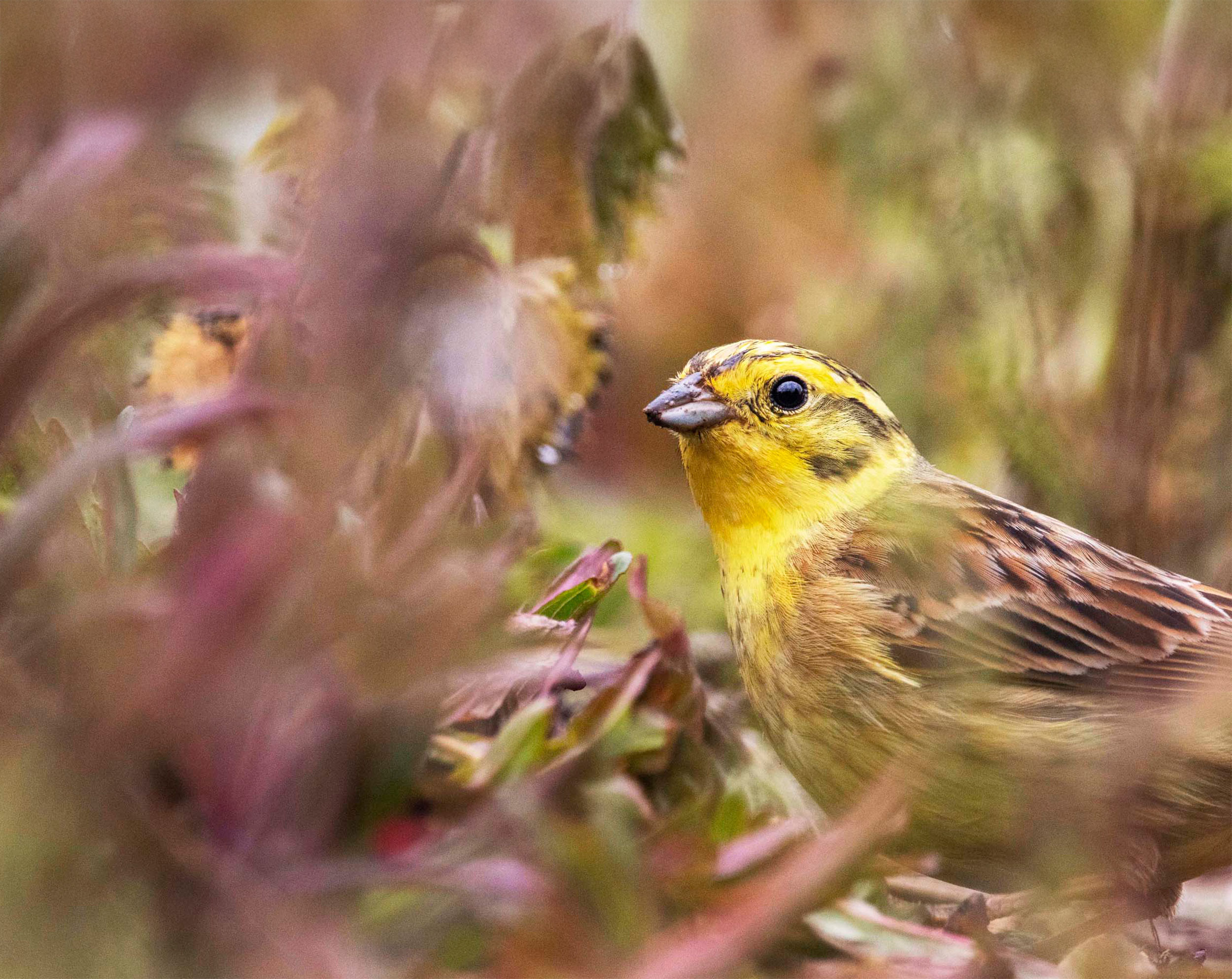
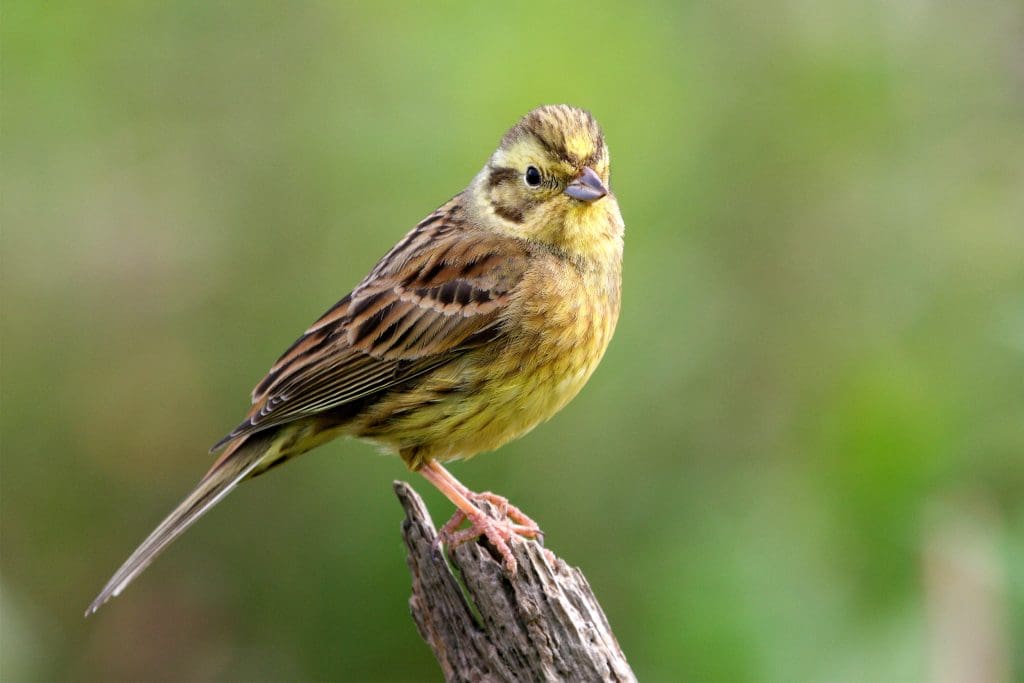
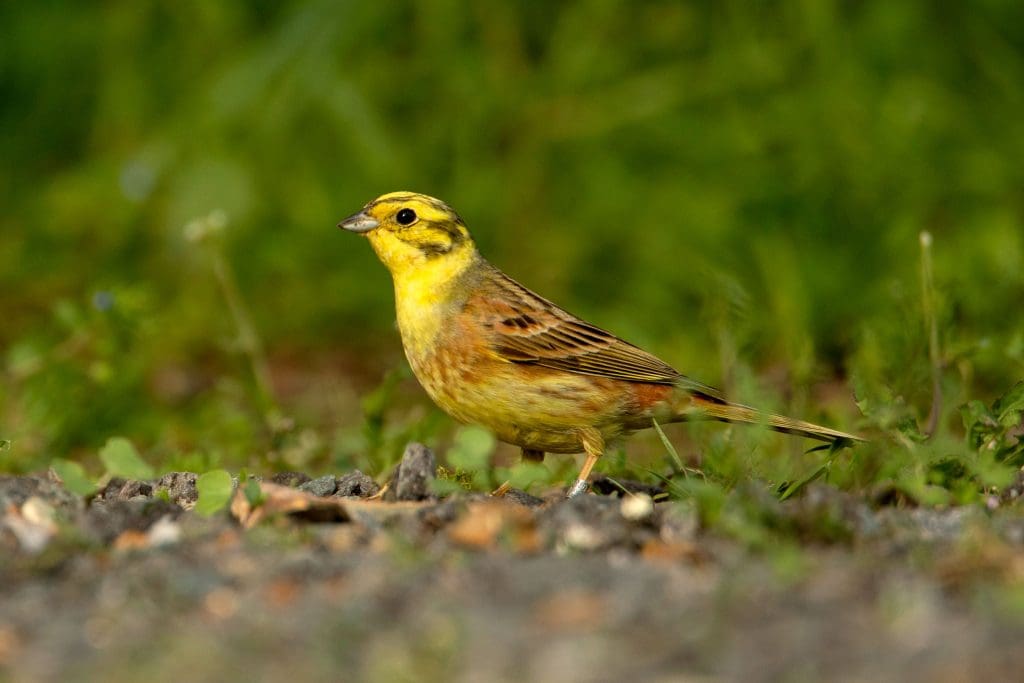
This bright yellow bird brings a flash of colour to a cold winter’s day. And there’s good news to be had behind this joyous sight. Conservation of the Yellowhammer has been a major success story at RSPB Hope Farm. Although the breeding population has doubled thanks to the insect-rich field boundaries and margins created here, the measures taken to boost seed food have had an even more significant impact on the number of wintering birds.
Listen to the call of the Yellowhammer
Yellowhammer. Audio: Patrik Åberg (xeno-canto)
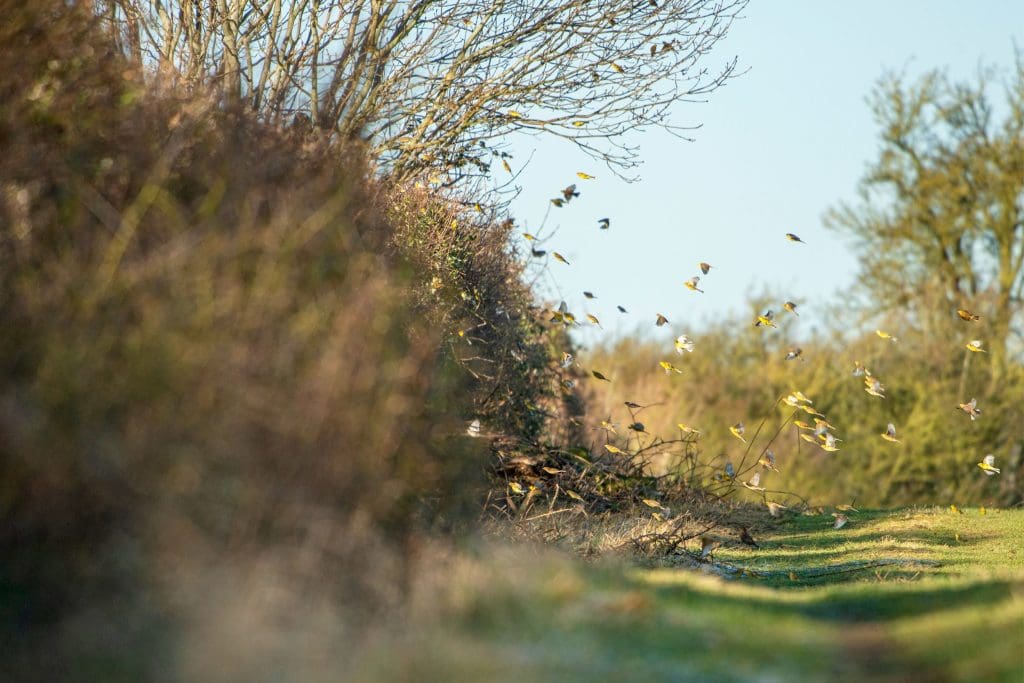
Whereas winter numbers in the first few years rarely climbed into double figures, in recent years averages are well over 200, with a peak count of 723! As a result, Hope Farm is supporting the overwinter survival of Yellowhammers over a much greater area than the farm itself. This is significant because poor overwinter survival due to lack of seed food is the primary driver of the national decline. Yellowhammers also benefit from the regulatory requirement to delay hedge cutting until after 1 September, as it is a late-nesting species that can be actively rearing young throughout the month of August.
You might also like
An organisation unlike any other
Happy Birthday, Hope Farm!