Silk is a spider’s greatest superpower. Some insects, and even molluscs, also produce silk, but spider silk is distinct and multi-purpose. With silk, spiders can detect food or danger; capture and subdue prey; lure mates; protect eggs; and even fly through the air. All spiders produce it, but how they use silk depends on lifestyle. Only 10% of spider species use it to make the familiar orb web, but they all make egg sacs out of silk, and males wrap their sperm in it before mating.
A strand of spider silk is about a thousandth of a millimetre in diameter, about 30–50 times thinner than a human hair. It has a truly unique combination of properties, mixing great tensile strength with elasticity. Its tensile strength – how strong it is before it breaks – is equivalent to the properties of steel or fibreglass, while its elasticity – how far it can be stretched without breaking – is better than nylon, and when wet almost approaches that of rubber. If a strand was expanded to 1mm thick, it could support 79kg!
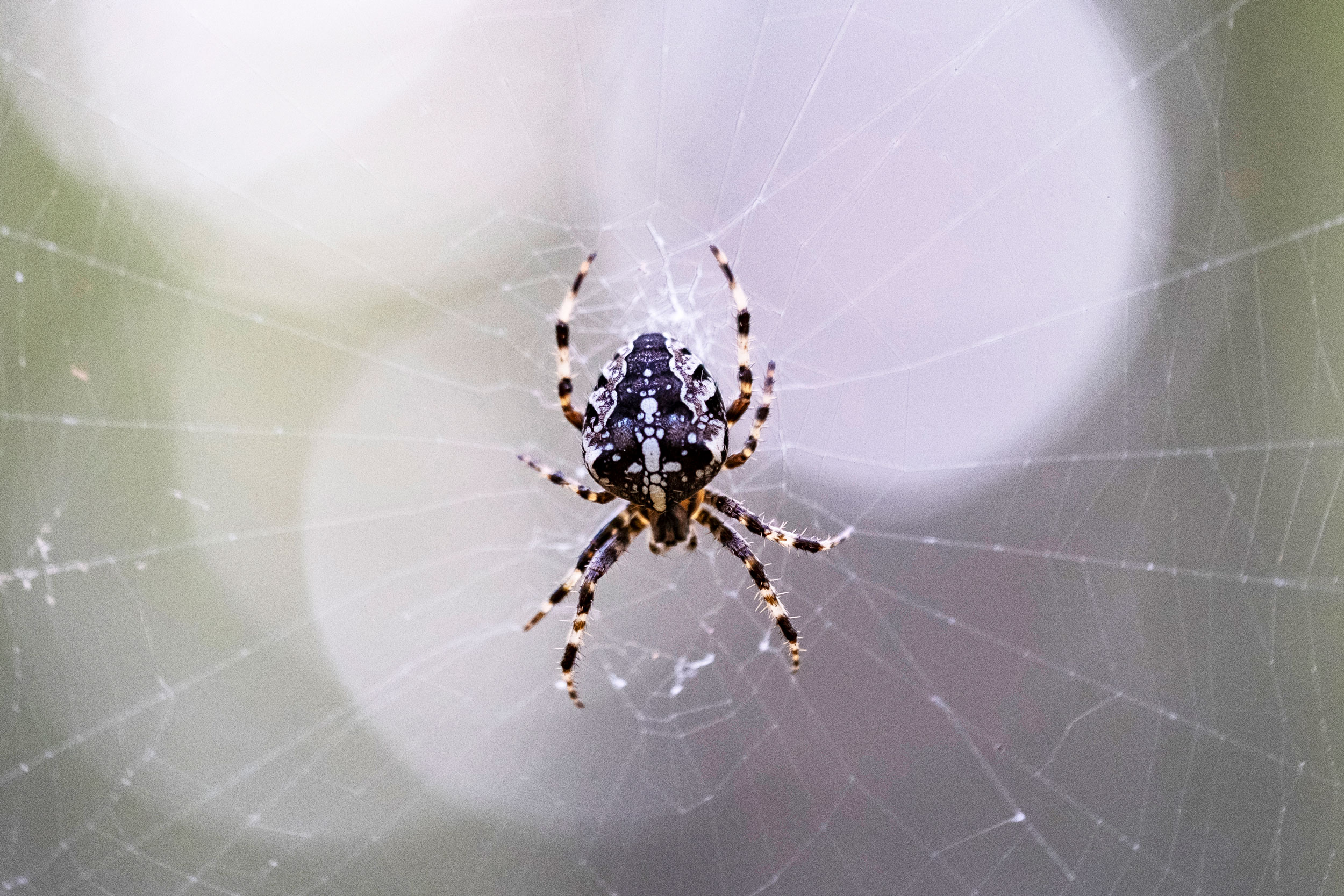
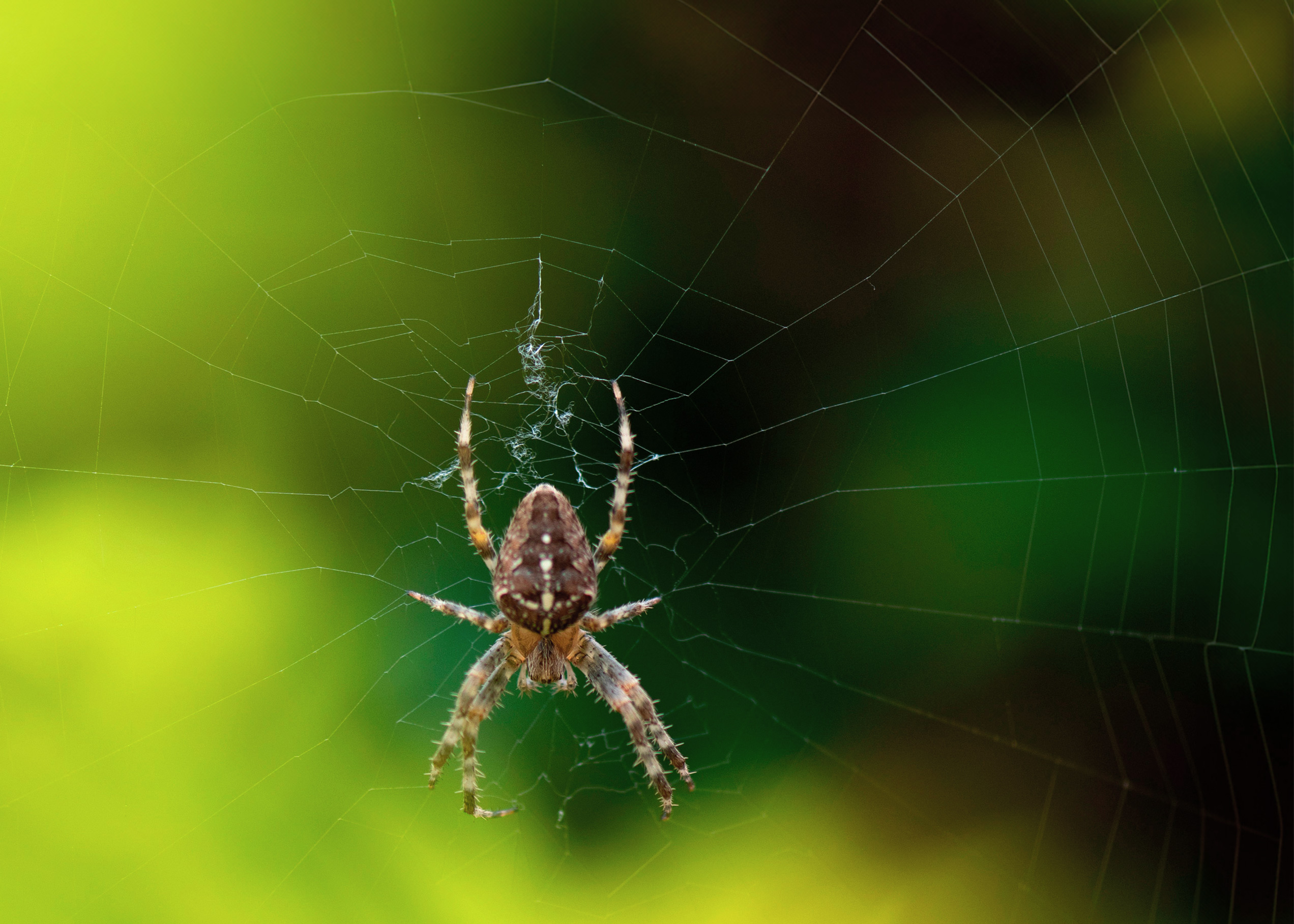
Garden Spider. Photo: RSPB/Sam Turley
Spiders produce silk in special glands in their abdomen, and these glands may make up a third of the animal’s hind body. There may be up to eight different glands producing silk with slightly different properties. Highly elastic strands are ideal for entrapping prey within webs, while stiffer strands are used for the web frame. Stiff threads are also used for the extraordinary skill of ballooning. A spider throws out a line and electrostatic forces (which the spider can detect) waft it into the air, often high enough for the breeze to disperse it, which is the intention.
Silk comes out of the spinnerets, which are located near the tip of the abdomen. It is synthesised as liquid but solidifies under pressure as it exits the many thousands of spigots (‘taps’) on each spinneret, pulled by the legs. There are up to three pairs of spinnerets, which are under independent control. The sheer ease and facility with which spiders use their silk in different ways is one of the hidden wonders of nature.
You might also like
Breeding like flies?
Three questions with an RSPB Legacy and In Memoriam Adviser