


Have you ever wondered where Manx Shearwaters go to nest?
Manx Shearwaters spend winter in the Atlantic, predominantly off Brazil and Argentina, then migrate to the UK for breeding. During the daytime, Manx Shearwaters are rarely seen on land but often gather in rafts in the water near to their breeding areas. These are often offshore islands, where they can be safe from rats and other ground predators.
Under the cover of darkness, birds come ashore, guided by the calls of their partner. These are a variety of raucous and piercing howls, screams and ghostly cackles. One island where these birds nest is the Isle of Rum in Scotland, host to an estimated 100–120,000 birds. Norse sailors who passed by these isles would hear these unsettling sounds and came to the conclusion it must be trolls. This is likely to be where the island’s Trollaval mountain gets its name!
I’ve seen what I think are Lesser Black-backed Gulls but I am not sure of the leg colour?
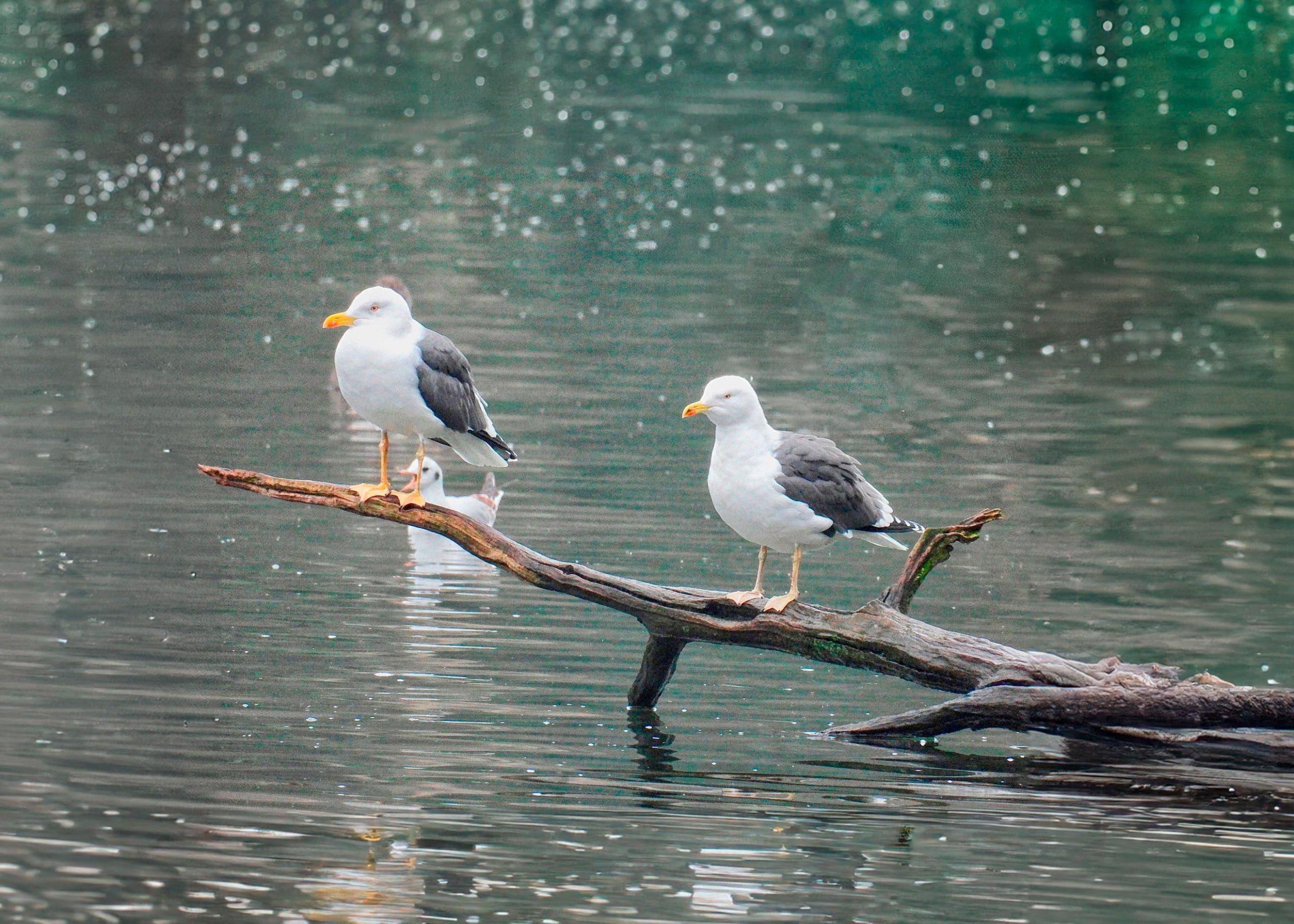
Lesser Black-backed Gulls. Photo: Peter Burrill
Peter Burrill
Gulls are amongst some of our hardest birds to identify, but you’re absolutely correct that these are Lesser Black-backed Gulls. There are a few features which can help narrow this down. The only other regular species with a black back in the UK is the Great Black-backed Gull. These birds always have pink legs, so the yellow legs indicate it to be Lesser Black-backed.
If you can determine the size of these birds as well, these birds are the same or slightly smaller than Herring Gulls, whereas the Great Black-backed is significantly larger.
The legs of Lesser Black-backed Gulls can range from bright to a paler yellow, which seems to just be individual variation. In winter, outside of breeding condition, these legs tend to vary more, but as the gull on the right-hand side in your photo (shown above) has some black on the beak it is most likely not a full adult which would help explain the paleness in the legs at this time of year. As we say, not an easy identification!
Where do all my garden birds go at the end of the summer?

At this time of year garden birds, such as this female Bullfinch, look further afield for food. Photo: RSPB/Ben Andrew
Jane Simpson
This is quite normal! Garden birds may seem to disappear at the end of summer for a couple of different reasons. After they finish nesting, garden birds moult into fresh new feathers, which can take several weeks. During this time, they will typically hide away as much as possible, as they are more vulnerable to predators while they are moulting their wing feathers. There is also an abundance of natural food around at this time of year, in the form of grain, berries and fruit. Many garden bird species, including House Sparrows, Starlings and finches, will move around in flocks and visit farmland to feed on the abundance of grain before it is harvested and the split grain following the harvest.
How to…
Build an insect house
Insect houses are a fantastic feature to add to any garden to help provide a safe hideaway for invertebrates, while also making use of garden waste. You’ll need to choose a level area with firm ground to position your insect house, either in shade (preferred by some bugs such as woodlice) or a sunny spot (as needed for solitary bees).
To start with you’ll need to lay some bricks down to act as sturdy corners, making sure to leave space between them for critters to move in. Then you can add three or four layers of wooden pallets on top with bricks between each layer. You can add dead wood, bark, dry leaves, stones and sticks, for example, to different layers – the aim is to create lots of nooks and crannies for different creatures to inhabit. To finish it off you’ll need to add a roof to keep it all dry; you can use old roof tiles or wooden planks covered in roofing felt.

An insect house is a safe place for a variety of creatures to take up residence. Photo: RSPB/Doug Shapley
Create a safe place for small creatures in your outdoor space. Video: The RSPB
What are the small brown birds I’ve been seeing hovering over local farmland?

Skylarks can be identified by a lowered or raised crest on their head. Photo: RSPB/Ben Andrew
Andy Groom
It sounds like these could have been Skylarks. They are a streaky brown bird, slightly larger than a House Sparrow, with off-white underparts and white outer tail feathers. A good feature to look out for is the short crest on their head that can be raised and lowered. They are often seen on farmland, where they nest on the ground. During winter they form flocks in open stubble fields. Male Skylarks are known for their song-flights; they fly steeply above their territories, hovering and singing at a great height before descending.
Which is which? Common vs Grey Seal
You can find two resident species of seal living and breeding along the coastlines of the UK: Grey Seals and Common Seals. They are semi-aquatic mammals who are members of the Phocidae family, otherwise known as earless seals. Our resident population of Grey Seals makes up about 95% of the European population and are our most common of the two species (despite the Common Seal’s name). Here are some key features to look out for when trying to distinguish the two.
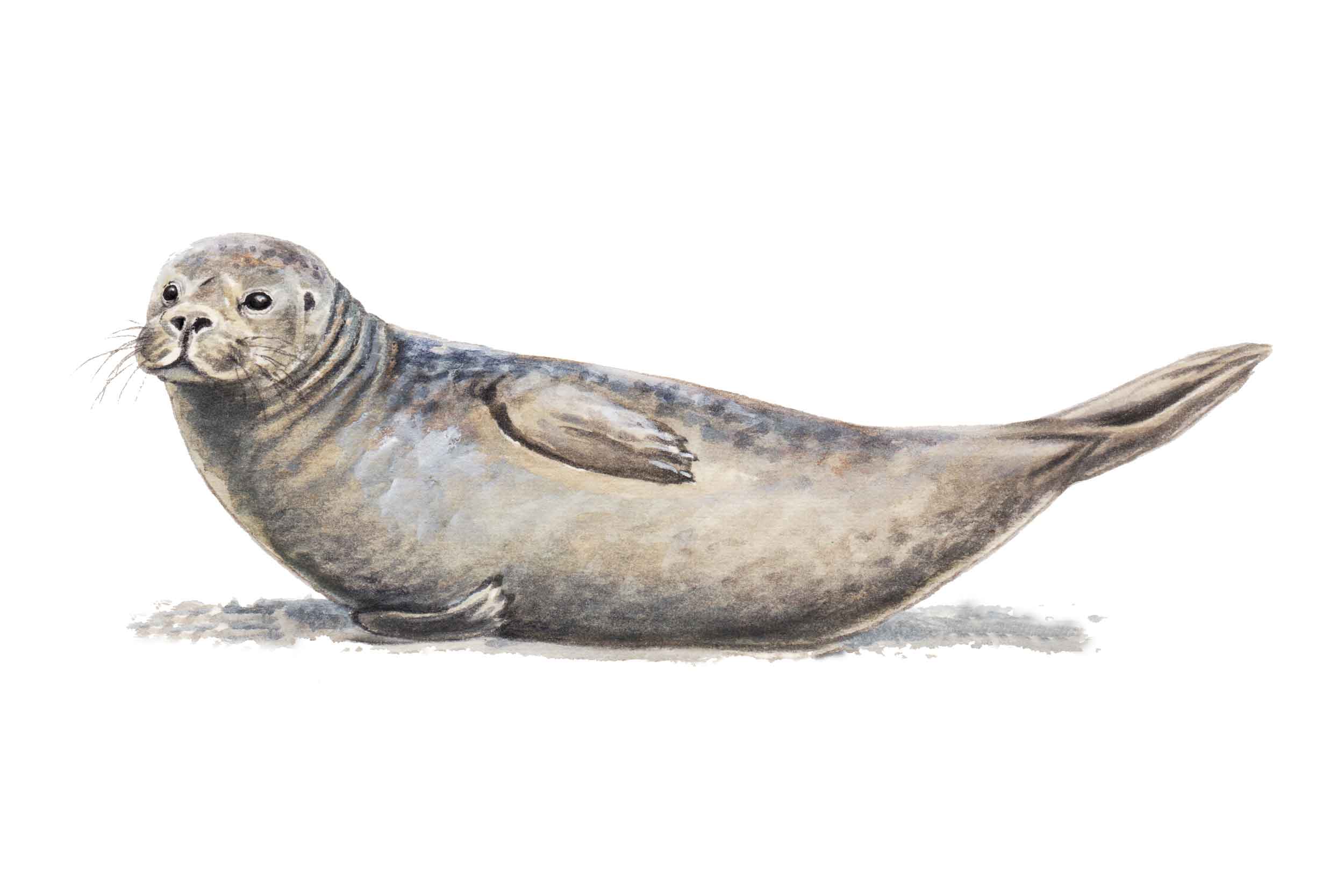
Common Seal. Illustration: RSPB/Mike Langman
Common Seal
- Large eyes positioned on the front of shorter faces
- Skin usually more spotty
- Smaller in size (up to 130kg)
- Will give birth to pups in early summer in calm, shallow water
- Can sometimes be heard ‘singing’ eerie wails

Grey Seal. Illustration: RSPB/Mike Langman
Grey Seal
- Long sloping face
- Nose protrudes much further than chin
- Parallel nostrils
- Much larger (up to 300kg)
- Will give birth on land in autumn. Pups are born with a white coat of fur to moult before they can swim

Send us your questions
From fascinating fungi to the benefits of a big beak, send your wildlife questions to the RSPB Wildlife team!

House Sparrow. Photo: RSPB/Ben Andrew
You might also like

Helping Swifts take flight

Is it a bird? Is it a troll? It’s a Manx Shearwater! Your questions answered


