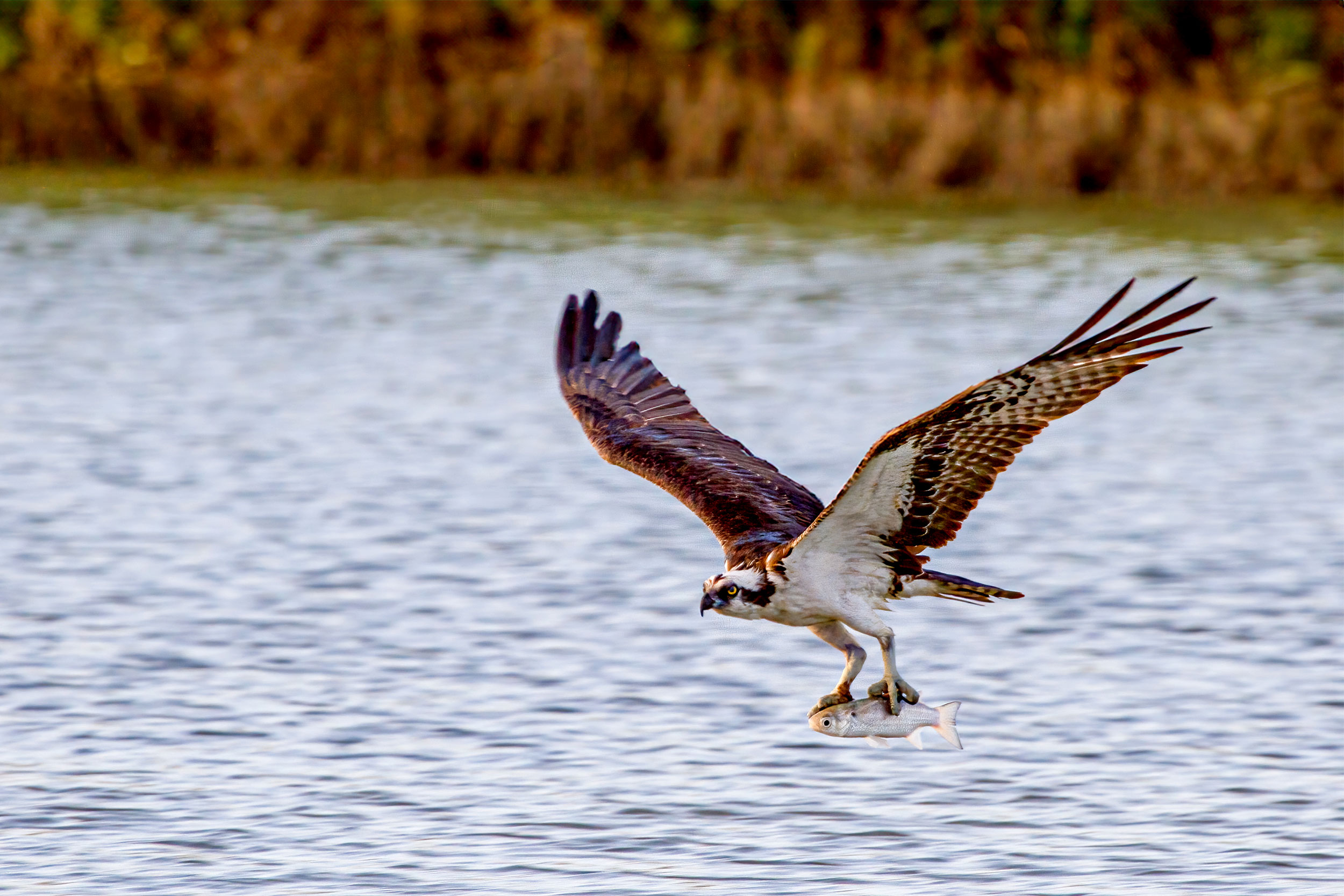
Vanishingly few birds in the world catch fish with their feet. Think of all the waterbirds you know, and they all use their bills, so the Osprey is a true outlier. Its specialised hunting technique is to plunge into water feet-first and get enough of a grab of slippery prey to carry it away. Another rare exception, the White-tailed Eagle, can grab fish from the water with its talons, but it doesn’t plunge, only snatches.
Do you know your Osprey from your White-tailed Eagle? Learn how to ID birds of prey
Ospreys have multiple adaptations for this way of life. The most extreme involve the legs and talons, the catching equipment. The Osprey’s legs are unusually long, and the feet are large for the size of bird. The claws are very long, sharp and strongly curved inwards, although also robust. Importantly, the outer toe can be swung back to meet the hind toe, so two toes face forwards and two back.
When the Osprey plunges, it opens its talons and these adaptations all combine to give it excellent reach. The talons also absorb the shock of hitting the water. Assuming the Osprey dives accurately, the long claws both embrace and partly impale the fish. As the talons clamp, the fish’s body is further gripped by spicules that project from the bottom of the toes, allowing it to be held tight. Once airborne again, the Osprey manoeuvres its prey to face forward below the hunter’s body, to reduce aerodynamic drag.
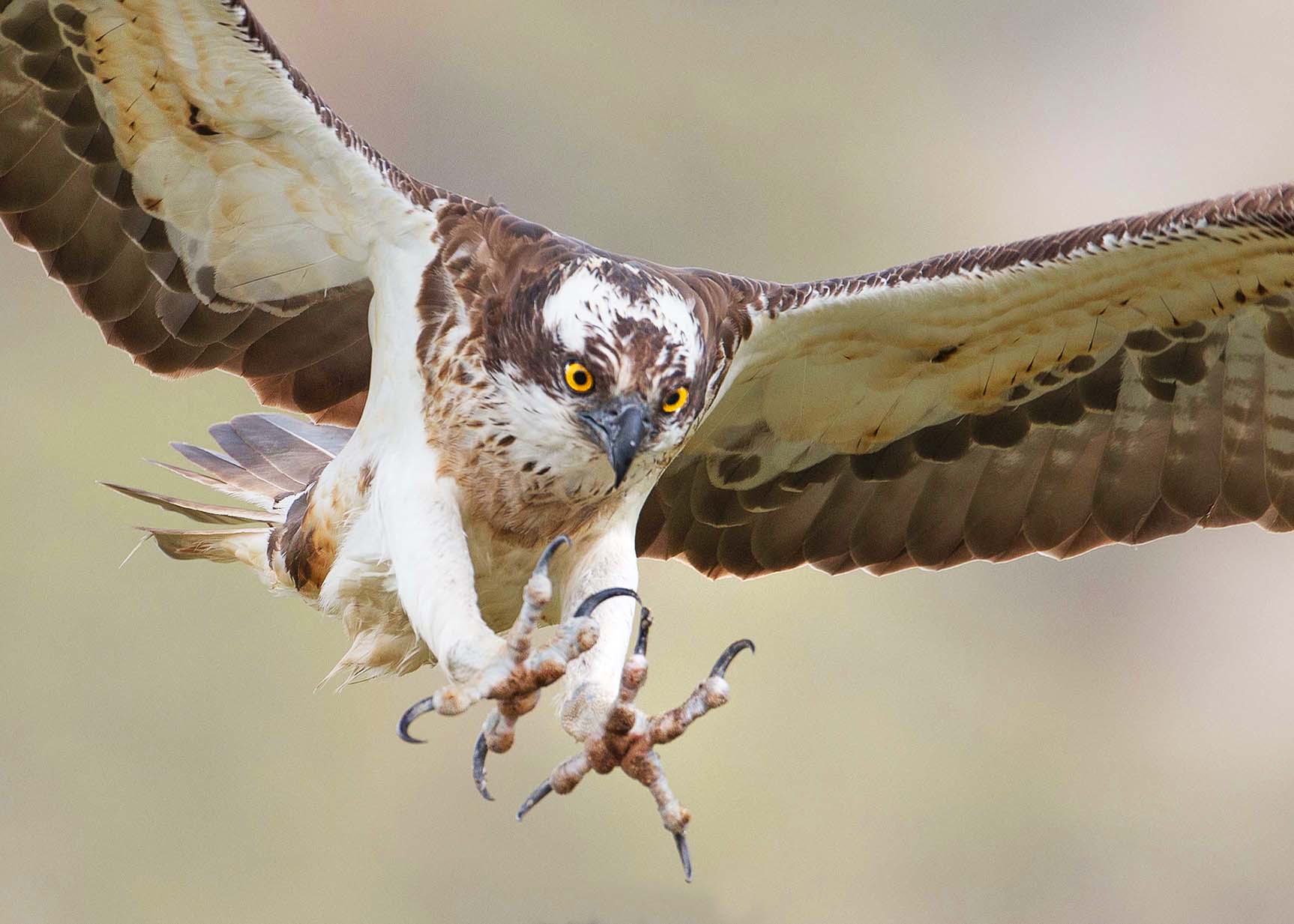
Photo: Peter Cairns (rspb-images.com)
None of this works unless the Osprey can find a target first. It has keen eyes, which face forward, allowing it to judge distance. The relatively light body and long wings allow it to soar and hover for long periods at a time, all the while manoeuvring over unsuspecting prey. It can spot fish from at least 40 metres up, although it can plunge from as little as 10 metres.
Once in a plunge, its relatively small head allows for less wind drag. Its dense, oily plumage confers waterproofing and its nasal valves prevent water rushing up its nose. Once the fish is snared, special skeletal adaptations of the wing enable it to flap to get airborne, even when carrying prey that may weigh 2kg, over half the weight of the heaviest Osprey. Most prey, though, only weighs 150–300g and measures 25–35cm in length.
You might also like
How birds of prey learn to hunt
Stop the killing: The state of birdcrime