Caddisflies straddle two worlds, spending most of their life underwater as aquatic larvae that eventually metamorphose into animals of the air: short-lived, moth-like adults.
This resemblance to moths is no coincidence: both diverged from a common ancestor that lived at least 250 million years ago.
Caddisfly larvae are remarkable architects, making delicate, protective cases from stones, sand, leaves, twigs and even the shells of other aquatic animals. These cases are specific to each species, and the building materials they use are bound together using silk secreted by modified salivary glands.

A case-building caddisfly. Photo: Nature Picture Library (Alamy Stock Photo)
Some species, especially those that live in moving water, also use silk to construct little fishing nets in which edible morsels are filtered from the current. Many species roam about looking for food –this can be living or dead plant matter or even other aquatic organisms.
See how caddisfly larva create their own protective cases underwater. Video: The RSPB
We have around 200 caddisfly species in the UK. One species, thought to be extinct from Great Britain since 2016, was recently rediscovered. A survey carried out by Wales’ species flagship recovery programme, Natur am Byth – a partnership the RSPB is involved in – discovered the rare Limnephilus pati on Anglesey.
Find out more about our work on the Natur am Byth programme
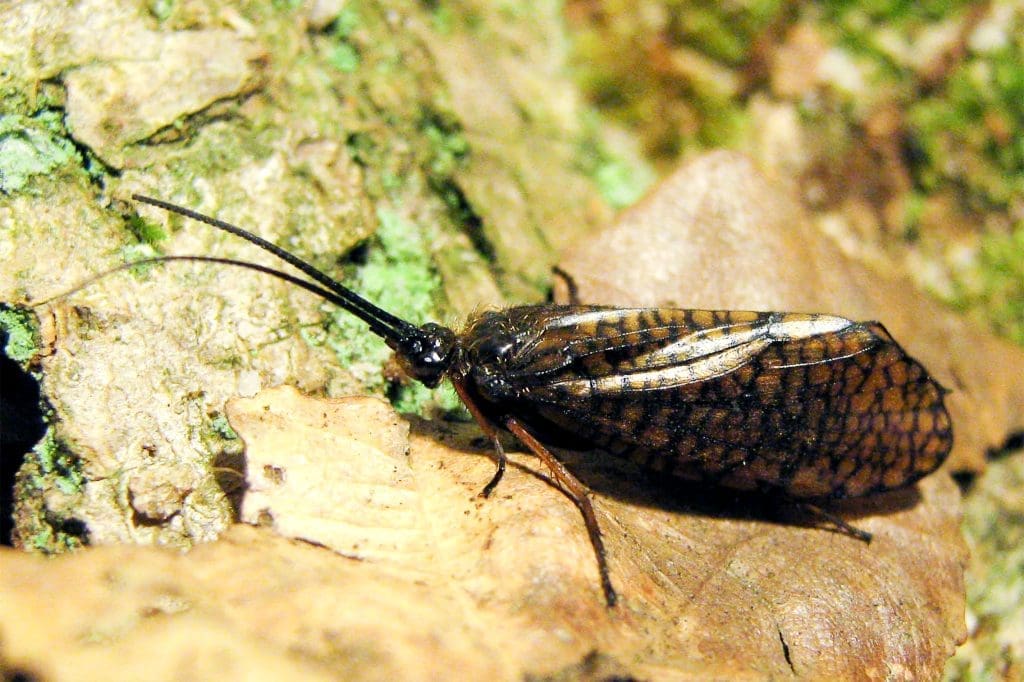
One of our strangest species is Enoicyla pusilla – the so-called ‘Land Caddis’, the larvae of which have forsaken aquatic habitats in favour of woodland leaf litter. Here, this species is scarce, found only in the West Midlands. The distinctive Window Winged Sedge caddisfly, Hagenella clathrata, is another rare species of note, currently known from only four sites in the south of England.


You might also like

What minibeasts can you find in early autumn?

Your gardens: get lost in the Forest of Flowers