
Chunky and sparrow-sized, Snow Buntings are arguably our prettiest bunting.
In winter, they are snowy-white with a warm apricot scarf, poll cap and balaclava, a tawny-grey tweedy cloak and a neat wheat-seed bill. Plumage varies by age, sex and season: males become striking black and white in summer, while females are more streaky brown.
Challenge yourself this winter and search for other buntings too.
A tiny number (around 60 pairs) breed in the Scottish Highlands, especially in the Cairngorms, building deep, moss- and feather-lined nests among rocks. In winter, 10,000–15,000 birds migrate south, mostly from Iceland and Scandinavia. In the UK, they favour coastal fields, dunes and saltmarsh, particularly along the North Sea, where they feed on seeds and insects. The overwintering population has increased by a third over the past 40 years.
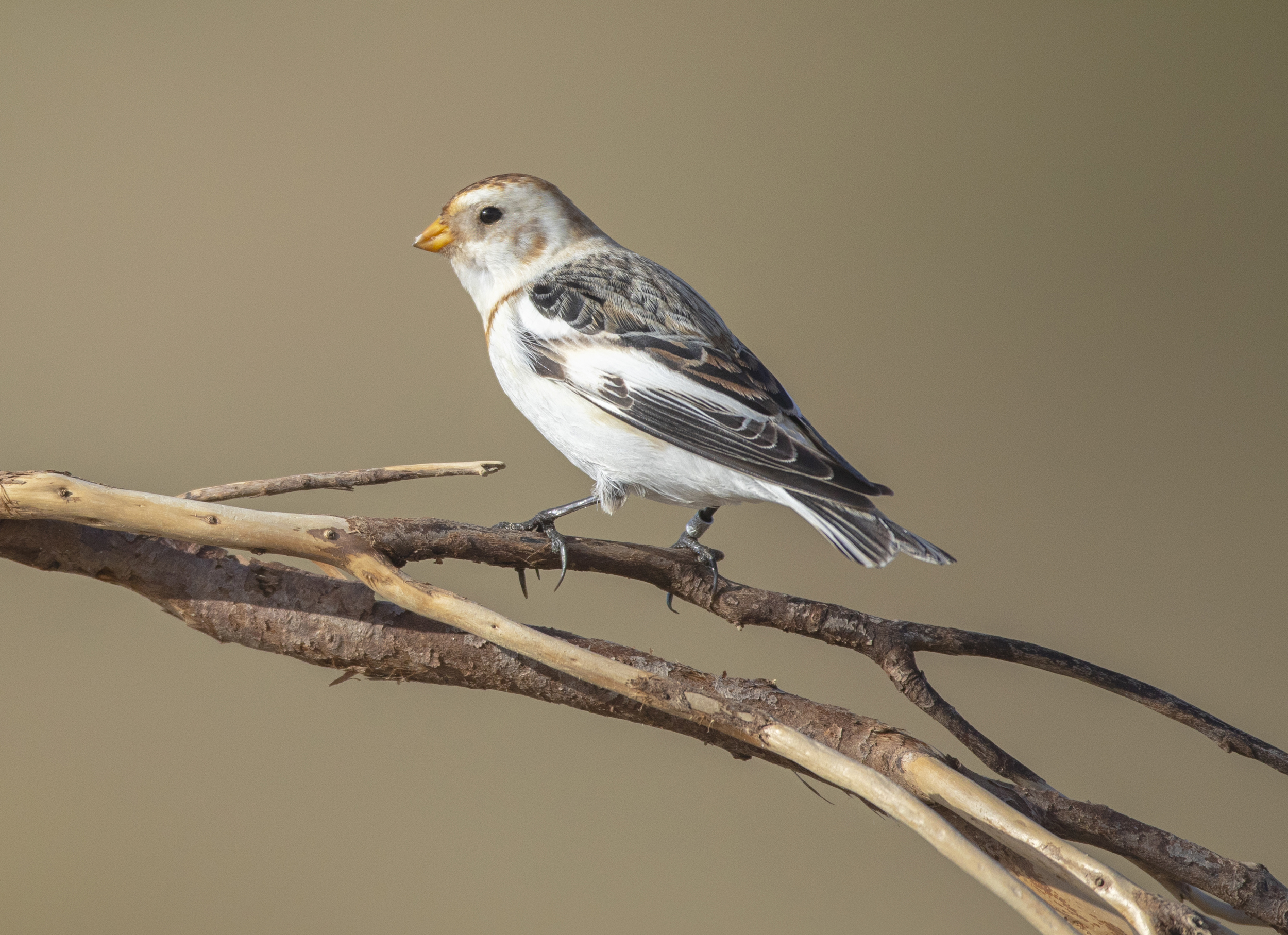
Adult Snow Bunting. Photo: Ben Andrew (rspb-images.com)
Listen to the Snow Bunting
Audio: Dougie Preston (xeno-canto)
In flight, Snow Buntings earn their nickname ‘snowflakes’, flying in low, trilling, forward-rolling flocks that seem to tumble across bleak, foam-flecked shingle beaches. They are tough birds, breeding further north than any other small bird, and are considered a key indicator of climate change in Arctic ecosystems.
With dense feather insulation and a crouched walking habit to keep feet warm, Snow Buntings are well adapted to the cold. But they must feed constantly to sustain their high metabolism, so habitat protection and minimal disturbance during their winter stay is crucial. Climate change in their Arctic breeding grounds poses another serious challenge to these resilient little polar birds, which is why tackling the climate crisis is a priority for the RSPB.
You might also like
The spotters’ challenge: Buntings
RSPB news roundup (autumn/winter 2025)