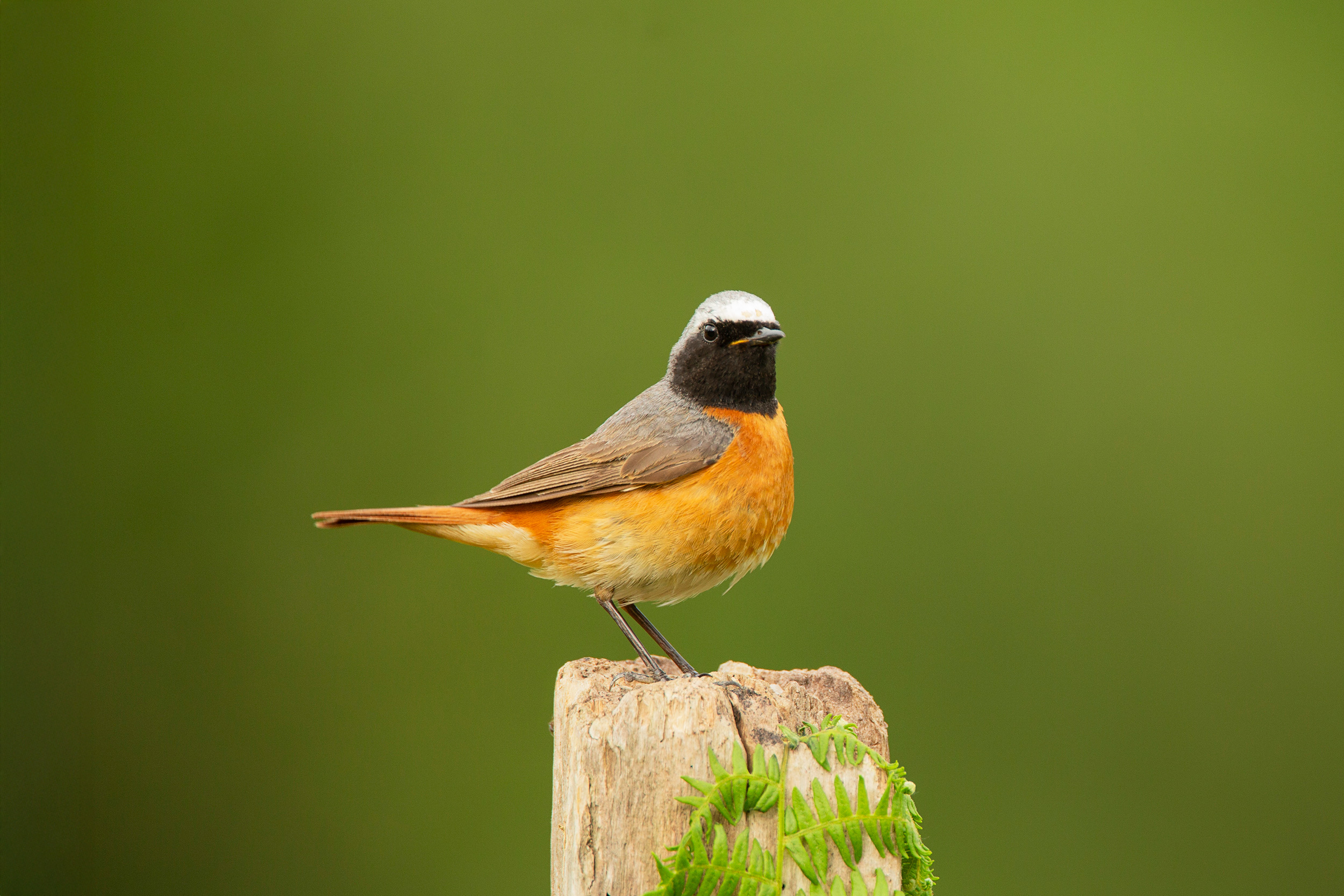
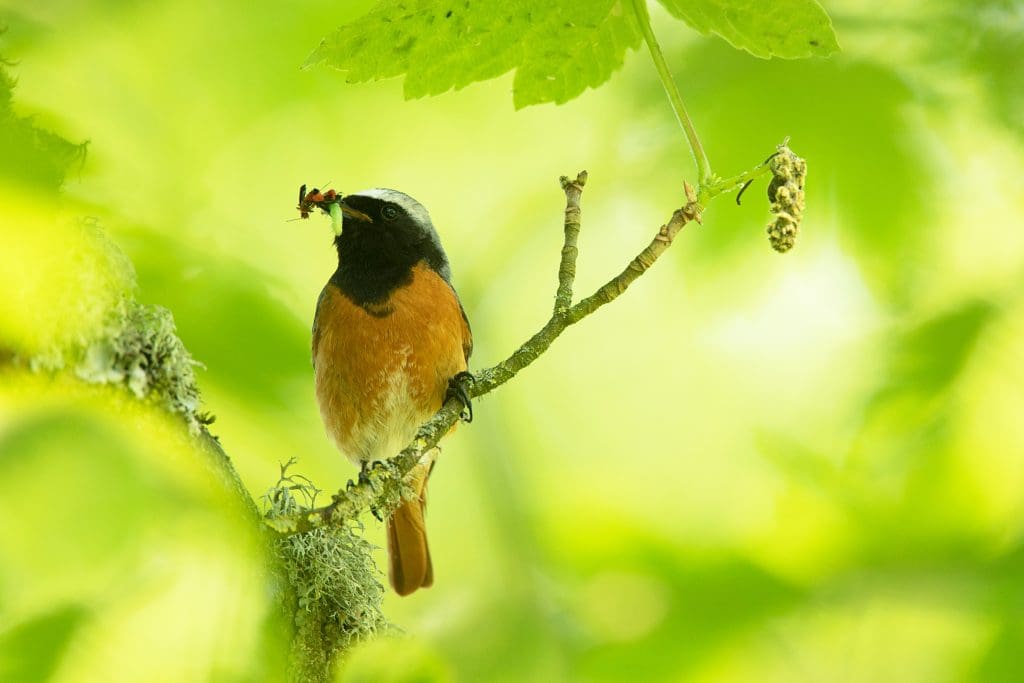
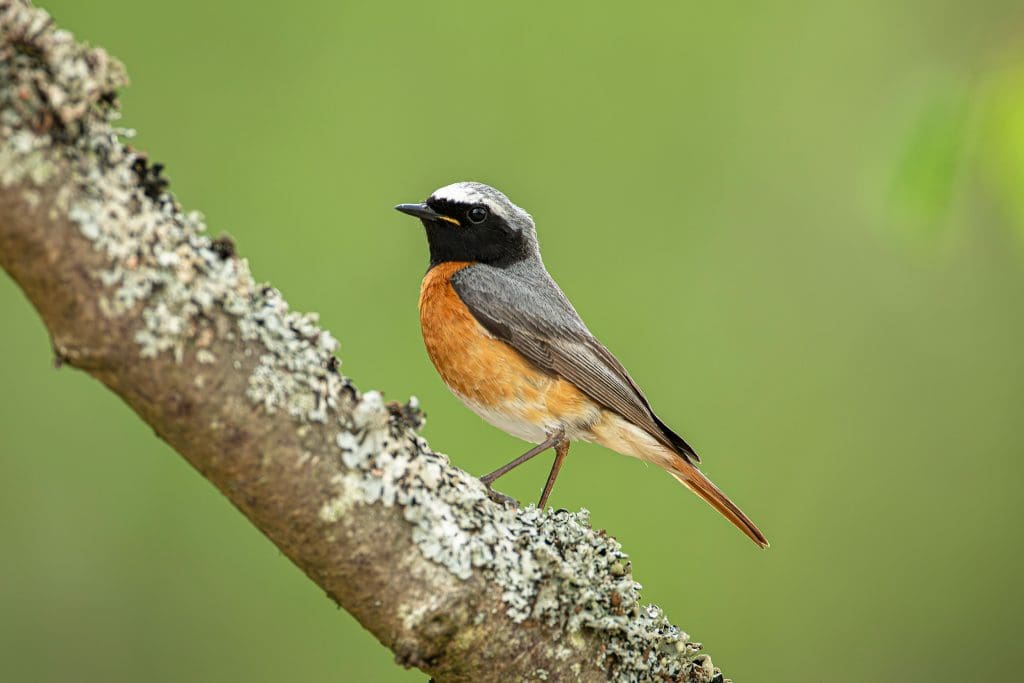
Perched proudly and singing their hearts out, male Redstarts are unmistakable in their breeding plumage. Look out for a black mask and bright orange-red tail and chest on a Robin-sized bird. While females don’t have the same bold colouring, they can still be readily identified by the orange-red tail feathers that they’re named after – the ‘start’ coming from the old colloquial term for tail.
In spring and summer, an estimated 100,000 breeding pairs of these little birds visit the UK. They make the long migration from central Africa in search of temperate woodlands to breed in and insects to eat. Across Britain, these Amber-listed birds are most abundant in Wales, but can also be found in the north and west, occasionally breeding in central and southern England. They are a rare breeder in Ireland.
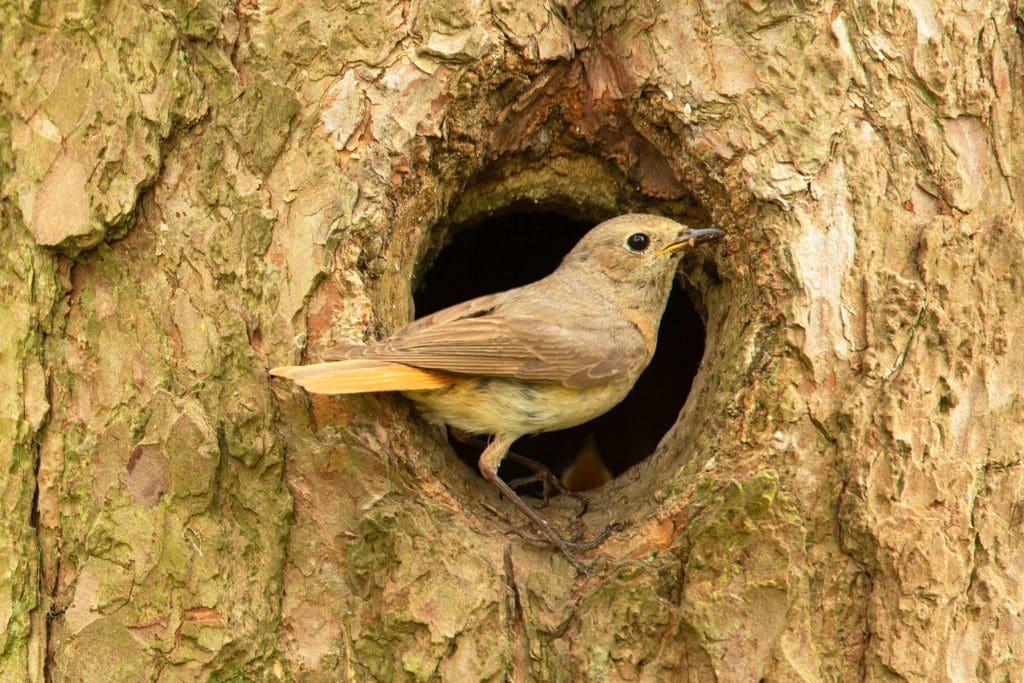
Populations sharply declined in the late 1960s and early 1970s due to severe drought in the wintering location of Sahel, but numbers have since recovered. Conservation work by the RSPB to protect woodland nature reserves in Wales benefits this species. They often nest in holes of trees and in stone walls, but will also use open-fronted nest boxes, so a box high up in a mature tree where human disturbance is minimal can also help these passerine birds.
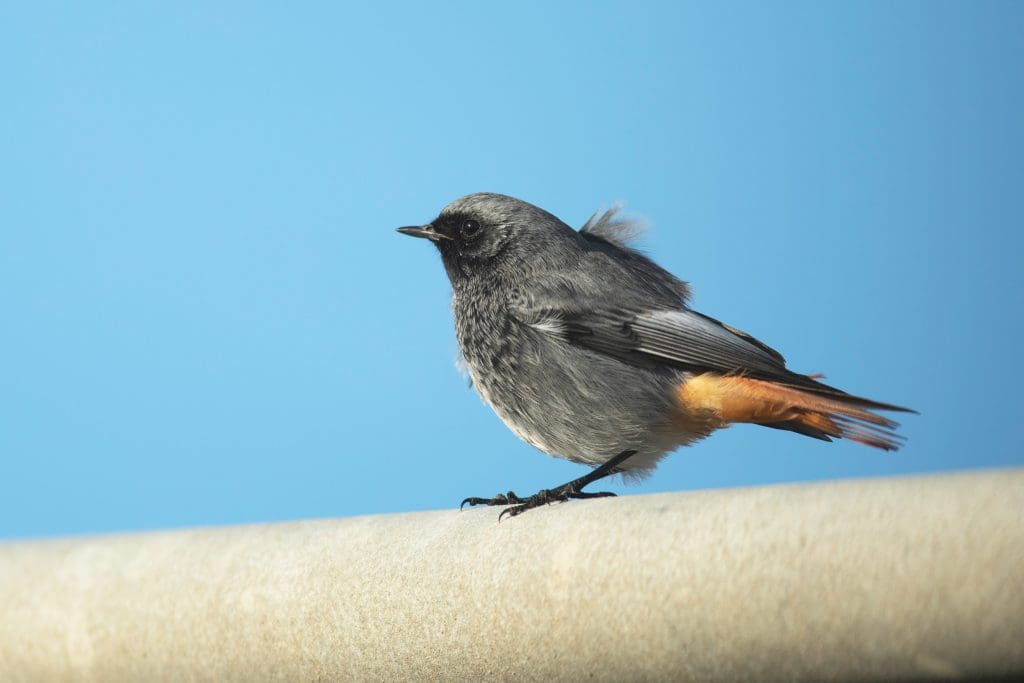
Its close relative, the Black Redstart, has similar habits but lacks the red chest and blue-grey upperparts. The Black Redstart is Red-listed and more likely to be found in urban habitats when breeding.
Hear the melodic rattle of the Redstart
Audio: Patrik Åberg (xeno-canto)
You might also like
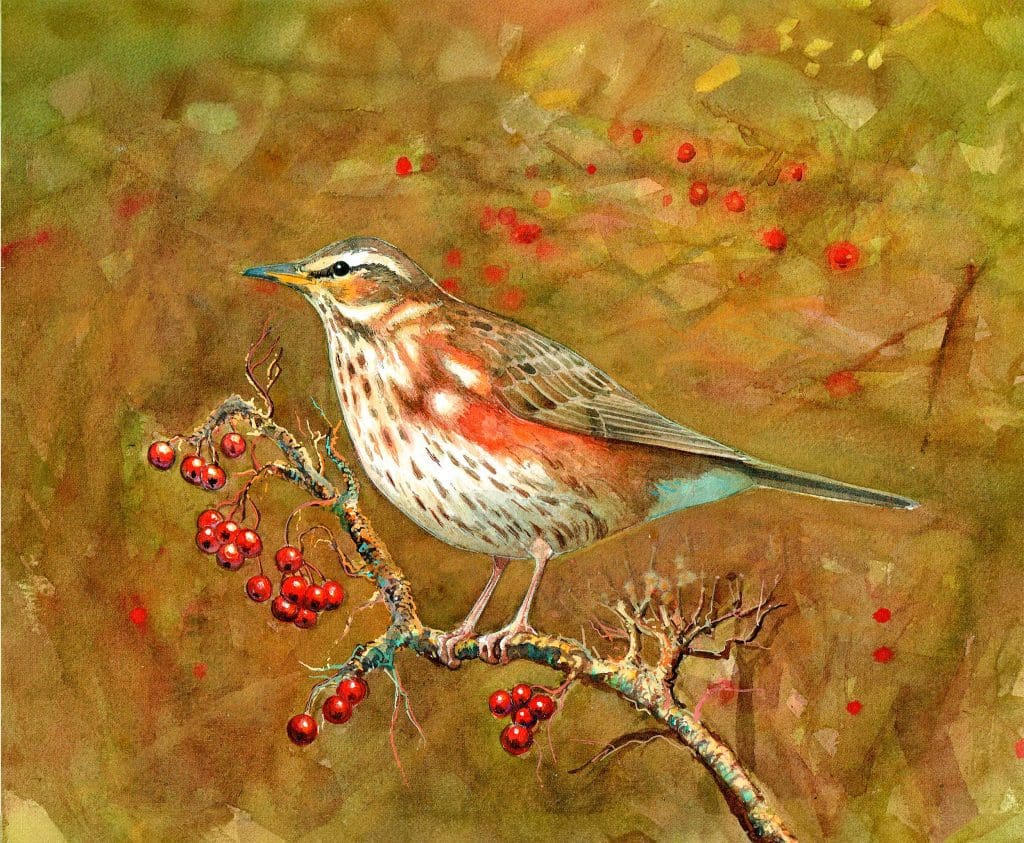
How to turn your photos into stunning art
A bright future for Yellowhammers