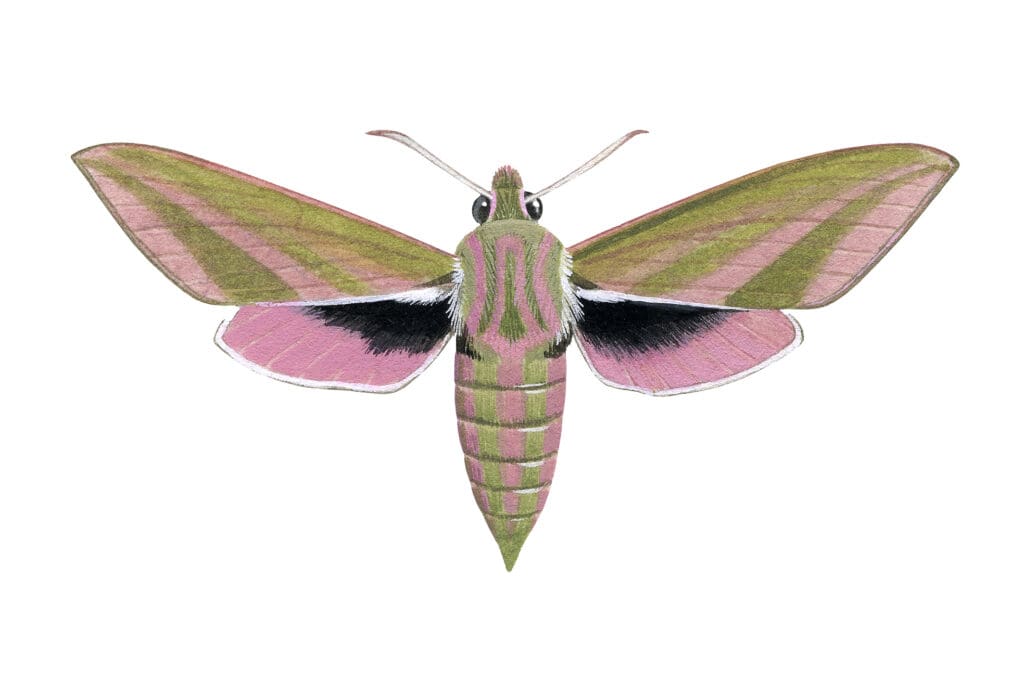
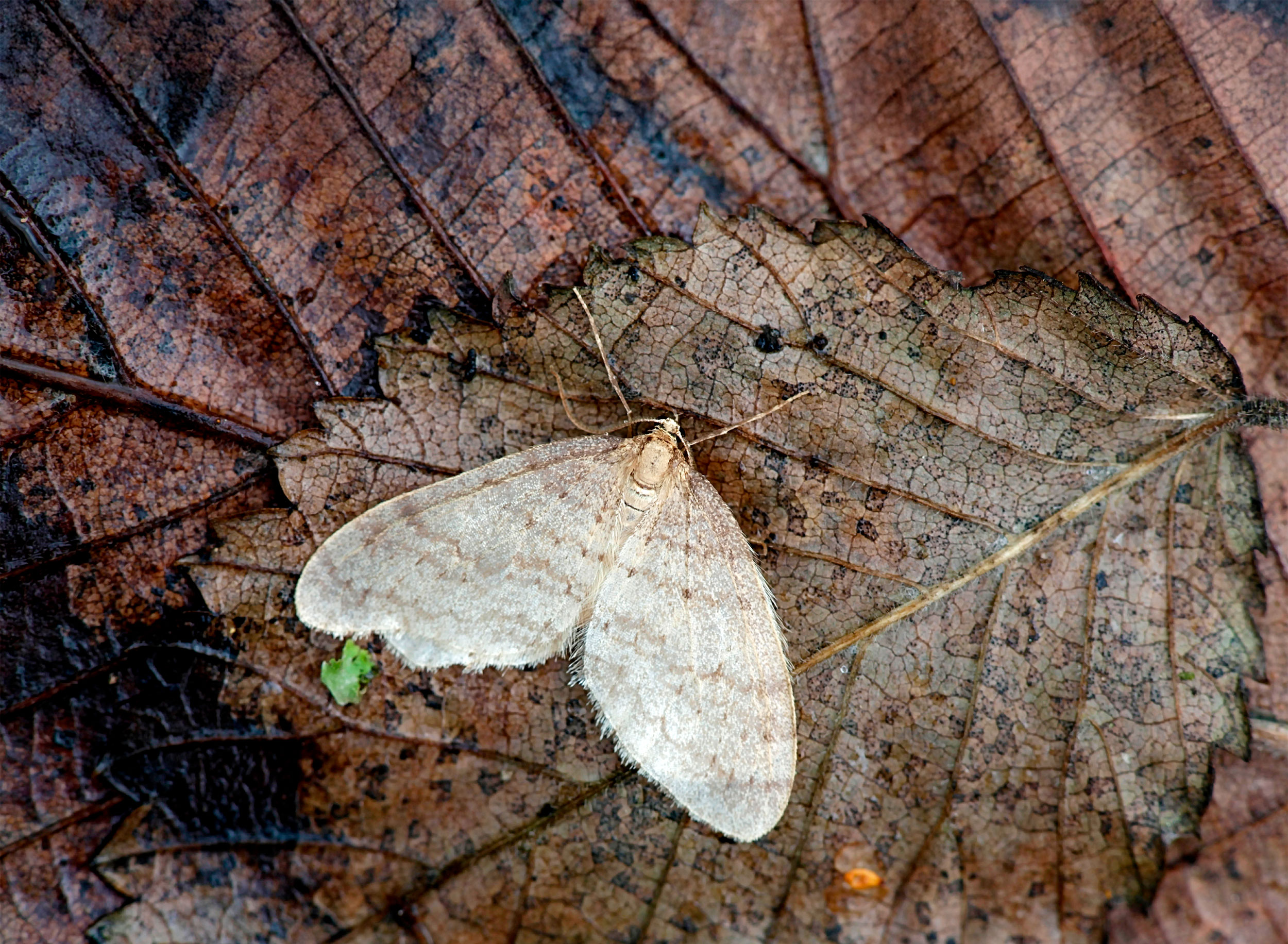

Male and female Winter Moth. Photo: Biosphoto (Alamy Stock Photo)
This moth, although rather dowdy, has extraordinary biology. Not only has the female dispensed with flying, but they are also able to tolerate winter temperatures by producing compounds that stop them from freezing. The eggs, once laid on twigs or in fissures on bark, remain dormant until the spring, awaiting the flush of new plant growth. Oak, birches, Hawthorn and heathers are favoured, but they will use a wide variety of food plants. When they hatch, the caterpillars set to work devouring the soft, new leaves. In turn, the huge numbers of Winter Moth caterpillars are an important food source for many bird species.
Should they exhaust a particular food-plant, the caterpillars can even ‘balloon’ to pastures new, spooling out a long line of silk that carries them aloft via electrostatic repulsion – much the same as spiders. By June, fully grown caterpillars tumble to the ground to pupate in the soil – awaiting the shorter days and falling temperatures that will trigger adult emergence.
You might also like
The hidden world of winter insects
Your questions – autumn/winter 2025