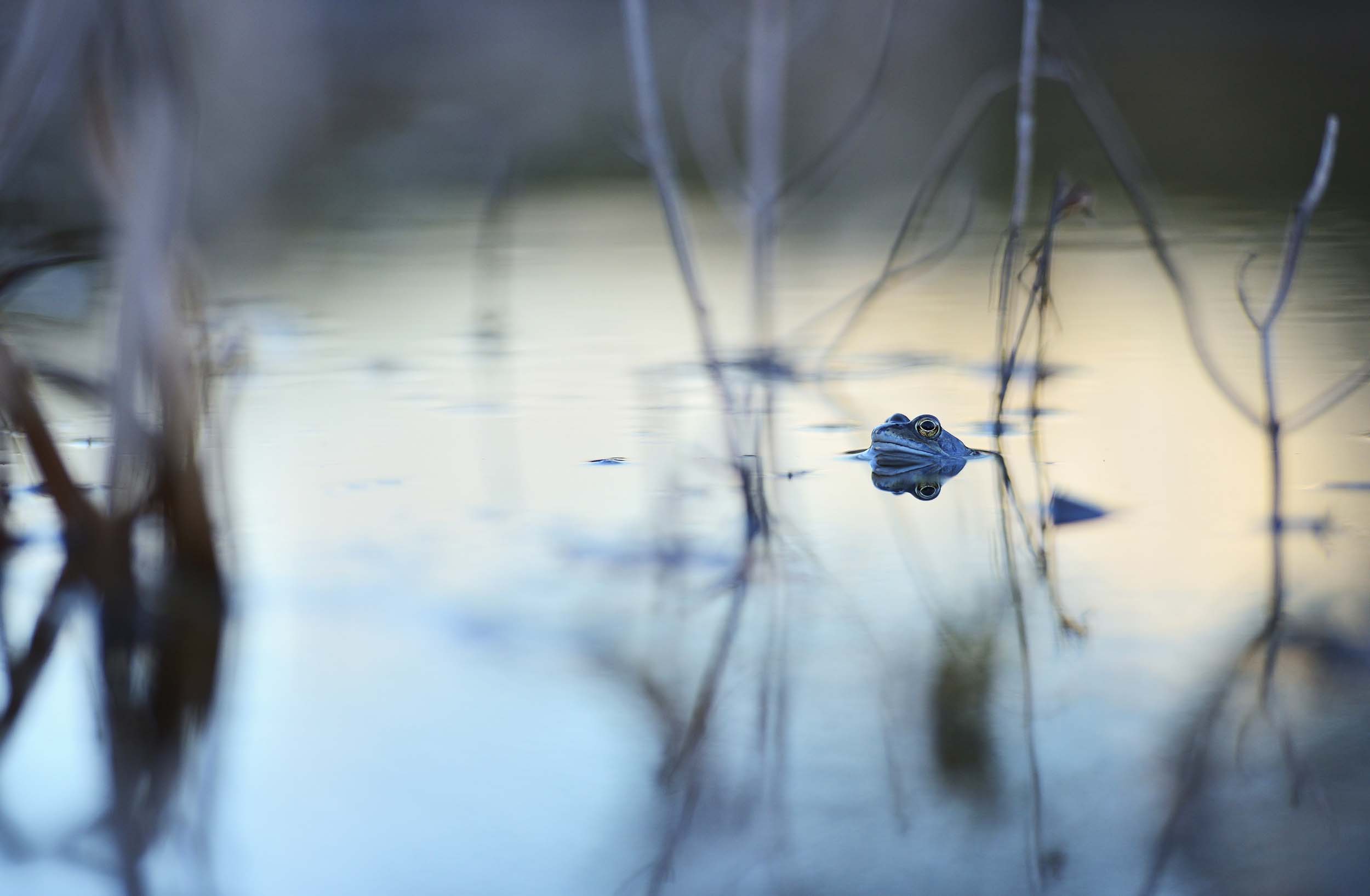
I found a dead frog in my pond after the ice melted, did it die from the cold?
Cathy Peters
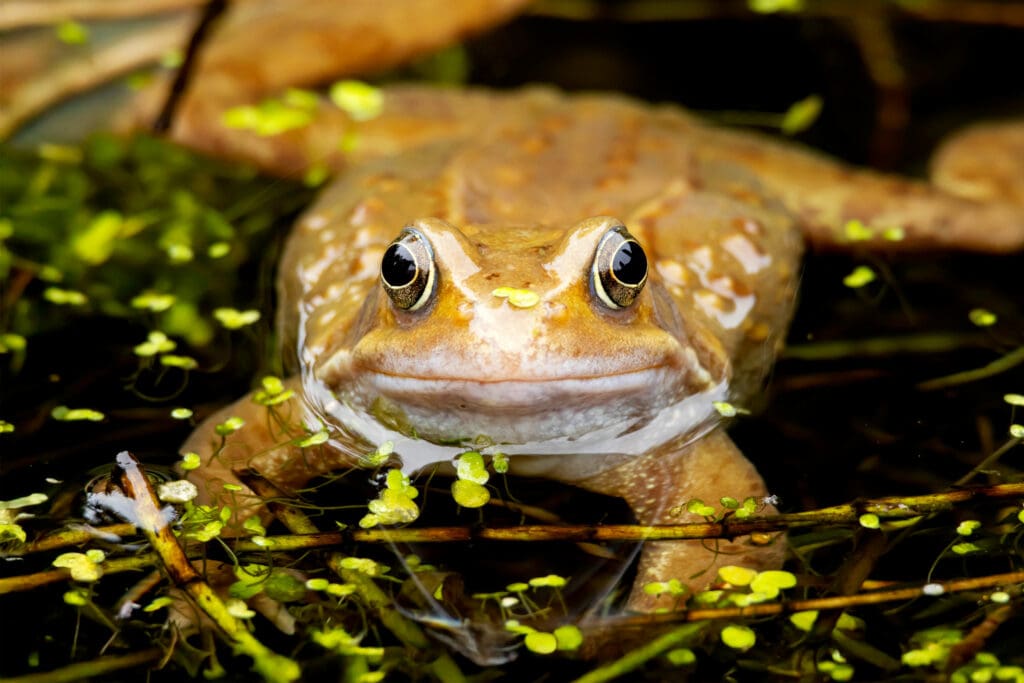
Very cold or freezing weather can be a challenge for wildlife, including pond inhabitants. Common Frogs (pictured above) often overwinter in the silt at the bottom of ponds, but sometimes ‘winterkill’ occurs, which is a non-infectious event linked to freezing conditions. The exact cause isn’t fully understood, but it may result from a lack of oxygen; from a build-up of toxic gases from decomposing material beneath the ice; or, in very shallow ponds, the entire water body freezing. To help prevent this, you can sweep snow from the surface of the ice to let sunlight through to aid oxygen production – but only attempt this if it is safe for you to do so. For more ideas, see our guidance on keeping water available in winter below.
If you find any dead amphibians, please report them to Garden Wildlife Health
Why is this Great Tit feeding a Great Spotted Woodpecker chick?
Angela Pearson
Cross-species feeding is recorded in many garden birds. We’ve also had reports of a Mistle Thrush feeding a Blackbird fledgling and a Great Spotted Woodpecker feeding a House Sparrow. Some parents instinctively continue feeding after their brood has failed. Nesting close by can also cause confusion, leading some birds to feed the young of another species. Less commonly, begging calls of orphaned chicks can trigger nearby adults to provide food.
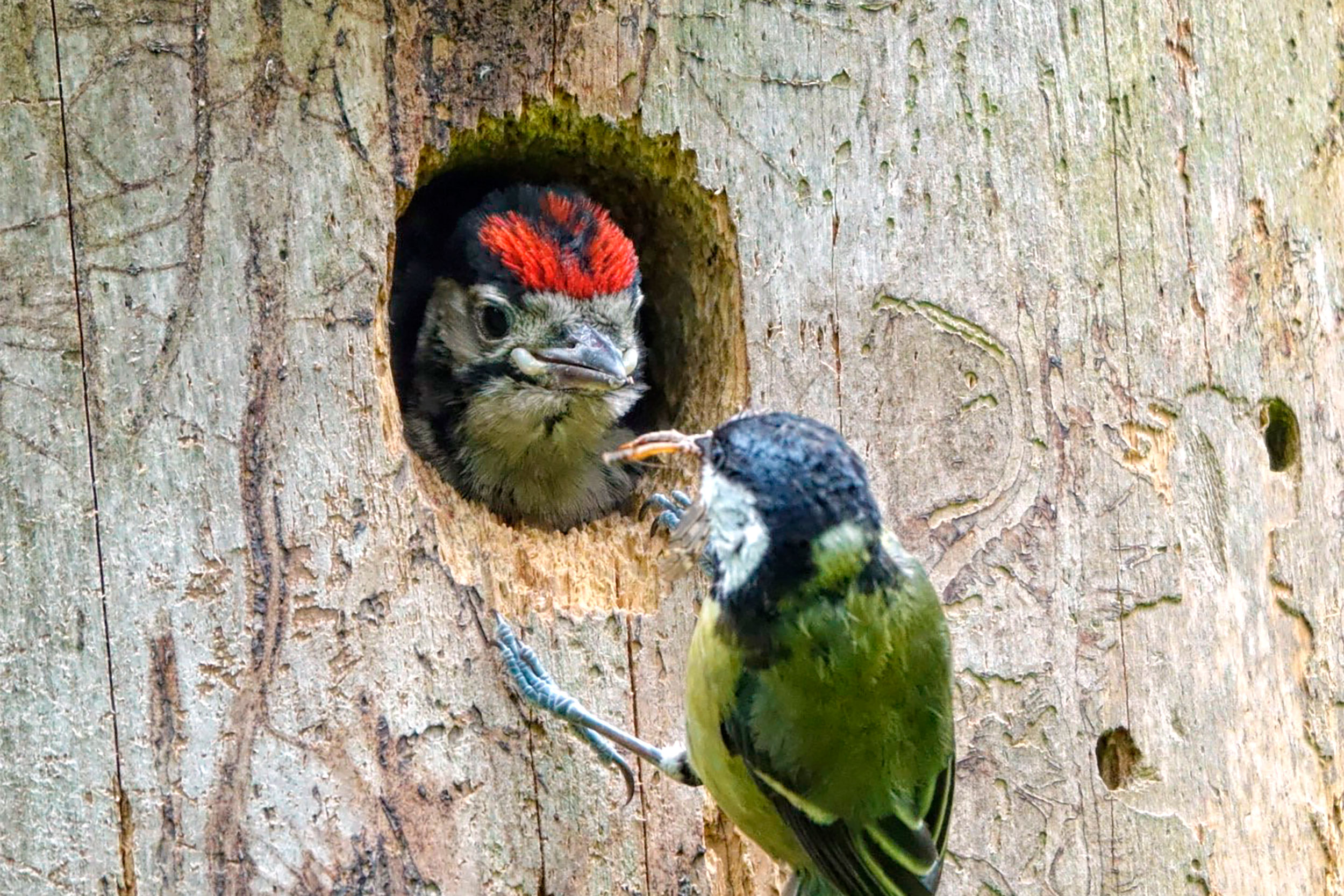
Great Tit feeding a Great Spotted Woodpecker. Photo: Ray Kennedy (rspb-images.com)
How to…
Keep water available for birds in winter
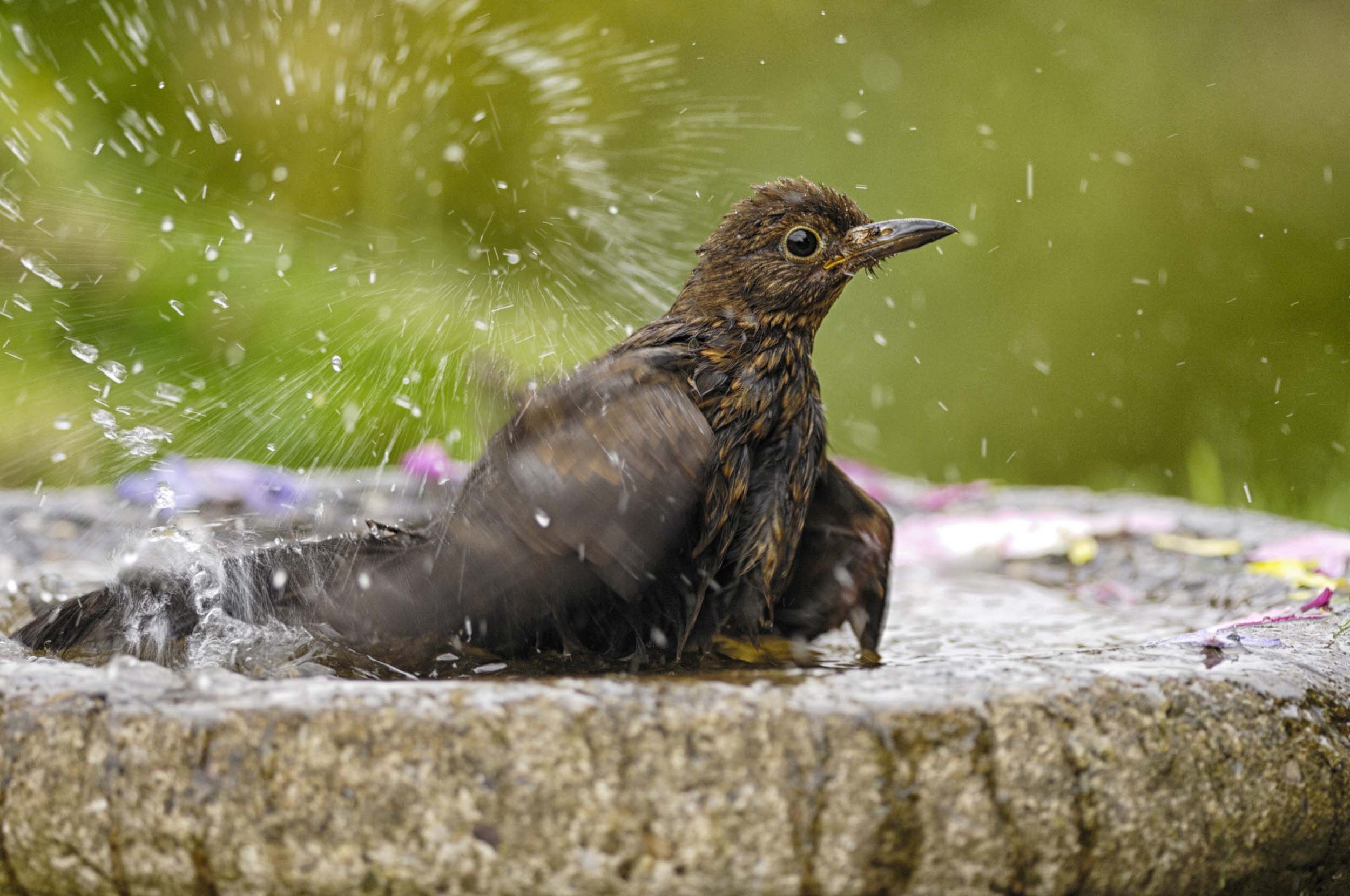
A juvenile Blackbird taking a bath. Photo: Ray Kennedy (rspb-images.com)
Why do flocks of Long-tailed Tits huddle together?
Victoria McCann
This is typical behaviour of Long-tailed Tits, especially at this time of year. In winter, they are more often seen travelling in flocks and visiting gardens for food. Due to their small size, they would be much more at risk from the cold if they roosted alone, so huddling together helps them survive the cold winter nights. Juvenile Long-tailed Tits (pictured below) roost together immediately after fledging; to begin with they all try to get into the middle of the roosting line, but once hierarchies are formed, individuals at the top of the hierarchy get the middle spots.
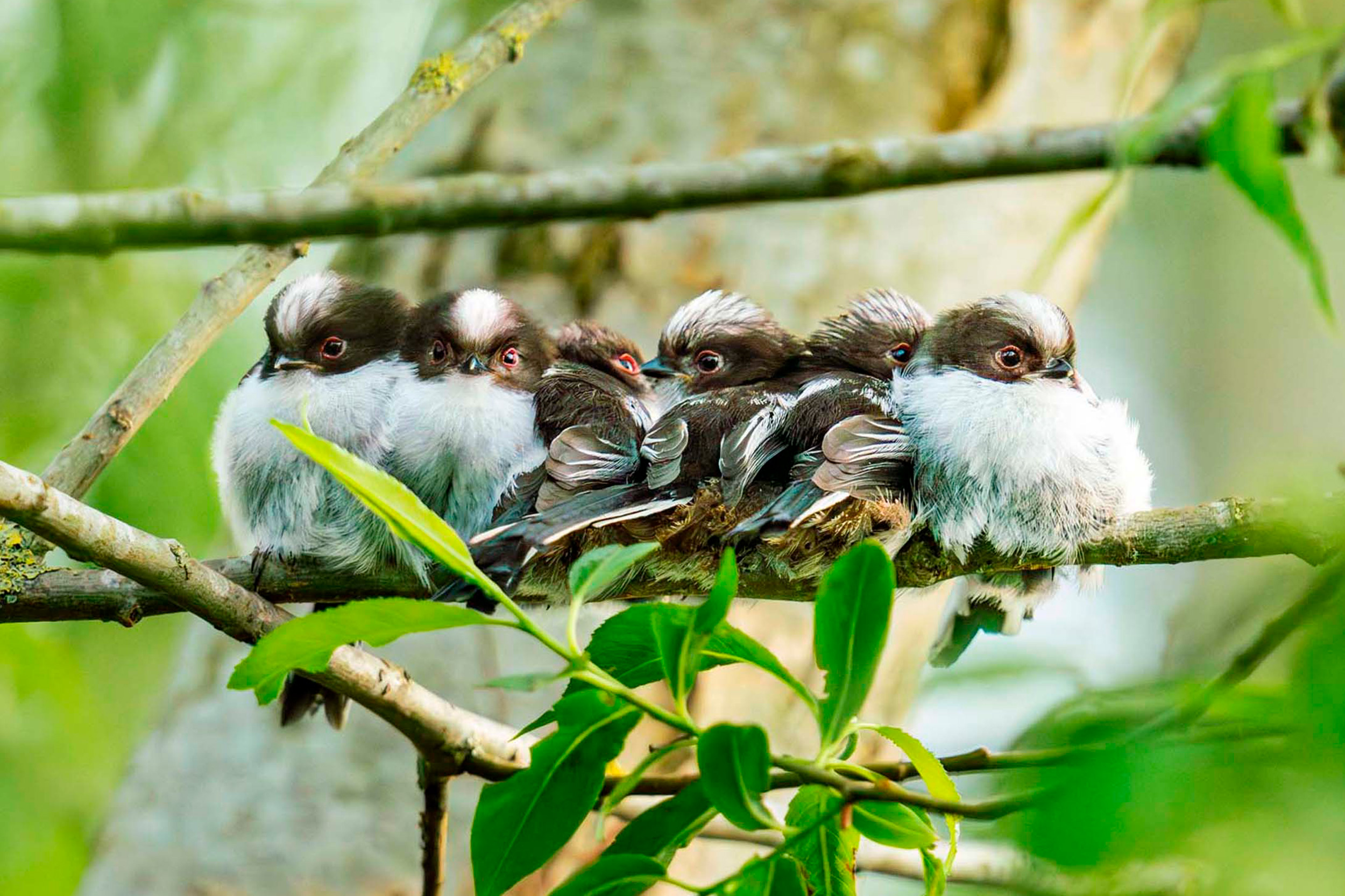
Juvenile Long-tailed Tits huddle together. Photo: Alan Harbottle (Alamy Stock Photo)
Have you ever wondered if woodpeckers get a headache while drumming?
It used to be a widely held belief that spongy bone in the front of woodpeckers’ skulls and the muscles around the lower beak act to cushion their brains when drumming. These biological shock absorbers have inspired the engineering of shock-absorbing materials and products such as helmets.
However, a recent study by researchers who analysed Black, Pileated and Great Spotted Woodpeckers (pictured below) showed that their skulls do not protect their brains as previously thought.
The researchers found that the birds’ bills and heads stop at the same time on impact, meaning both experience the same force. The birds’ skulls were found to act like a stiff hammer when they were drilling.
Scientists have long been intrigued by the conundrum of how woodpeckers can drill with such force and still protect their brains. A shock-absorbing mechanism in the skull would make it harder for the birds to peck into wood to drill for food and create nest cavities. The energy from the impact would be dispersed in the spongy bone in the skull, making the behaviour less energy efficient. Using your head like a hammer seems to be more efficient.
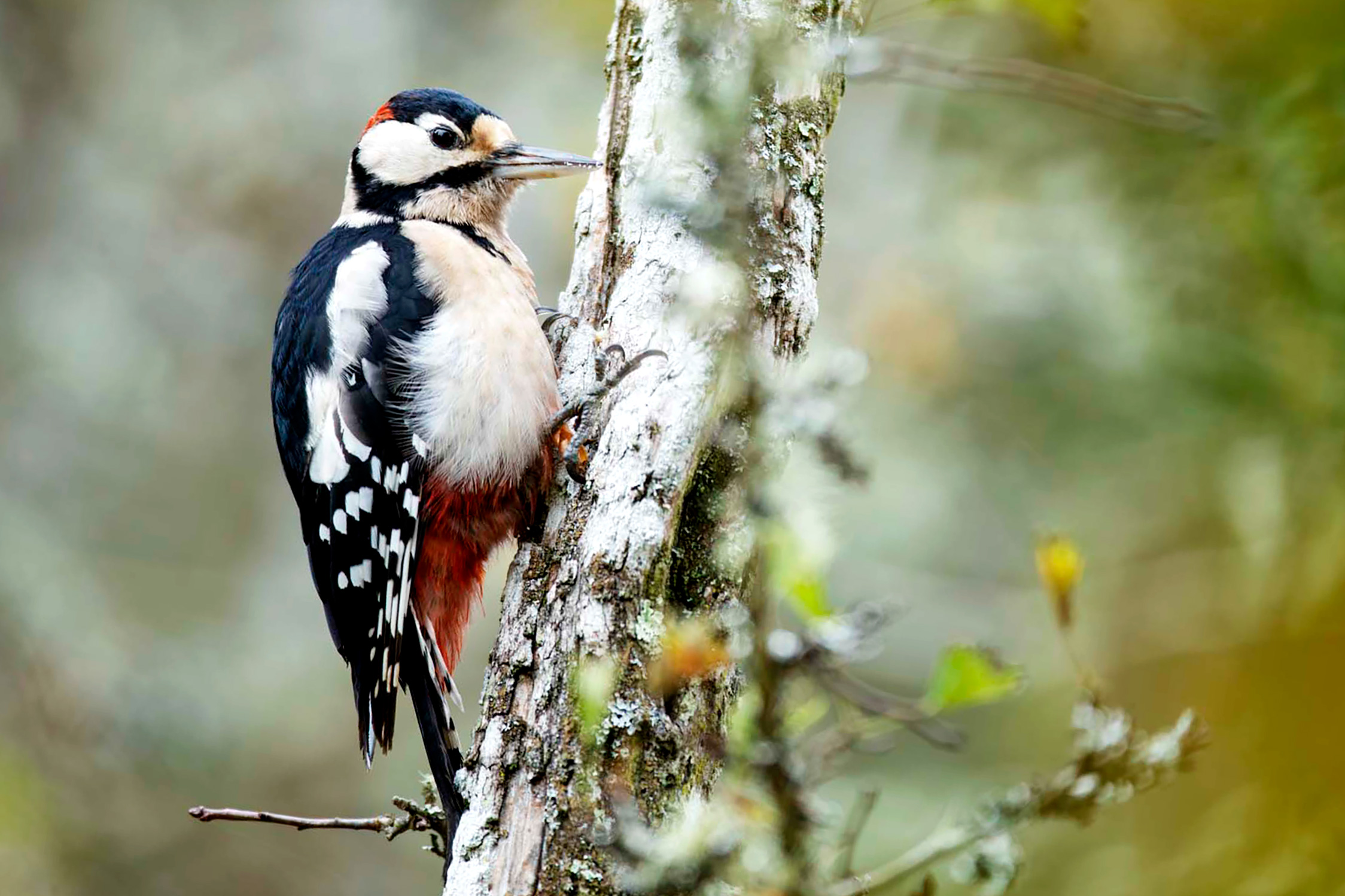
Great Spotted Woodpecker. Image: Ben Andrew (rspb-images.com)
Which is which? Rabbit vs Brown Hare
In the UK we have rabbits and hares, which are a familiar sight across our countryside. Both species have become naturalised. Rabbits were introduced by the Normans and the Brown Hare by the Romans, and both belong to the family, Leporidae. The two can be confused but have key defining features that make them easy to tell apart. We also have the Mountain Hare, native to the Scottish Highlands, whose grey-brown fur turns white in winter. The Irish Hare, a subspecies of the Mountain Hare found in Ireland, has red-tinged brown fur.
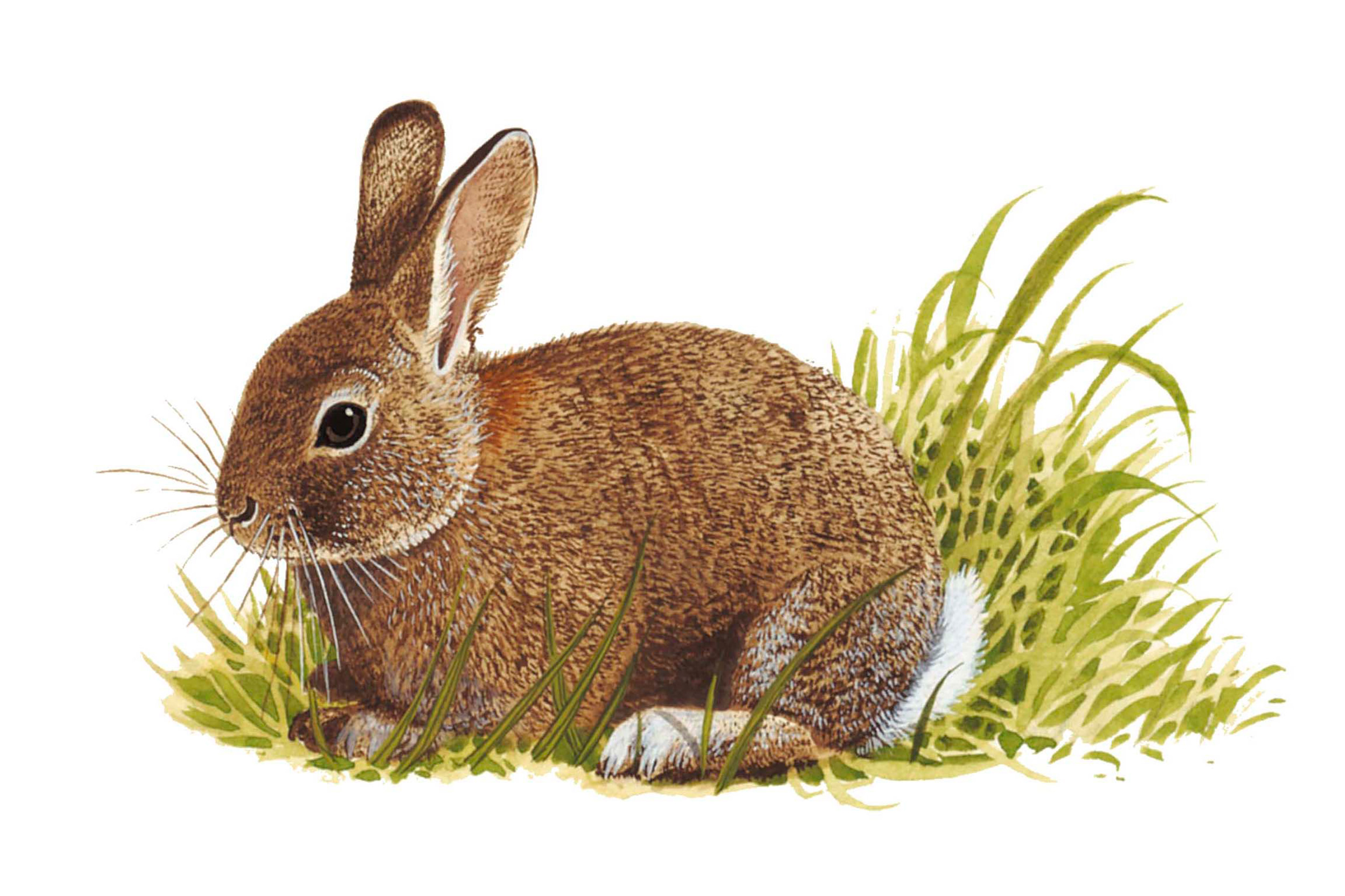
Rabbit
- Small, usually only reaching 40cm in length
- Grey, brown fur
- Shorter ears
- Dark brown eyes
- Classic cotton-ball like tail
Illustration: Chris Shields (rspb-images.com)
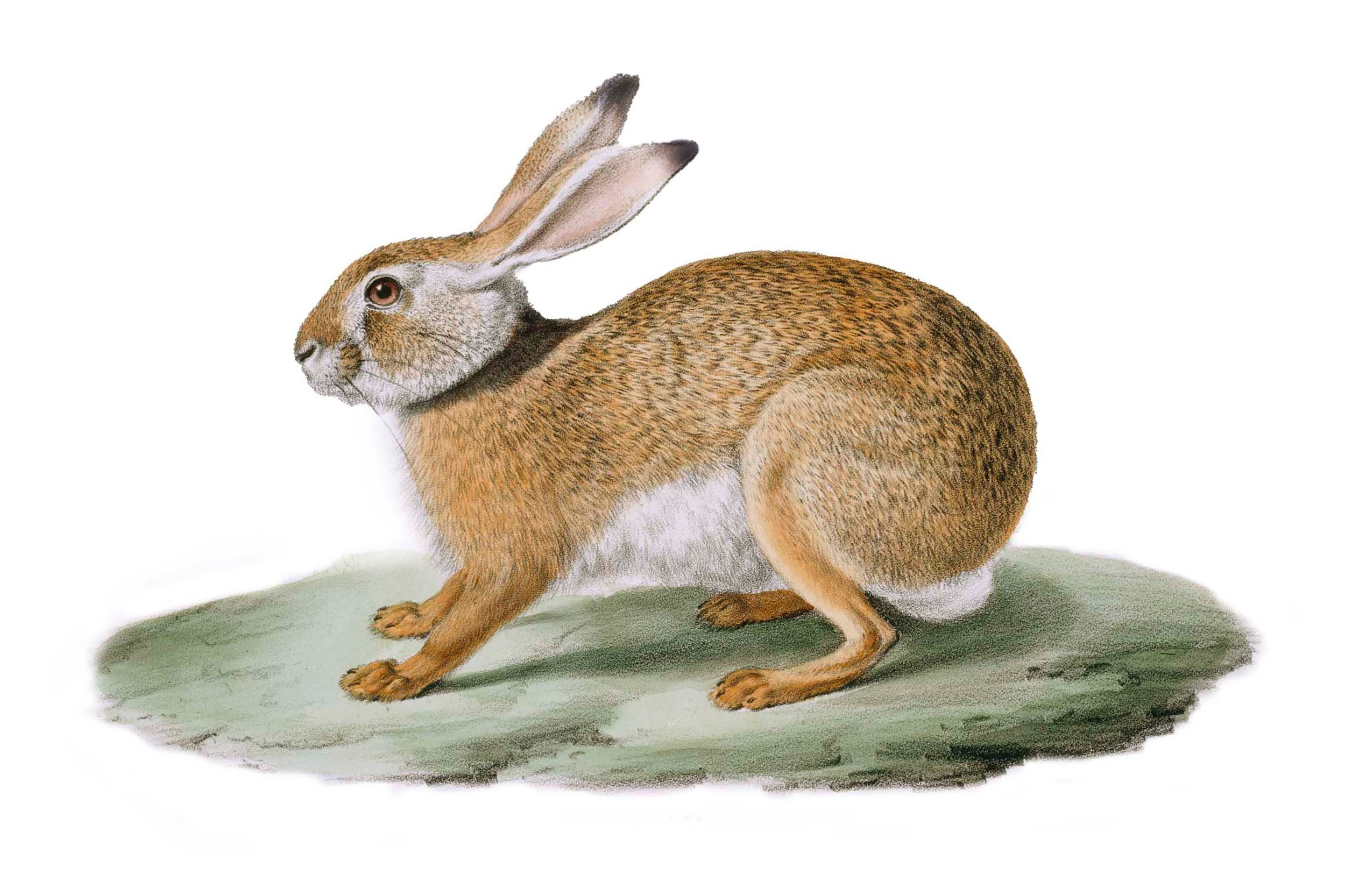
Hare
- Large, up to 70cm in length
- Golden-brown fur with a pale belly
- Long ears with black tips
- Amber eyes
- Tail is two toned, with white underside and black top
Illustration: The Natural History Museum (Alamy Stock Photo)

Send us your questions
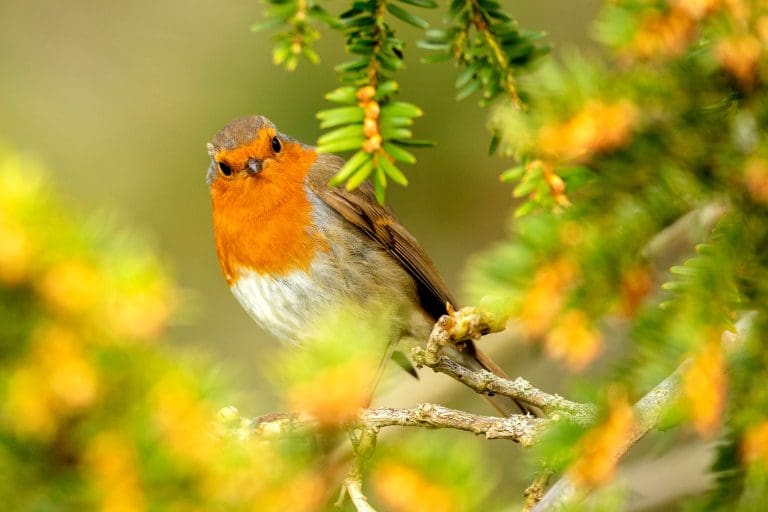
Robin. Photo: Ben Andrew (rspb-images.com)
You might also like
Your questions – winter/spring 2025
Shop highlights this season