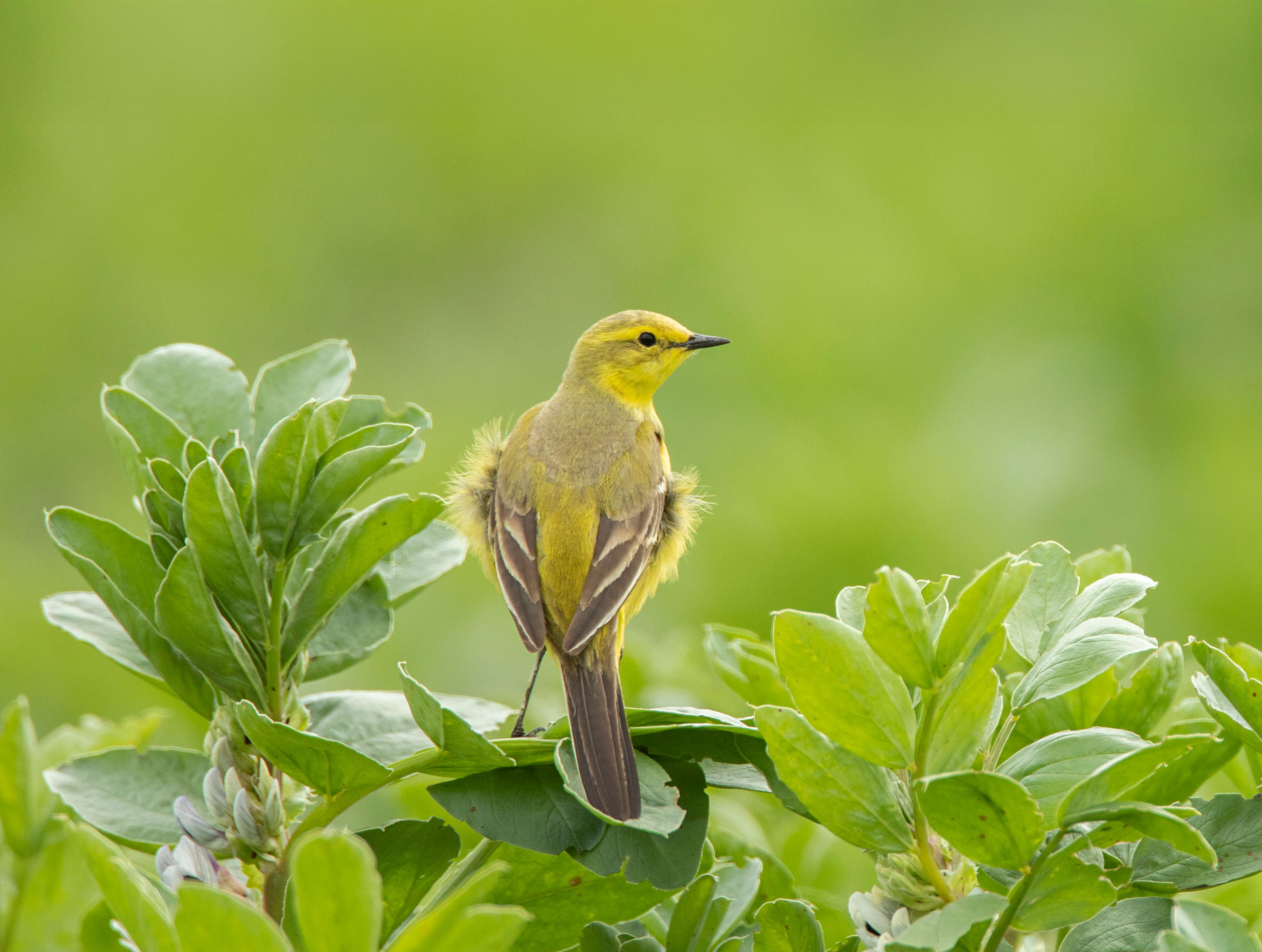
With its characteristic dancing tail, yellow and grey plumage and pointed beak, you may easily confuse the Yellow Wagtail for its more common cousin, the Grey Wagtail. Closer inspection reveals striking differences. In fact, Yellow Wagtails are one of Europe’s most variable bird species – with about 10 subspecies recognised, all with different plumage and colouration.
Unlike other wagtail species – which are resident here in the UK all year round – the Yellow Wagtail migrates, spending winter in the warmer climes of Sub-Saharan Africa. In fact, as you read this, the first Yellow Wagtails may be dropping in off the sea – making their arrival on the south coast of England. From here, many continue north, heading for arable fields and wet ground across central and eastern England, Wales and southern Scotland.
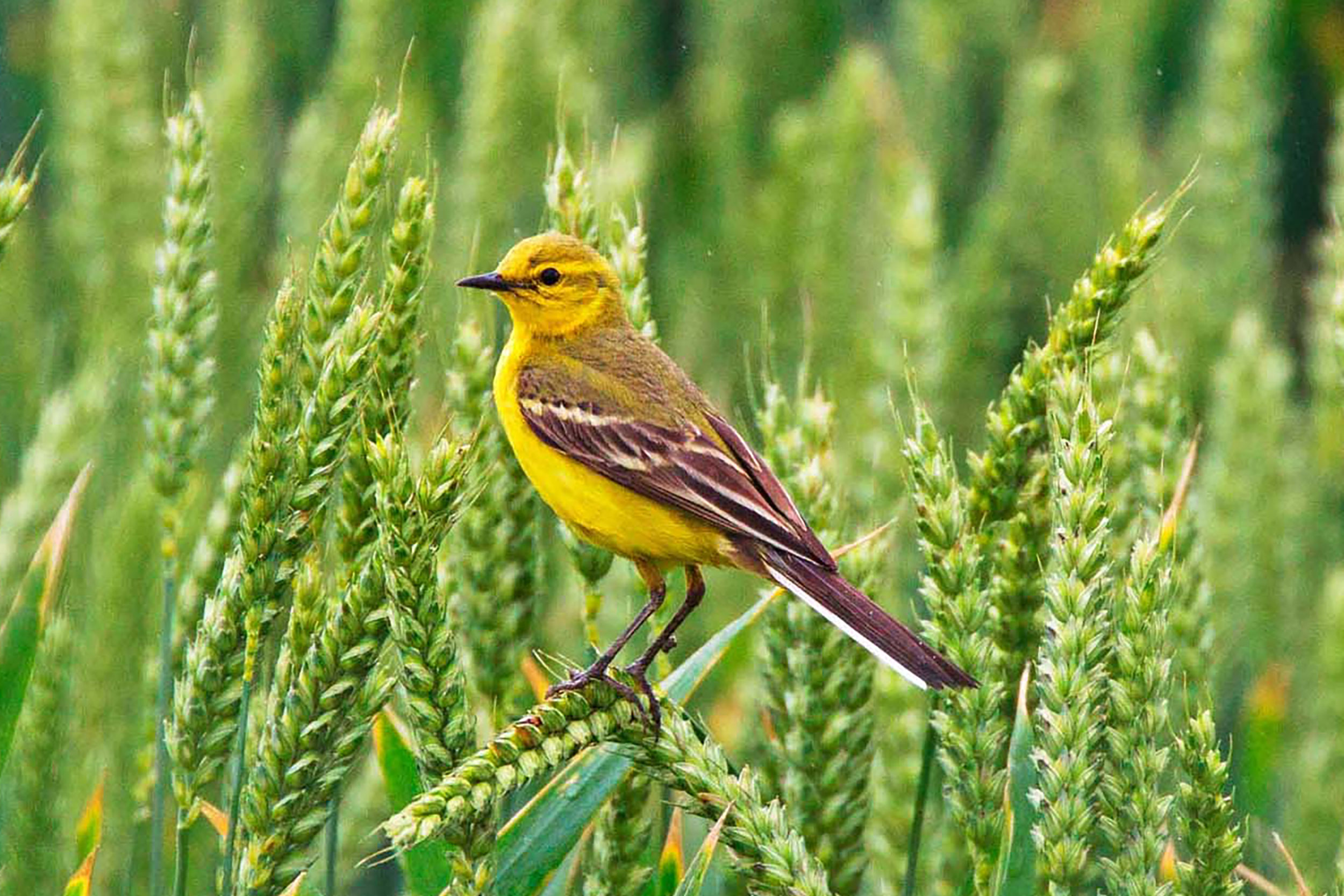
Yellow Wagtail. Photo: Blickwinkel (Alamy Stock Photo)
You may not associate wagtails with dry land – and you’d be right. The Yellow Wagtail has suffered an enormous decline of 78% since 1967, partly due to its favoured ‘wetter areas’ (such as floodplain meadows and unimproved grassland) being drained as farming intensified, forcing them to adapt to this new habitat. Pesticides too have had a huge impact, reducing the population of the invertebrate prey that Yellow Wagtails rely on so heavily.
Listen to the call of a Yellow Wagtail
However – for now – there are still enough of these wonderful, graceful little birds to surprise and delight birdwatchers across the country this coming spring. Listen carefully for their distinctive ‘trslie’ call as they brighten up a field or meadow near you.
You might also like
How the RSPB is looking after our garden birds
All about Swifts