Out of all our summer migrant birds, I would argue that Swifts are the most eagerly awaited returnees. The internet becomes ablaze with people regaling about the first sightings of Swifts over their neighbourhoods, cutting shapes through the skies. I too rejoice in their return. Ever since I was a child I wondered about their journeys and pondered over what these graceful birds saw on their migrations. I was even concerned as to whether they had got enough sleep!
We know a lot more about these birds now, even though we still have a lot more to learn. It is amazing to think that Swifts (known internationally as Common Swifts) belong to a family 109 species-strong that are found in almost all the corners of the world apart from Antarctica. Although all have the same basic design as the Swift we know, some are subtly different, having square-cut tails or slightly different shaped, though still scythe-like, wings.
Learn more about these fascinating birds and how to help them
The UK has only one regularly occurring species but, as a whole, the family ranges in size from the aptly named Little Swift to the needletails of Asia, some of whom approach the size of a small falcon. Speaking of which, the White-throated Needletail is often cited as the fastest animal in level flight, having been unofficially clocked ripping up the sky at speeds of up to 105mph. Incidentally, our very own Swift currently holds the confirmed level flight record of 69.3mph.
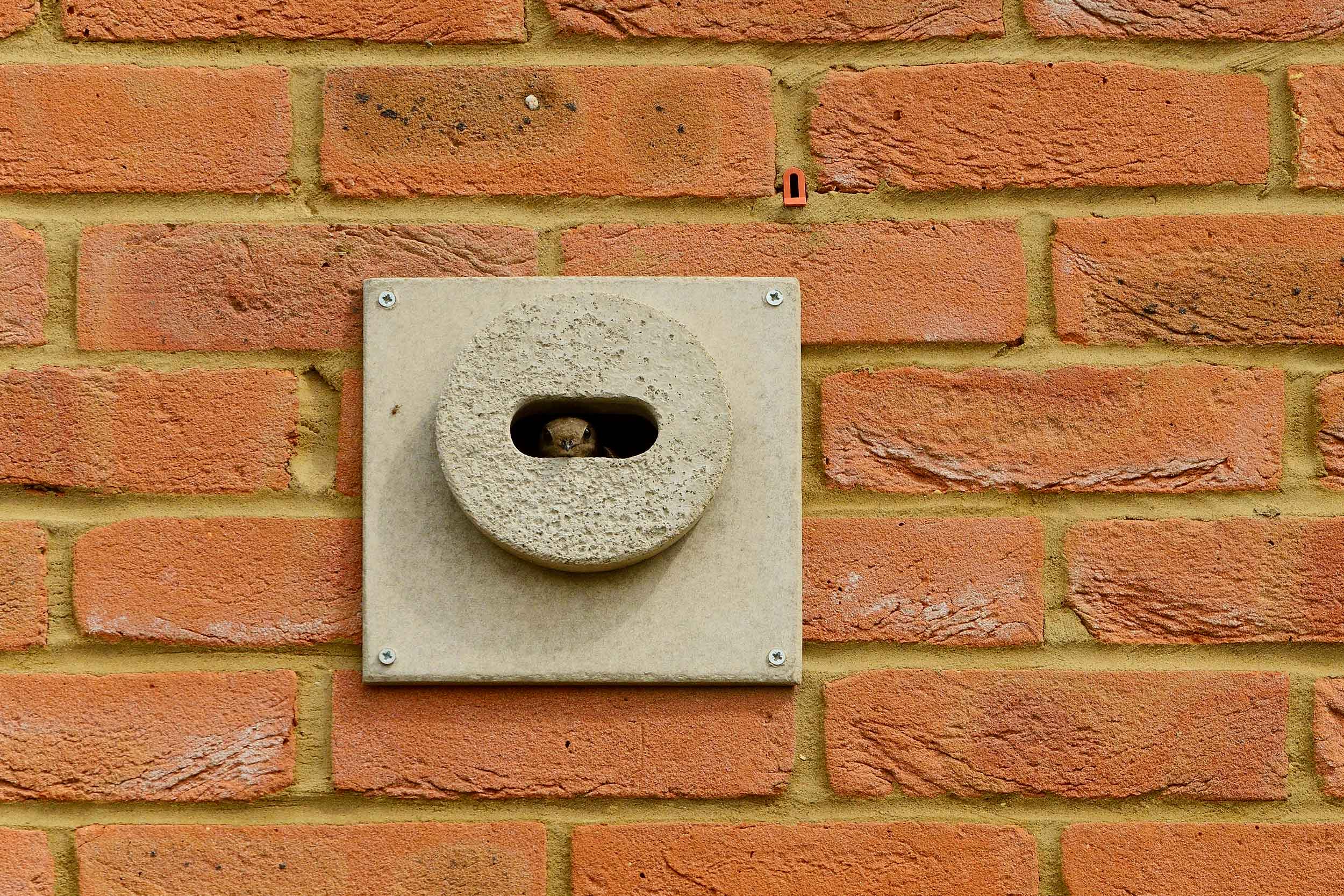
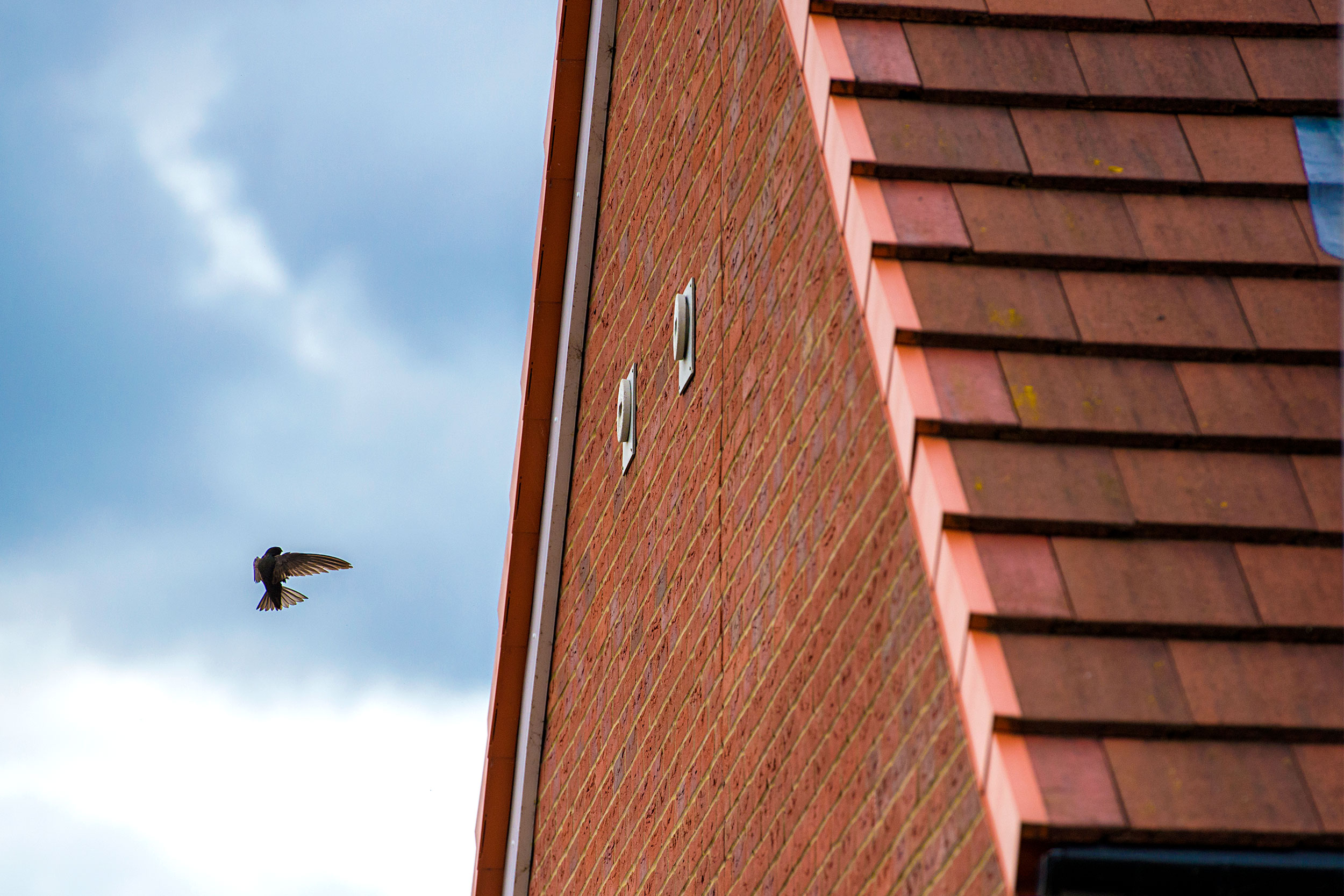
Specially created Swift nesting bricks are providing a lifeline to these vulnerable birds. Photo: Ben Andrew (rspb-images.com)
The subject of speed brings me neatly onto nesting. Practically all the swift family are cavity nesters, with a few species choosing to breed within our buildings. Herein lies a major problem. You will not need me to speak about the lack of nesting sites that Swifts are experiencing in our increasingly modern world. Moreover, when they do find suitable buildings, they are at the mercy of homeowners and builders who erect scaffolding smack bang in the middle of their breeding season.
I can understand the notion of making hay while the sun shines – who wants to do necessary building work during the wet and cold depths of winter? Unfortunately, the array of poles and platforms the scaffolding presents create an obstruction to the bird’s nests as Swifts fly at speed directly into their nest holes. They need a clear flight path because, unlike most other birds, Swifts cannot simply navigate around these insurmountable structures.
When they repeatedly can’t gain access to their nests the birds will desert their eggs and young. As birds with very strong site fidelity, they cannot simply move on and find another place to nest. And even if they could, in the UK and other highly developed Western European countries, they would face the ever-present issue of finding another suitable nesting site.
They need a clear flight path; unlike most other birds, Swifts simply cannot navigate around these structures
Work with your local Swift conservation group to plot where the birds are nesting in your area (or visit swiftmapper). If you have a neighbour who is unaware that their house is a Swift nesting site, perhaps inform them before they ever need to do any work. Hopefully, this will be enough to make them mindful of the birds’ survival. If they choose to ignore you and moodily start erecting scaffolding, have a chat with the building company. Perhaps remind them that Swift nests, along with all other wild birds’ nests, are protected under the Wildlife and Countryside Act 1981.
Many builders and scaffolders may be totally unaware of this matter and will, hopefully, welcome being enlightened. So, let’s all keep looking out for our amazing Swifts.

Celebrate Swifts
Swift Awareness Week is 27 June–5 July 2026, with talks, walks and other events being held. Get involved and learn more about these amazing birds.
You might also like
Creating bird-friendly cities and communities
All about Swifts