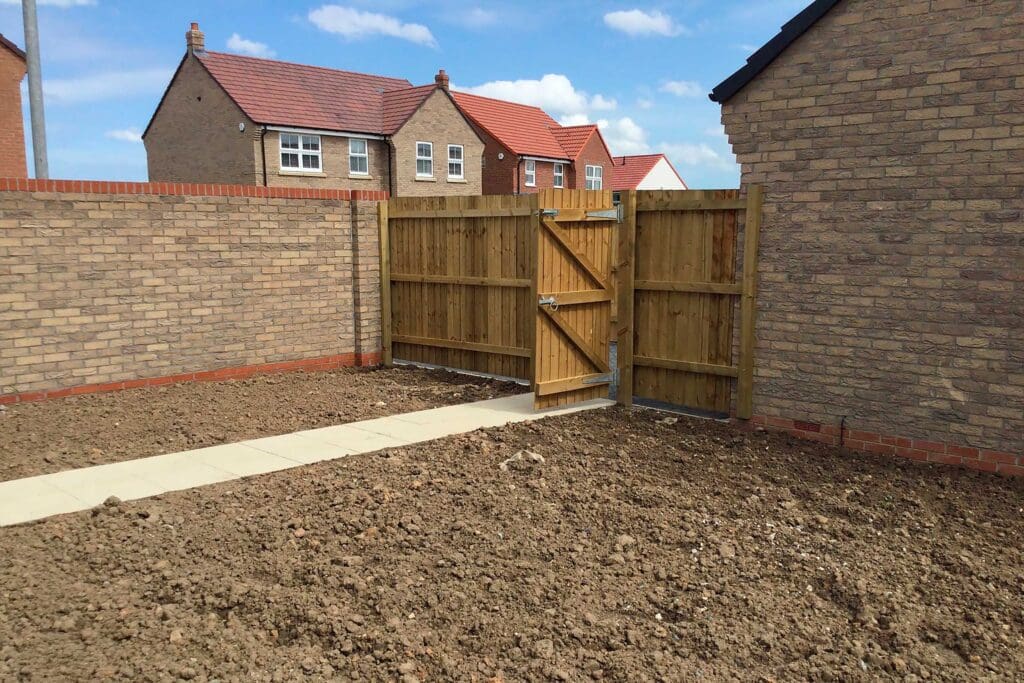
When Andrew Jackson bought his new-build house in Yorkshire in 2021, the garden was a small square of bare clay, heavily compacted and surrounded by high, blank walls. “It was overlooked on every angle and felt like an empty goldfish bowl,” he says.
This is the prospect many people face when buying one of the thousands of new homes built each year. It is hardly an encouraging start for wildlife, or indeed homeowners, but Andrew saw it as an opportunity! He had always been passionate about wildlife. “I remember helping my dad ring birds in our garden, so I thought wouldn’t it be fantastic to have nature in our own space?”
However, in his own words, he didn’t know one end of a trowel from the other! Undaunted, he set about designing the garden. “My first step was thinking how to make it private,” he explains. “So, I planted the edges with trees and shrubs such as Portuguese Laurels and Chanticleer Pears. Because I wanted instant impact, I bought ‘big’!”
There are also two Crab Apples that extend the season for birds at both ends of the year with the early blossom and then the late-hanging fruit.
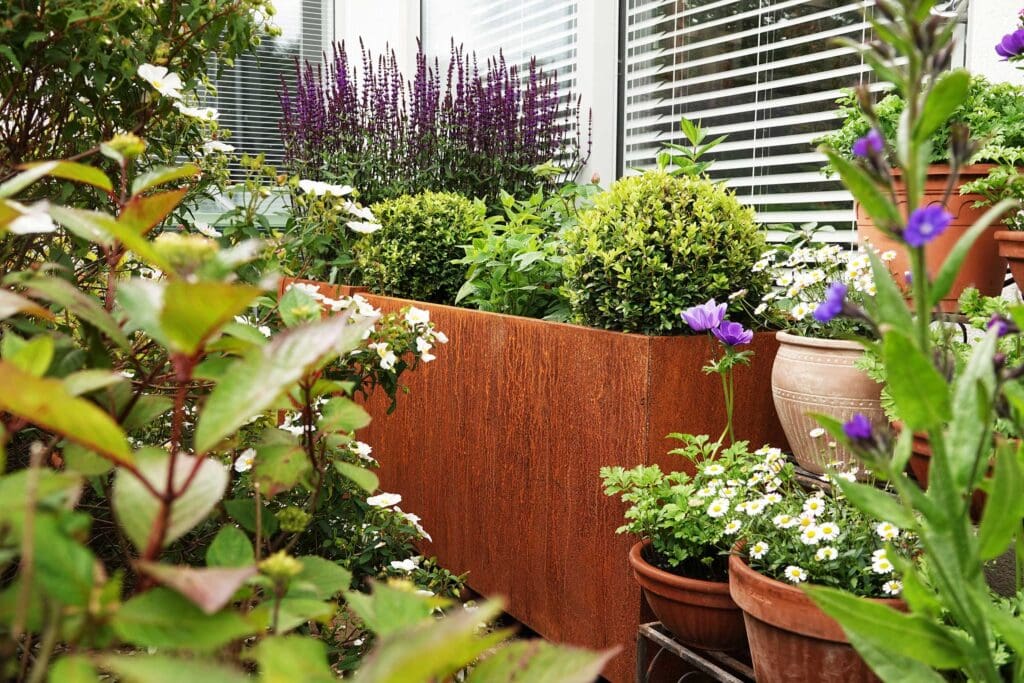
Within the garden are more shrubs. “They are massively underrated,” Andrew says. “They give brilliant all-year structure and seasonal changes.”
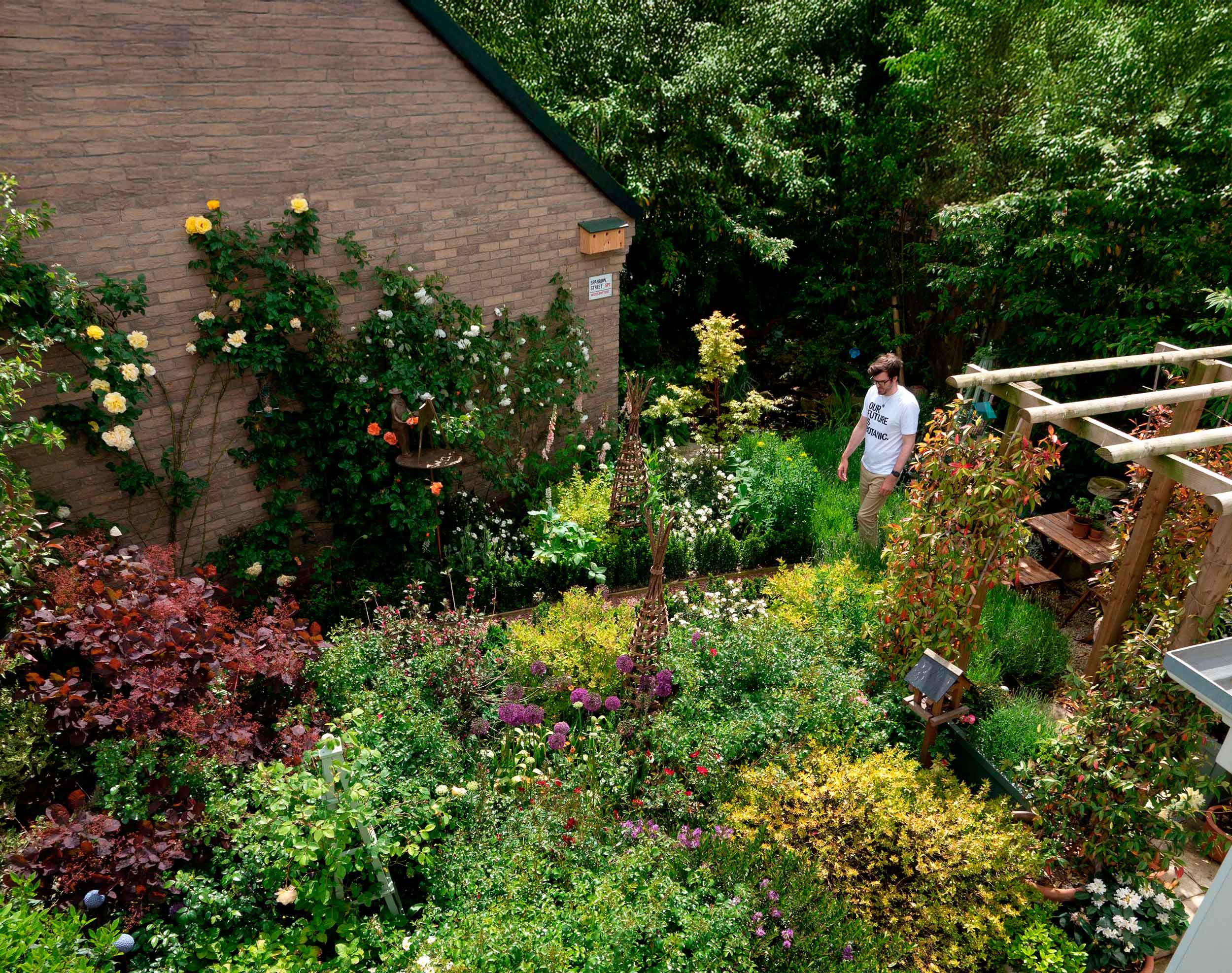
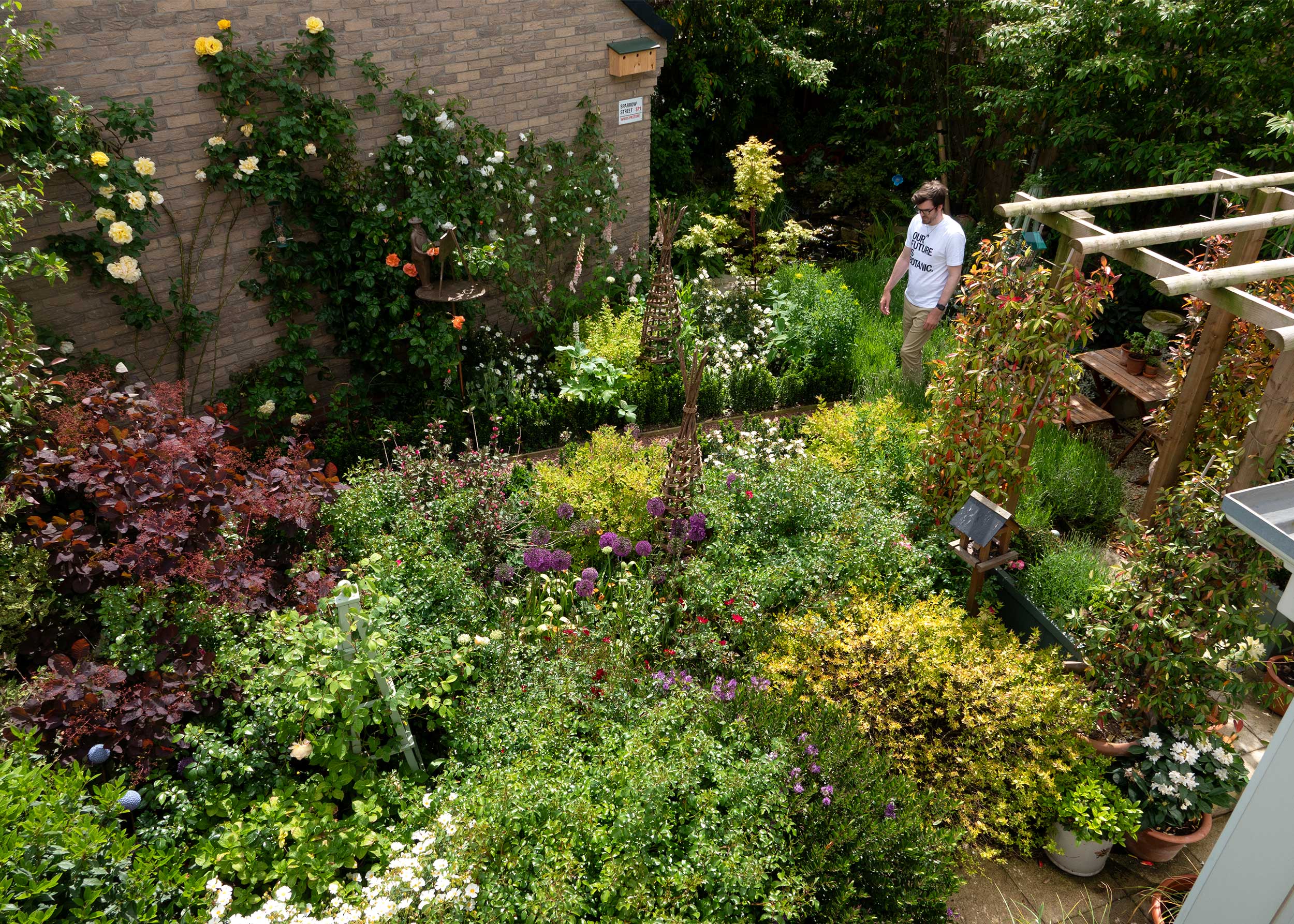
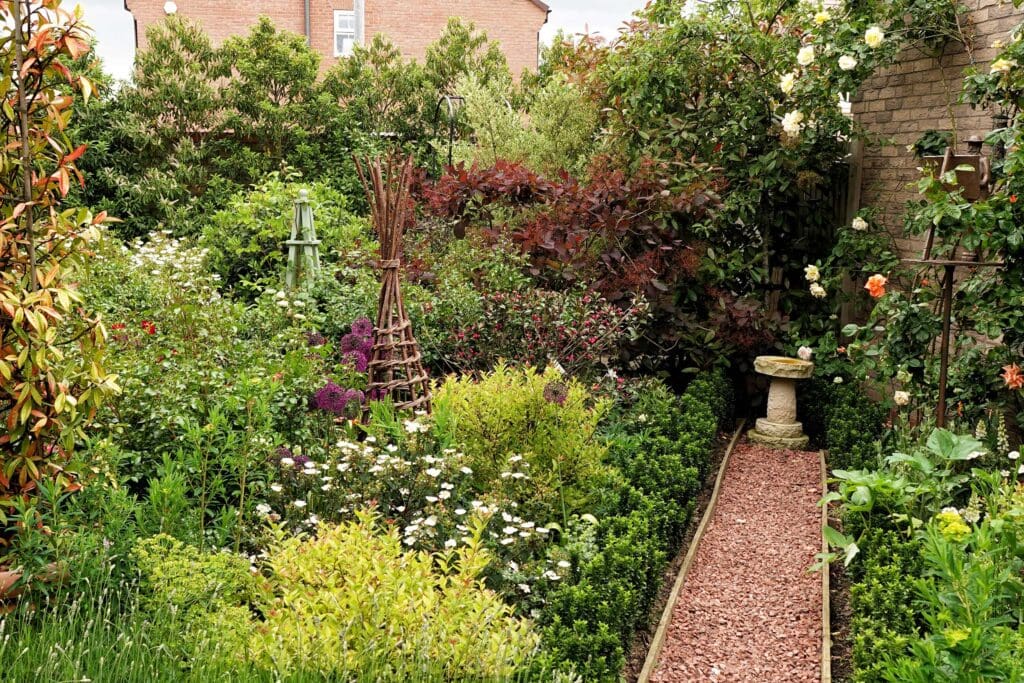
The pond was an important addition, and Andrew filled the rest of the garden with flowering plants, so much so that there is now very little ground to be seen, apart from a network of paths. The impact for wildlife has been astonishing. “It’s been so successful for birds that they get annoyed when I go out there,” laughs Andrew. “They feel it’s their space!”
At the time of my visit, the Blackbirds had already pulled off their first brood and were onto their second, and a Wren was busy in the thick cover. Andrew has flocks of up to 100 Starlings visit, plus 20 House Sparrows and two Grey Wagtails. The garden is also great for bees which converge on rosemary and lavender.
What Andrew couldn’t have foreseen is how this journey would lead to him launching a campaign to transform attitudes to new-build gardens. He calls it the ‘New-Build Manifesto’. Its essence is to encourage new homeowners to see the potential of their bare garden for wildlife, and for housing developers to do more to help new garden owners succeed. It chimes perfectly with the RSPB’s ongoing work in our major partnership with Barratt-Redrow.
Andrew’s new-found love of gardening for wildlife has even led to him designing a gold-medal-winning show garden at the Harrogate Flower Show this spring, followed by opening his own garden to the public. “And it all stems from seeing what wildlife a new-build garden can support,” he enthuses. “Knowing it is there because of what I’ve done is an amazing feeling!”
Follow Andrew on Instagram at @andrewjacksonwriter to see more of his incredible garden transformation.
Andrew’s top tips for a new-build garden
- Break up the work into sections. Take your time; do everything slowly and surely, not in one go.
- Think about what wildlife you would like to see. Birds? Frogs? Hedgehogs? You may end up attracting them all, but it is good to have a target to start with.
- Give yourself time to understand your space. I deliberately didn’t do anything for the first six months to see how the garden responds to light and sun.
- Take care when planting – it’s all about the right plant in the right place.
- Keeping it looking good takes far less time than you might think, so don’t be daunted, just get started!
How to…
Make a stream
Andrew’s pond features a delightful little stream cascading into it.
“Having water running has been so important,” he says. “Birds are in there every day to bathe. In winter it can get down to minus 12 degrees here, but the running water stays ice-free.”
Typically, these stream features use an electric pump to circulate water from the main pond via a hidden pipe up to the top of the cascade. It is more challenging to create than a pond – the skill is in hiding a pipe, making the cascade look natural, ensuring it is watertight, and ensuring the electrics are safely laid across the garden.
Andrew designed the pond and cascade but, having not installed one before, he employed specialist contractors to build it.
The sound of moving water can also be very relaxing for us, and the circulation can help keep the pond oxygenated and free of algae.
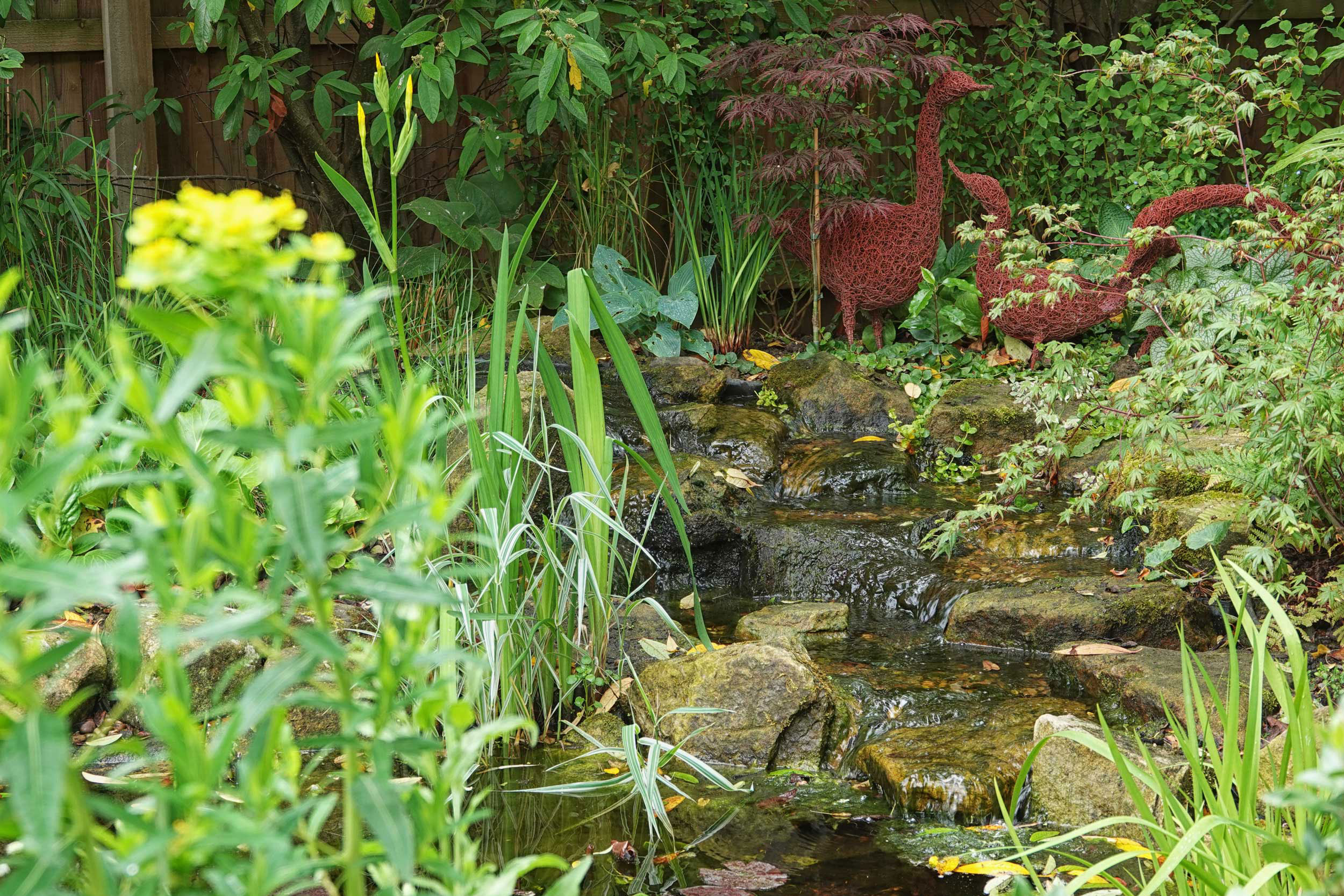
Although harder to construct, a water feature will stop algae from growing in your pond. Photo: Adrian Thomas
Wildlife gardening ideas: climbing frames
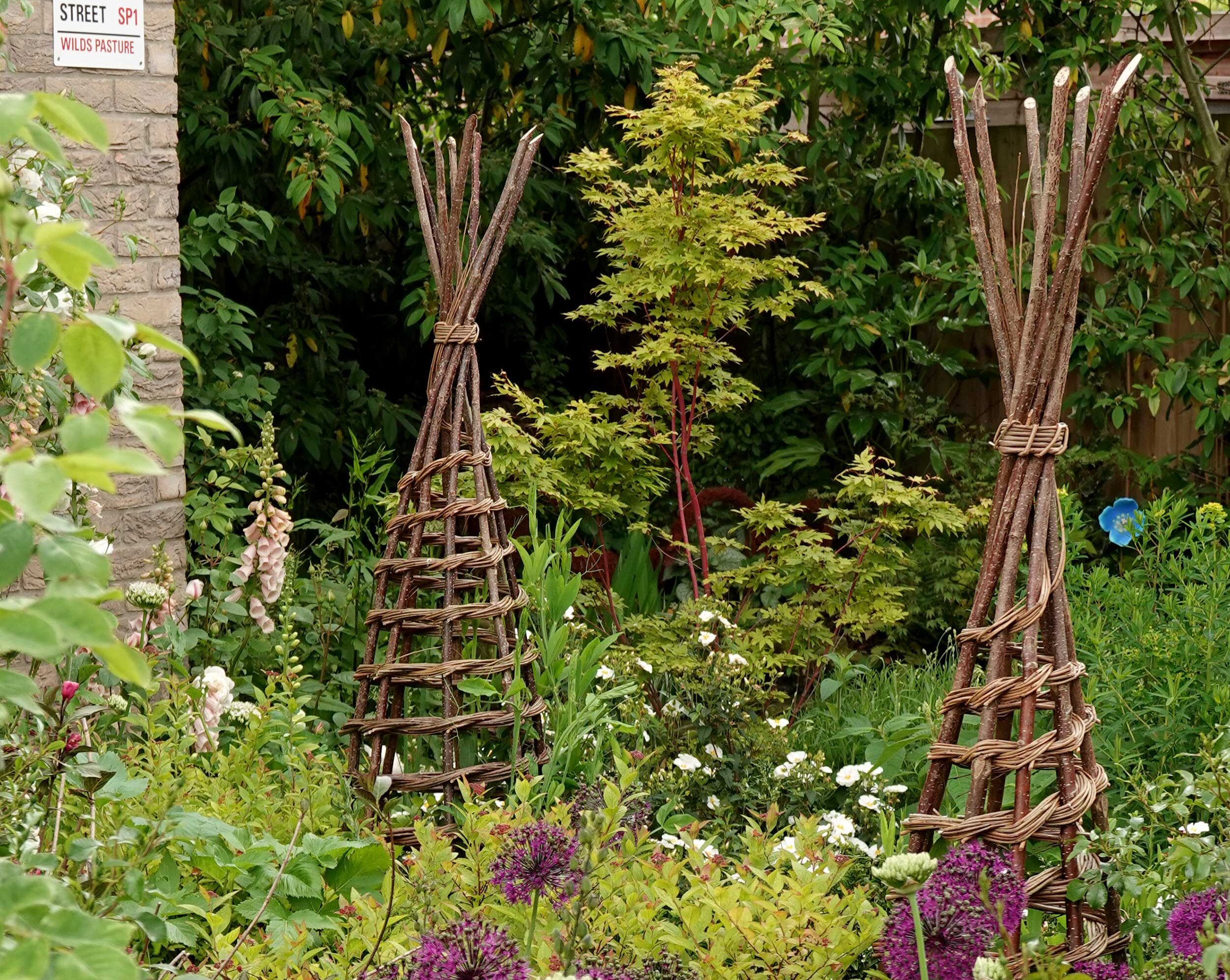
Many gardens are created to be perfectly flat, so providing plants with opportunities to climb requires some creative solutions.
Andrew uses a range of wigwam structures, which themselves look attractive and provide perches for birds. And, of course, he helps plants grow up the garden and house walls, including the roses pictured cloaking the garage here.
Wigwams can be expensive to buy, so it is worth exploring ways to make your own. A few bamboo canes or Hazel or willow stems tied together look pleasantly rustic.
Try growing sweet peas, runner beans, Honeysuckle and Hop, which will all deliver value for wildlife.
What to grow
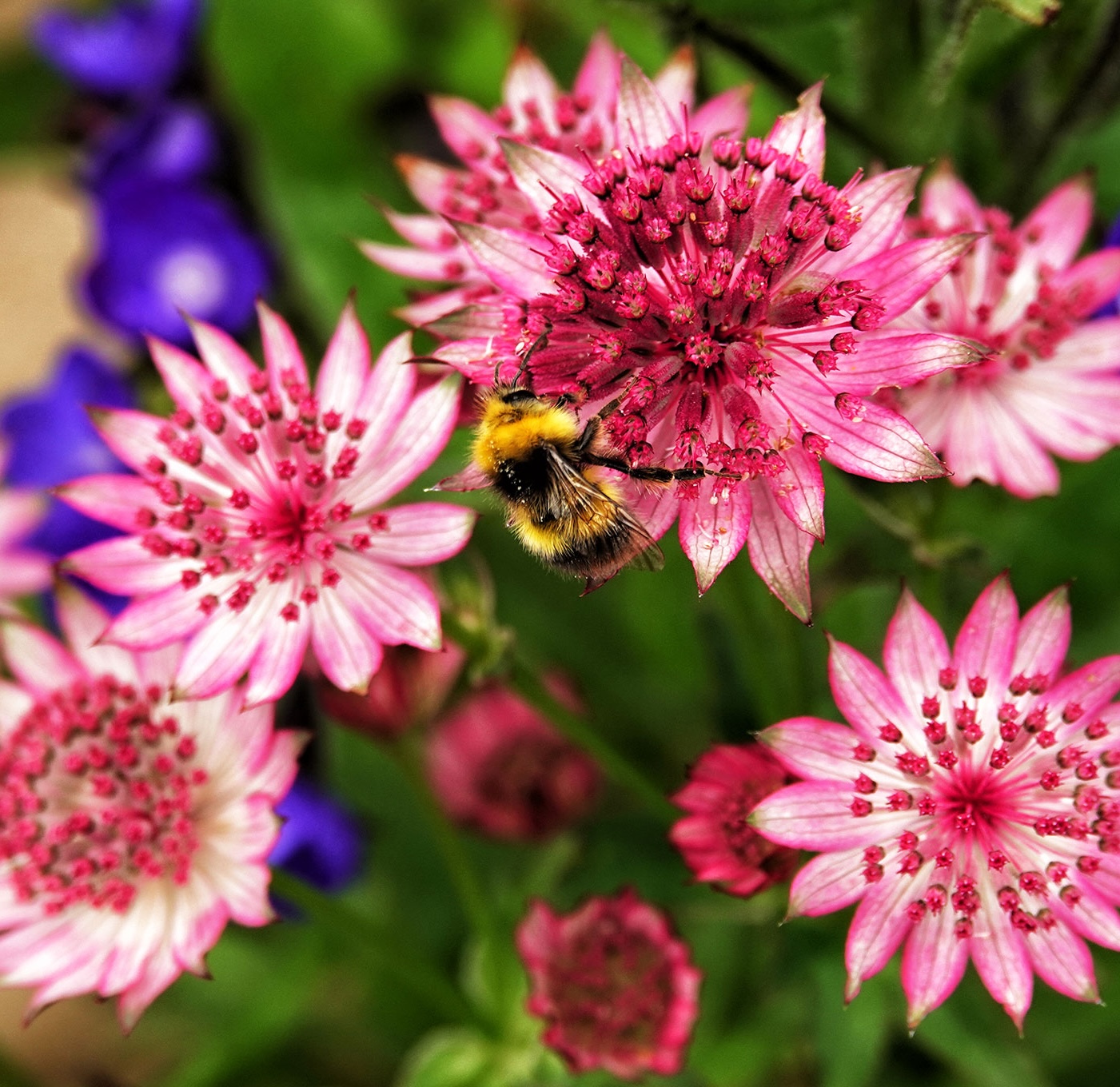
‘Astrantia’ – a constellation of stars to attract the pollinators. Photo: Adrian Thomas
Masterwort Astrantia
- This pink flower is typically known by its scientific name, Astrantia.
- The name comes from the Latin word ‘aster’ meaning ‘star’ – for obvious reasons!
- It grows to about 75cm (2.5ft) tall and flowers from June to August.
- It is a herbaceous perennial, the leaves dying back in autumn but then fresh growth coming back up from the roots in spring, with each clump gradually expanding over time.
- Its origin is in mainland Europe, where you can find several species growing in open alpine woods.
- The wild species tend to have white flowers, but growers have bred varieties that are much pinker, with popular varieties including ‘Roma’ and ‘Ruby Wedding’.
- It doesn’t like conditions too dry or wet, nor too sunny or shady, so give it somewhere nice and average!
- It is a very good plant for pollinators, including bumblebees and solitary bees.
- Andrew has paired it beautifully with the rich purple-blue flowers of Anchusa azurea, another perennial from Europe, this time from Mediterranean countries such as Italy.
Spotlight on: Blackbirds
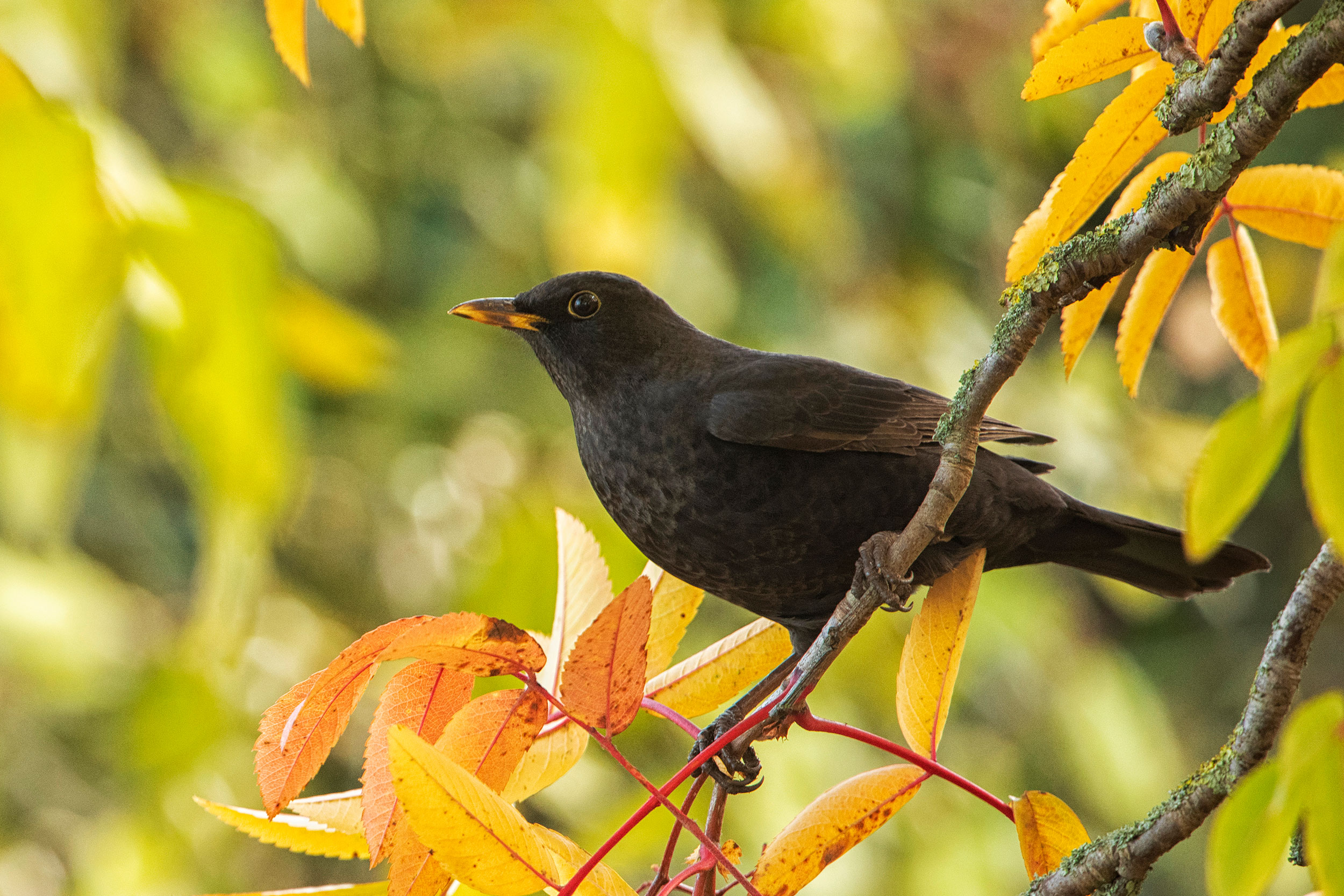
A male Blackbird. Females are brown, with brown to yellow beaks. Photo: RSPB/Ben Andrew
The Blackbird is one of the UK’s most familiar birds, and often is endearingly tame. Most UK Blackbirds are resident and highly sedentary.
However, in winter they are joined by an influx of continental Blackbirds from the low countries and southern Scandinavia.
They feed on insects and worms, berries and fruit, often feeding on the ground, so their ‘home needs’ are a mix of bare ground, leaf litter and short grass, plus the thick cover of trees and bushes. They raise two or three broods between March and July.
In some parts of the UK, Blackbirds are now suffering from a disease caused by the mosquito-bourne Usutu virus. First noted in London in 2020 and recently identified in Scotland in April 2026, it is often fatal for them and is causing populations in affected areas to fall.
It remains to be seen whether the impact will be short-lived or whether this is going to have a major national impact.
Your letters: garden therapy
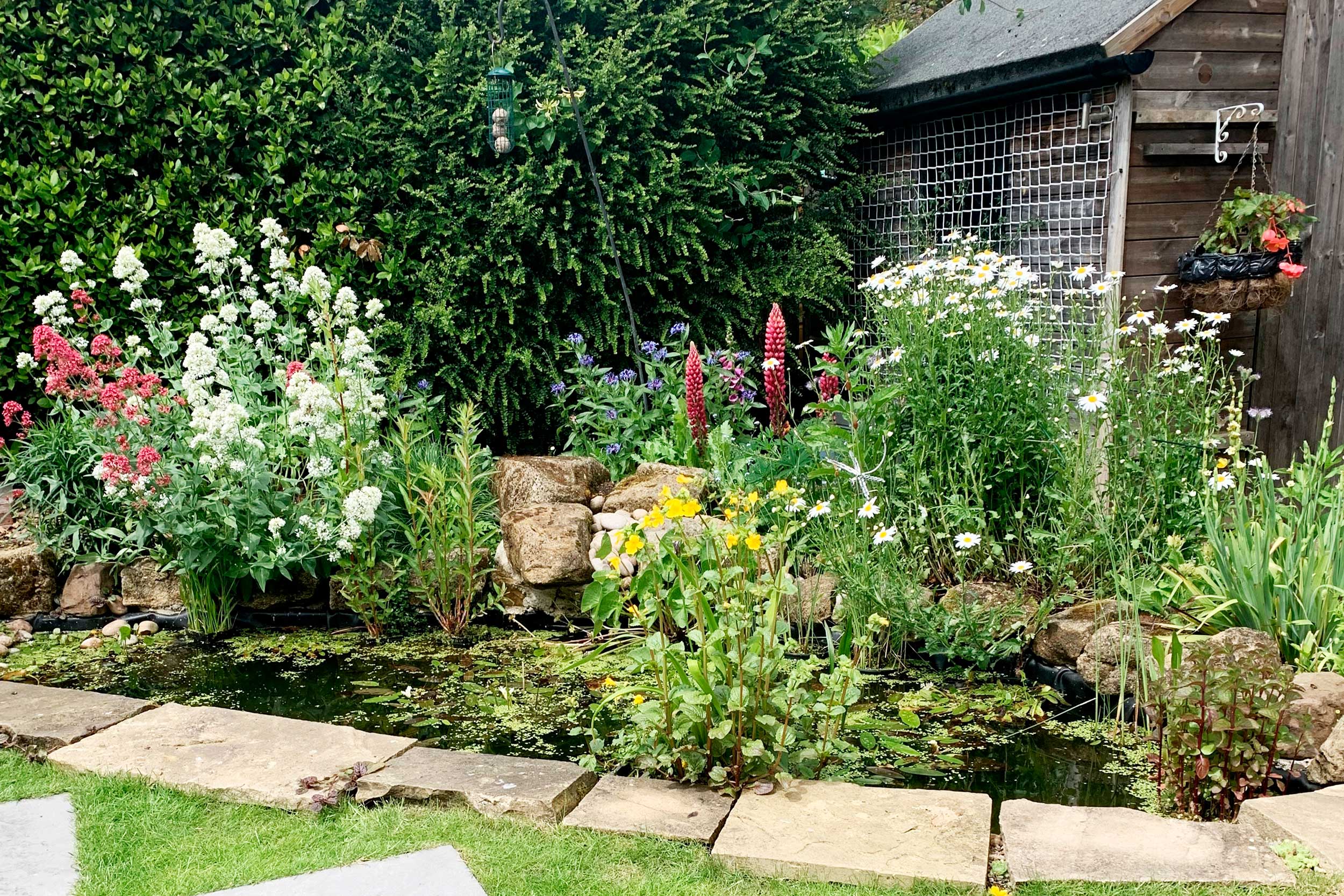
The installation of Phil and Rose’s pond has brought a pleasing variety of wildlife to their garden. Photo: Phil Dykes
My wife and I moved house in January 2024 and have planted our small front and back gardens with wildlife in mind. Unfortunately, I am somewhat restricted by Parkinson’s disease and now spend increasing amounts of time sitting watching the garden and the wildlife within it. However, it gives me the opportunity to continue birdwatching. We were keen to have a pond to encourage wildlife. By September 2024 the job was done and, since then, the flora and fauna have been building up nicely.
The pond was heaving with frogs earlier in the year and now contains a good population of tadpoles. We put in Ramshorn Snails, but back-swimmers, pond skaters and water beetles have all found their own way there, as have Smooth Newts. We have had Common Darter dragonflies laying eggs which was very exciting. Last year a male Broad-bodied Chaser hung around for a few days, and Southern Hawker was also a regular visitor.
Brimstone butterflies have been regularly passing through the garden, so we have planted two buckthorn trees for their caterpillars. Orange-tip, Red Admiral, Painted Lady and Comma are among the 11 butterfly species spotted to date. The garden and its wildlife is so important for both of us.
Phil and Rose Dykes
Adrian says: Phil and Rose’s story is a powerful reminder of just how valuable our gardens are, for wildlife and for us.

What’s going on in your garden?
If you have been creative for wildlife in your garden, we’d love to see your efforts, whether it be unusual nest boxes, grand bee hotels, or stick and log art taken to a new level.
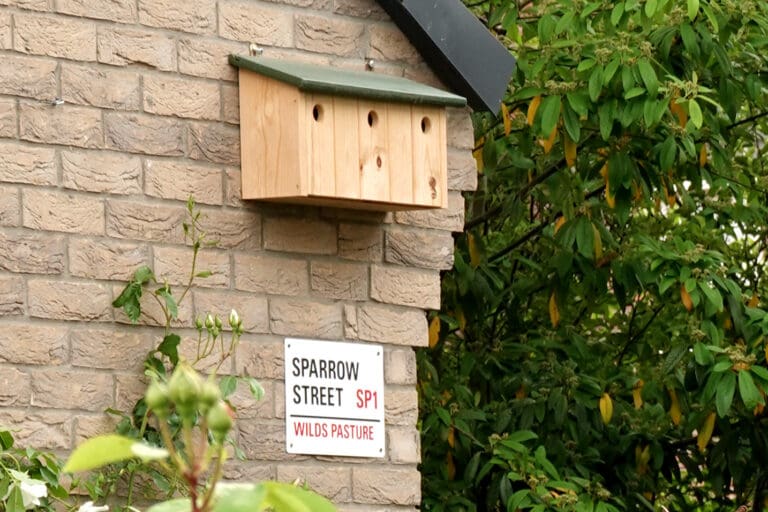
Andrew added a little humour to his back garden. Photo: Adrian Thomas
You might also like

How to photograph garden birds

Wildlife gardening: keeping it simple