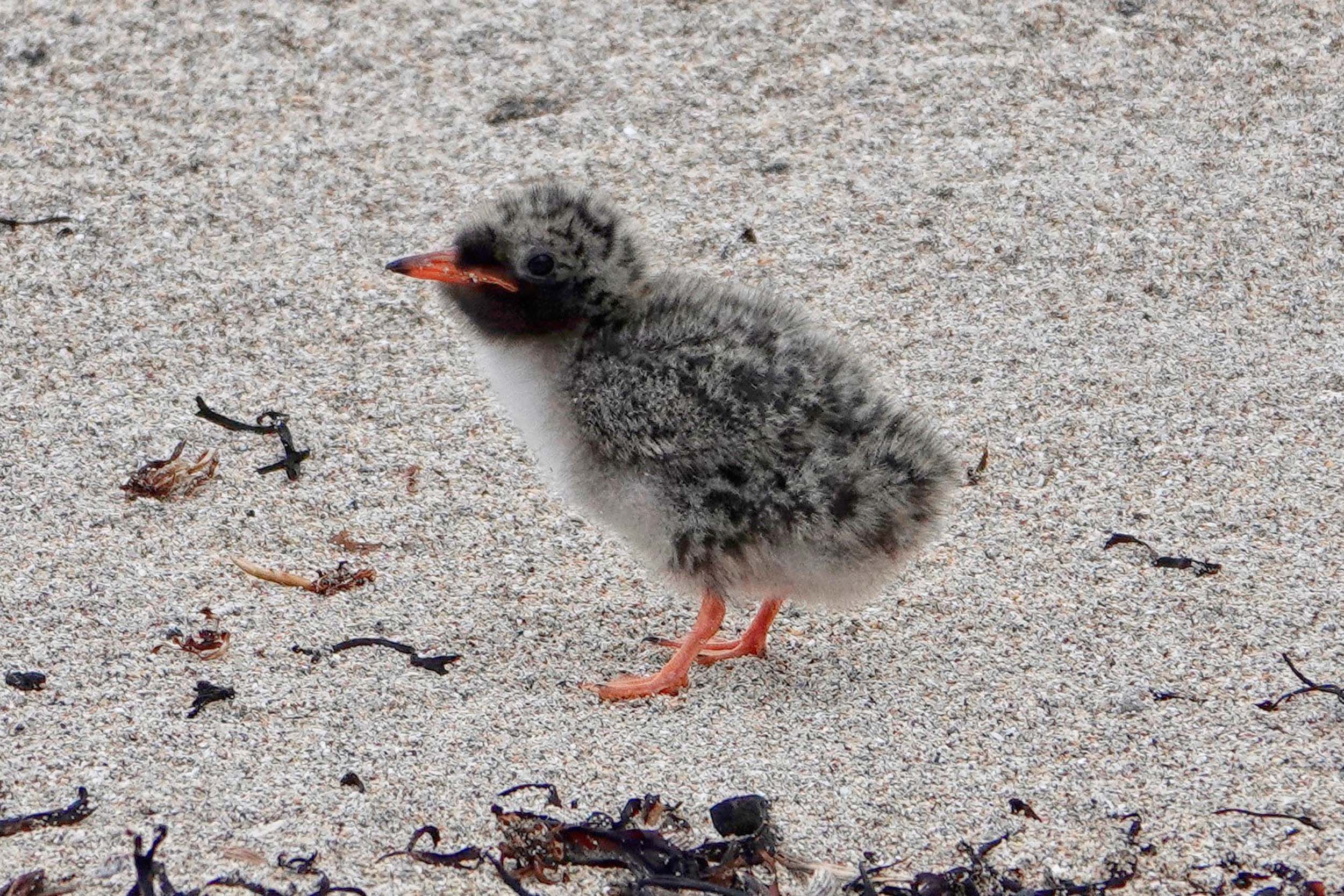
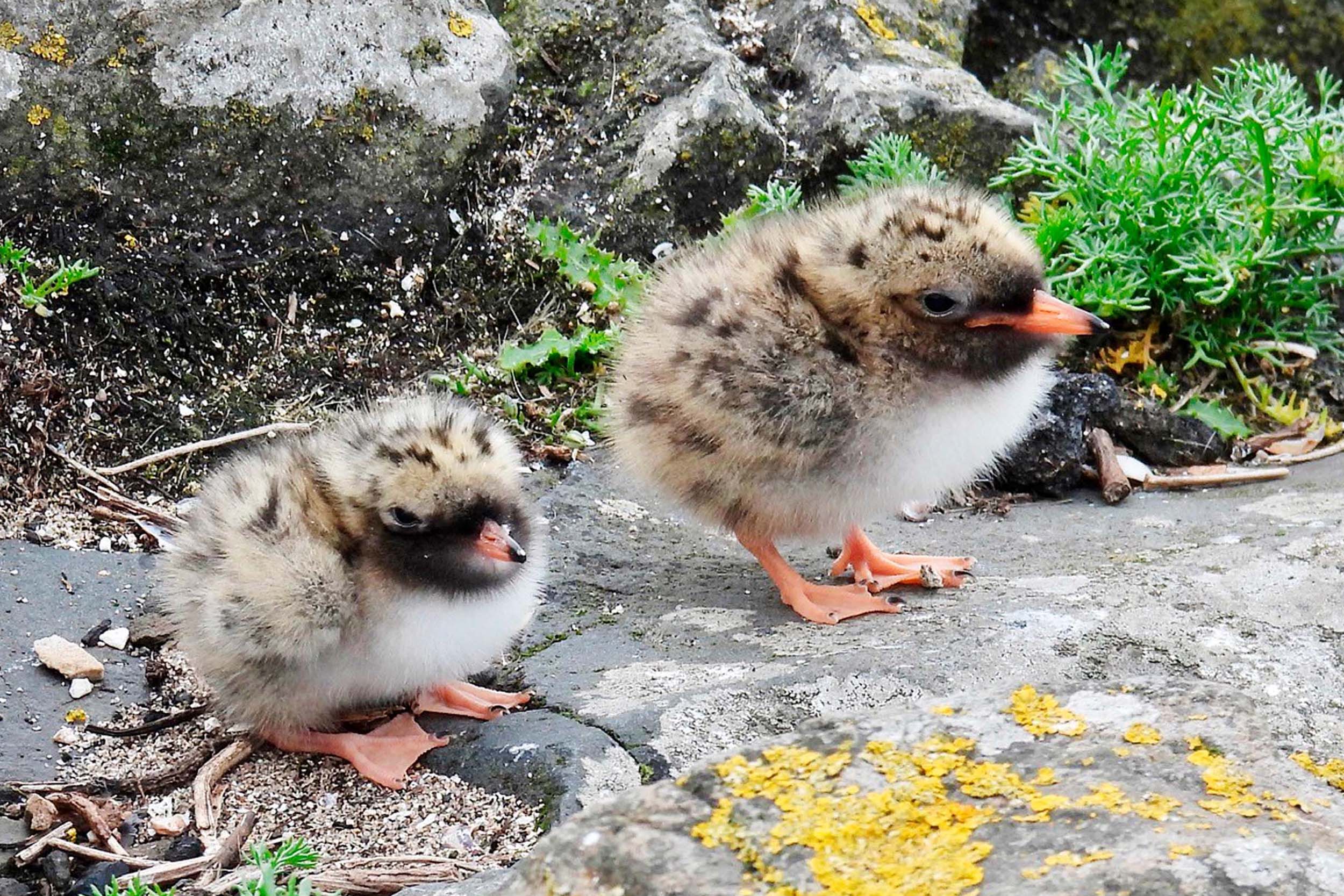
Are these chicks the same species?
Peter Burrill
Despite the differences in plumage colour, these photos both show Arctic Tern chicks. These different ‘morphs’ are typical of these birds, with Arctic Tern chicks ranging from grey to various shades of buff. Most chicks also have dark spots or speckles, as can be seen in these photos. Their forehead, lores (between the eye and the bill), and throat are also grey-brown or a dark brown. More research is needed to explain the different morphs, however, the differences in colouration have been linked to their surrounding habitat. Greyish chicks are more often found in areas with grey rocks and sparse vegetation, compared to areas of reddish rocks or brown sandy soil.
Have you ever wondered if birds hunt together?
Certain species have been found to work collaboratively to hunt and increase their chance of catching prey. One example of this is seen with Cormorants. Studies across western Europe have found large fishing flocks (some can include thousands of birds) where they school their prey to tire them and drive them higher in the water column, making the fish easier to catch. This is an incredible strategy to help improve their success when fishing.
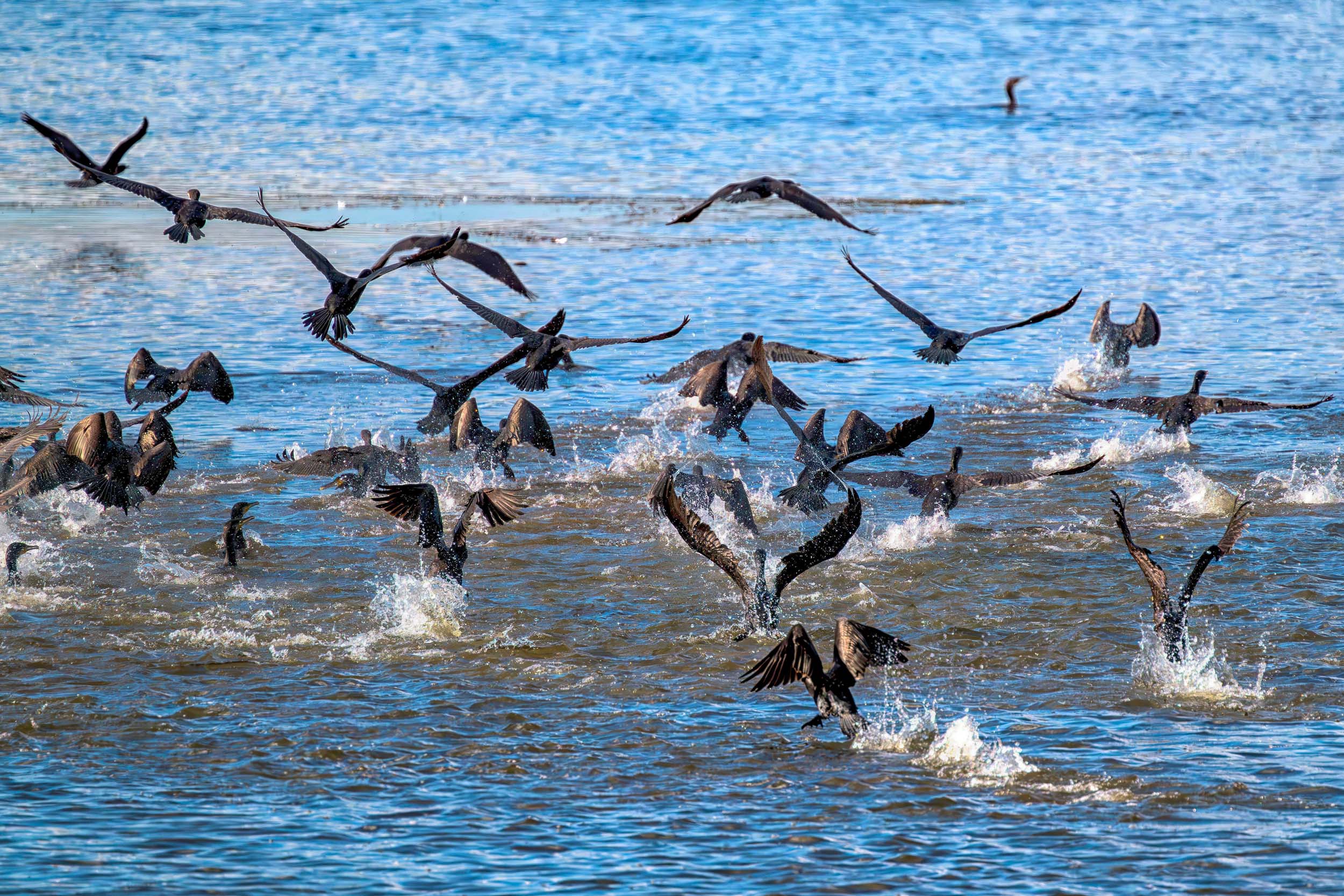
Flocks of Cormorants work together to tire out prey. Photo: Rachel Husband (Alamy Stock Photo)
How to…
Support birds through planting and creating wildflower gardens
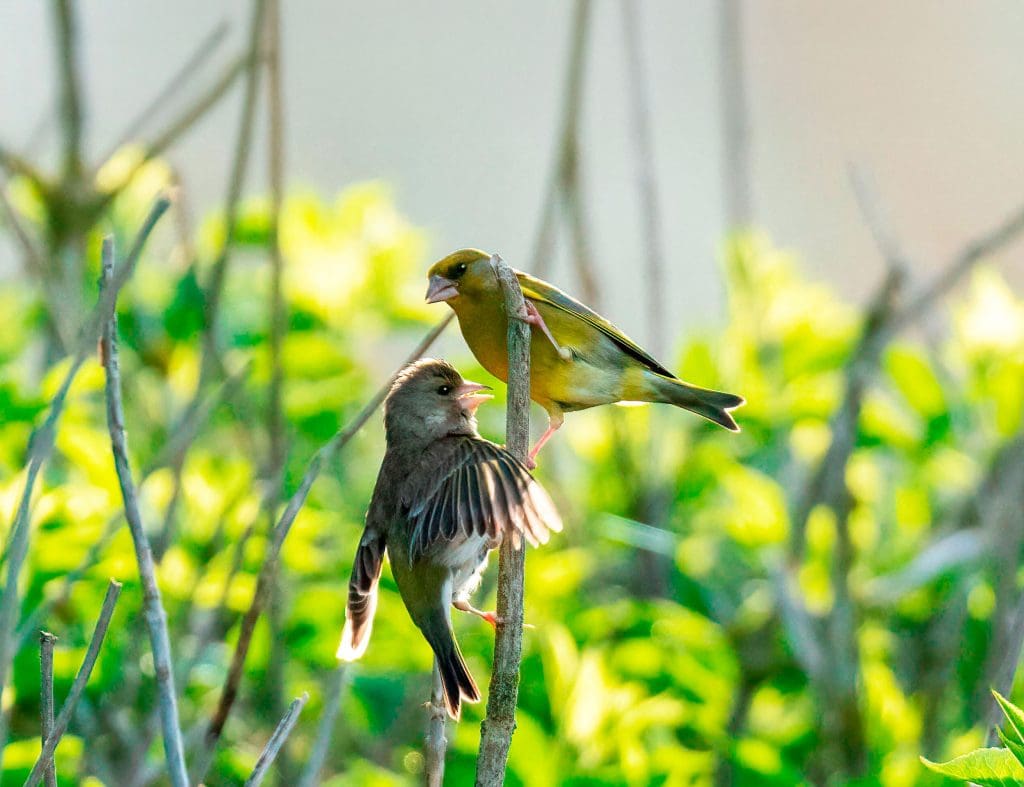
Your garden or even windowsill can provide positive impacts for birds, either by providing food and shelter or by attracting beneficial insects. More insects in the summer months means more food for young birds! Many seed mixes full of native flowering plants are available (tailored towards pots or patches of soil), but some suggestions to help both birds and insects are Cornflower, Corn Marigold and poppies, which are fast growing from seeds to a mass of flowers in only a few months. Insects love lavender, Catmint, Verbena and geraniums. Birds such as Greenfinch and Goldfinch can also use plants such as chickweed, groundsel and teasels for food. You can sow wildflower seeds in early spring for summer flowers or in autumn to ensure an early spring supply of flowers and food for wildlife.
Find out more in our video on how to plant a wildflower meadow
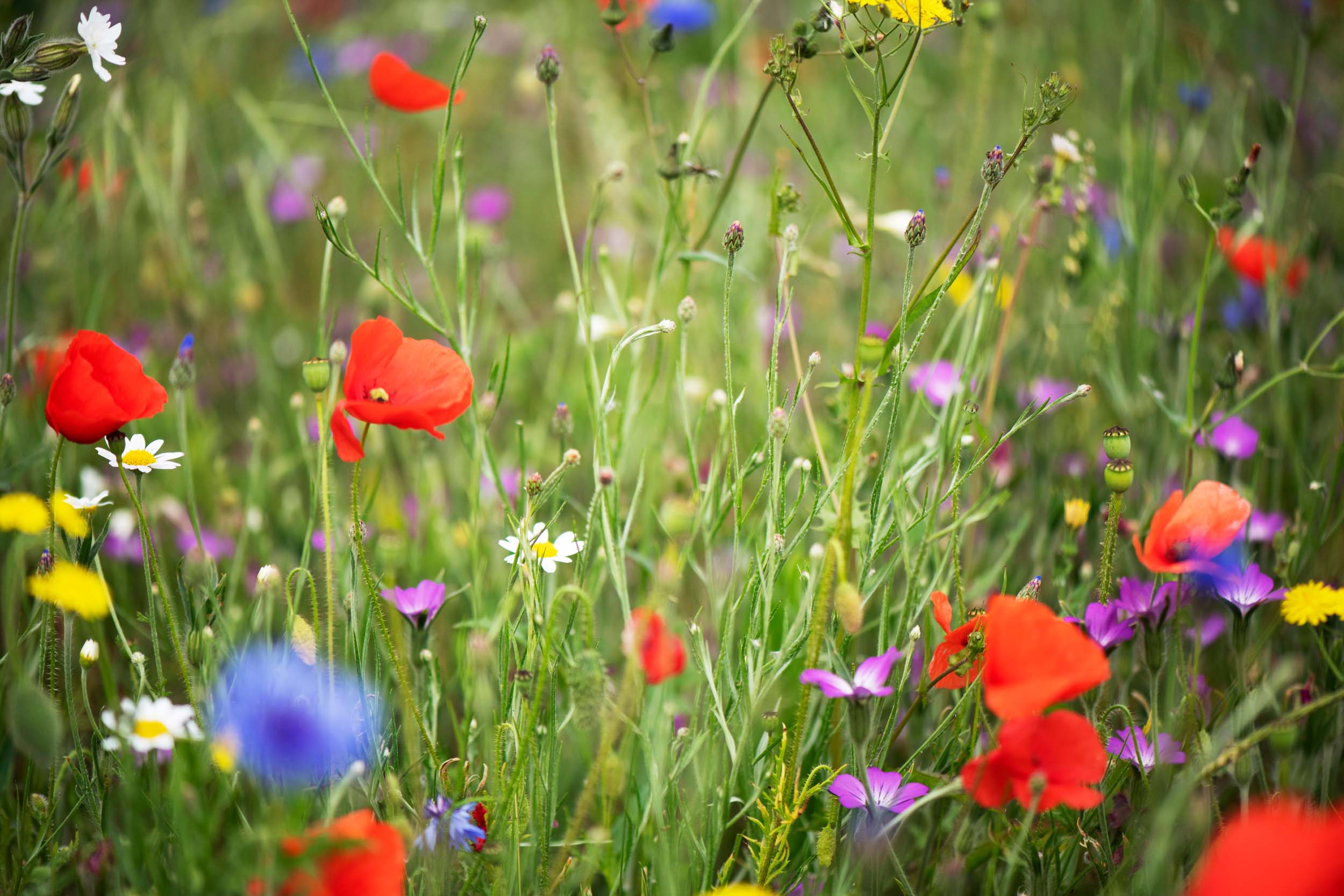
Photo: Ben Andrew (rspb-images.com)
I have seen Cuckoos and noticed they have a similar plumage to Sparrowhawks. Is this on purpose?
Rachel Grandey
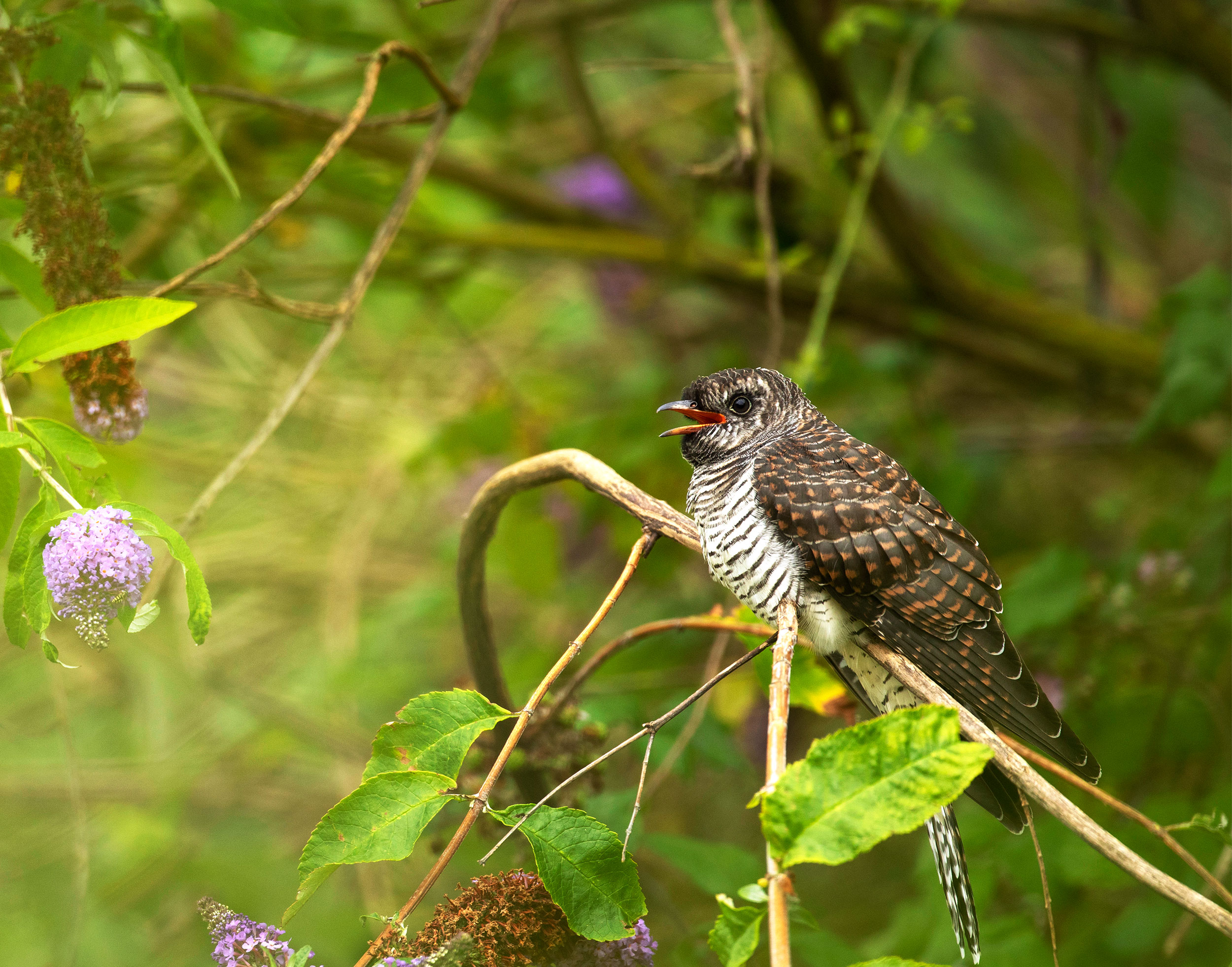
It’s fantastic to see or hear these amazing birds! They do have a barred under-plumage which mimics that of the Sparrowhawk. This is advantageous for the Cuckoo as Sparrowhawks are predators of many of the host species that Cuckoos parasitise (where they lay eggs in other birds’ nests), so this similarity can scare away prospective hosts, leaving the nests unguarded. The female Cuckoo removes an egg and lays a replacement very quickly while the hosts are spooked. Sometimes, if Cuckoos are perceived as a Sparrowhawk, this can have the opposite effect however, as wild birds are very protective of their nests once they have laid eggs and they can choose to try and mob the bird rather than hide. Meadow Pipits are particularly favoured, as well as garden birds such as Dunnocks.
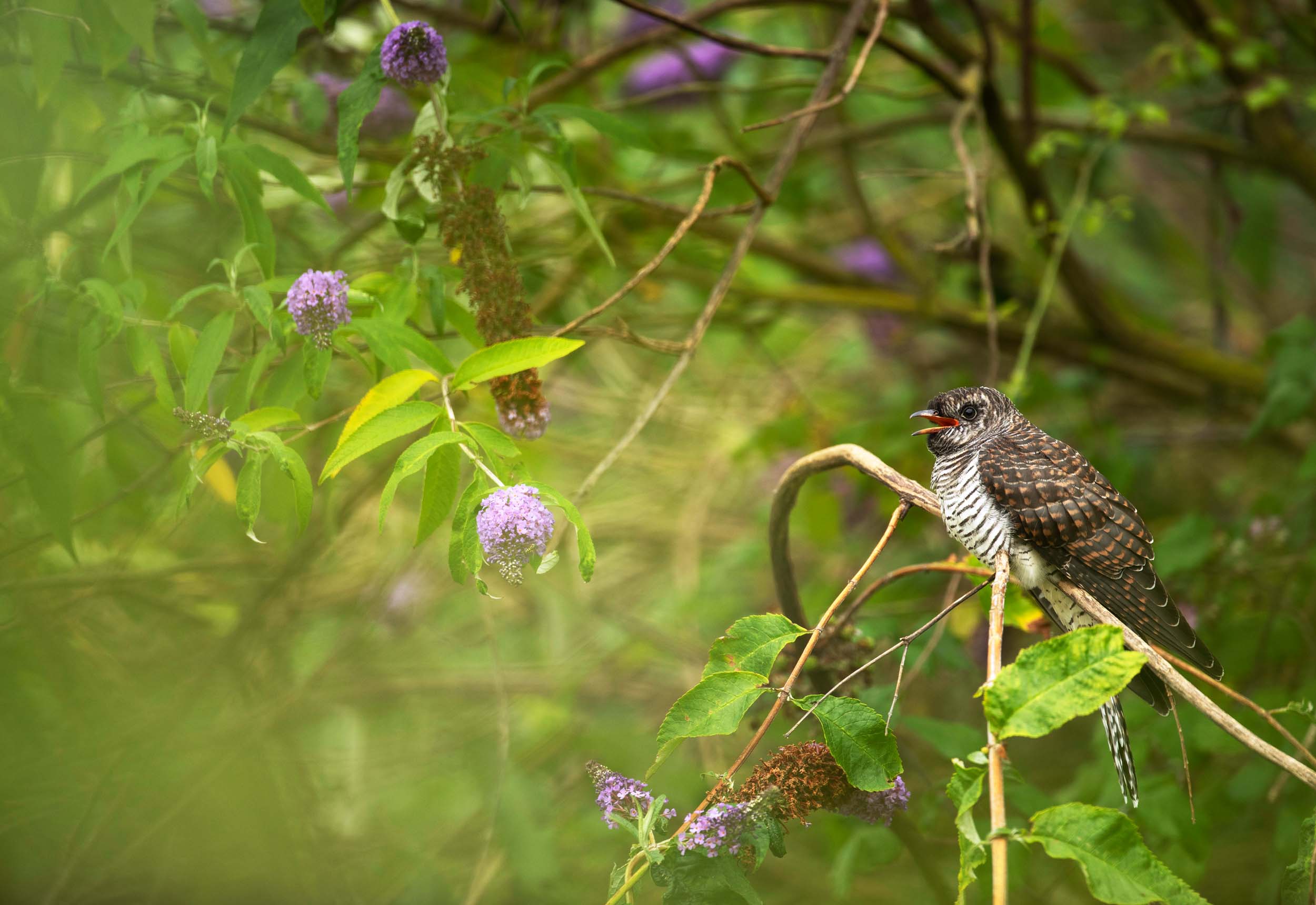
Cuckoos have dark grey plumage on their upper parts and barred plumage below. Photo: Ben Andrew (rspb-images.com)

Send us your questions
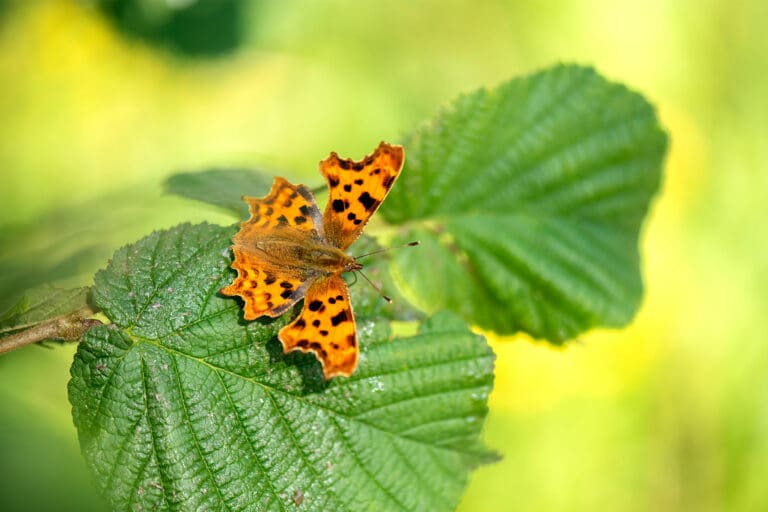
Comma butterfly. Photo: Ben Andrew (rspb-images.com)
You might also like
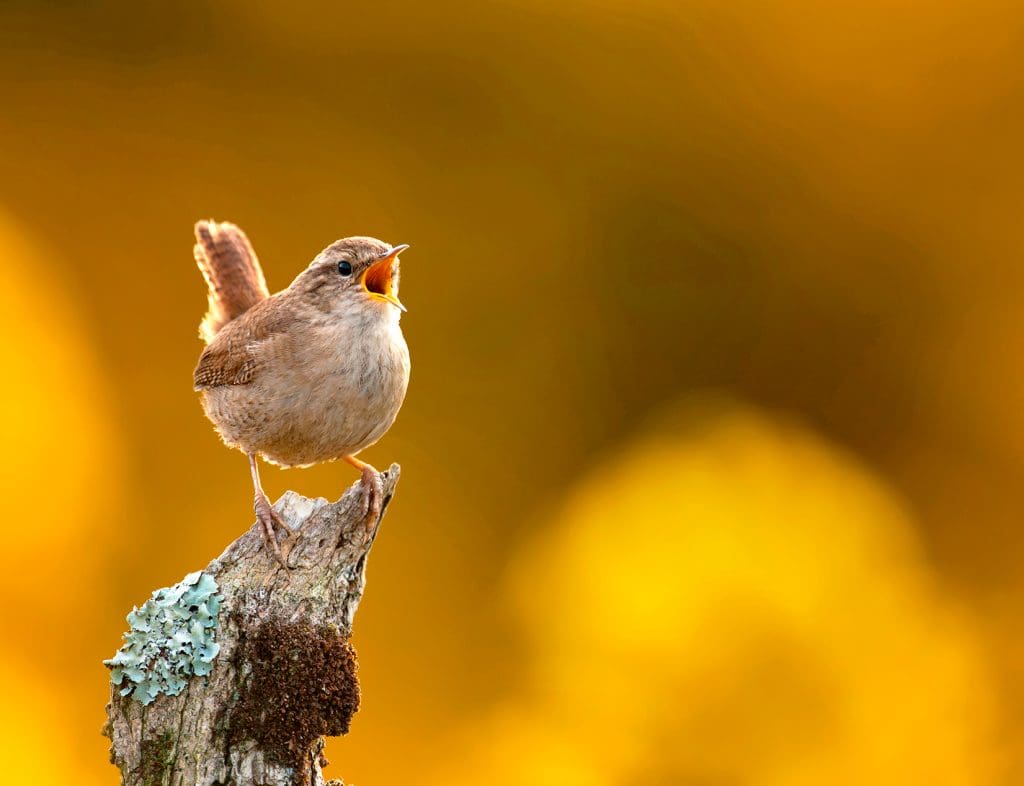
ID the stars of the dawn chorus