
Learn the difference between these tricky-to-identify winter/spring geese.
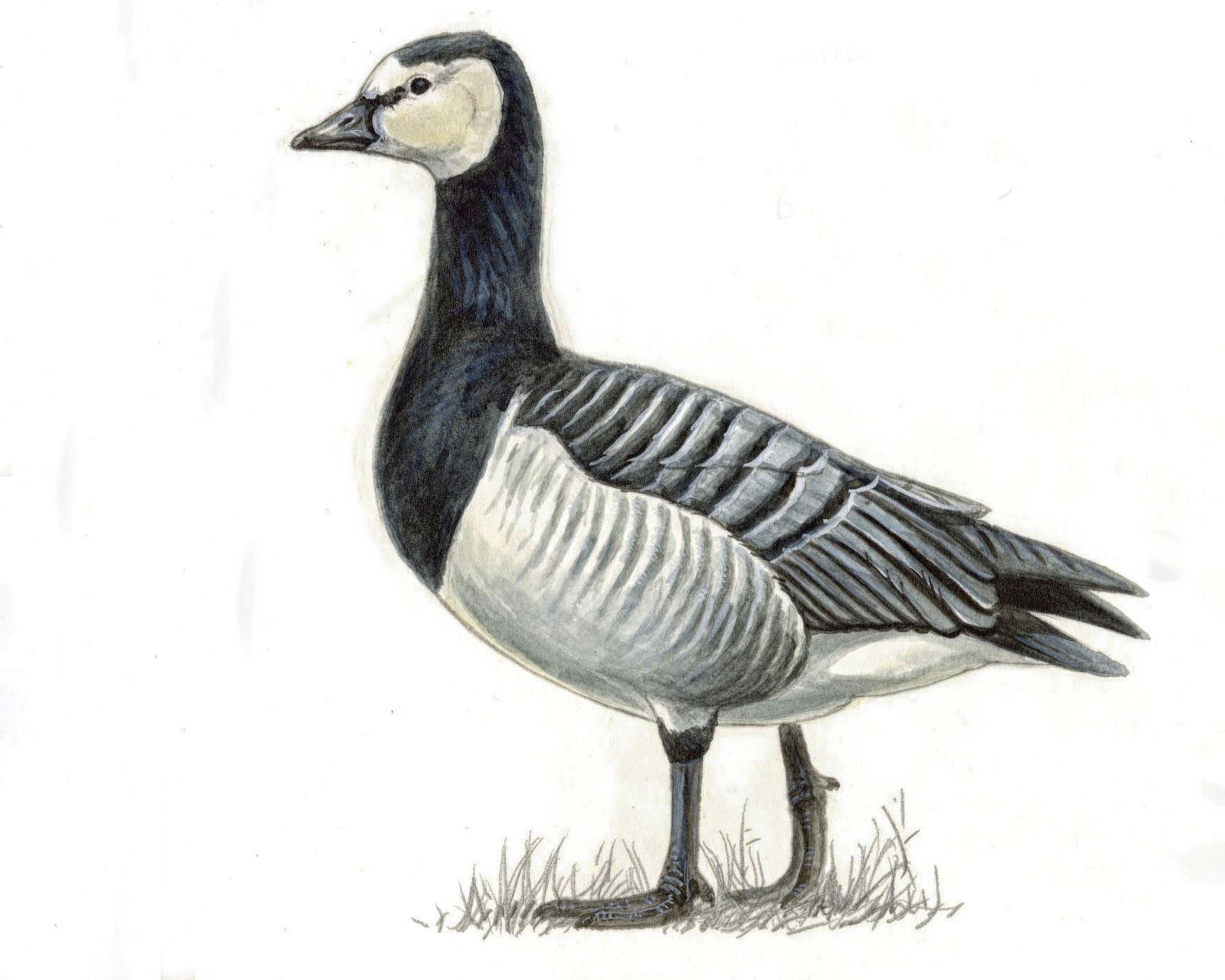
Barnacle Goose
These birds are a contrast of black, white and silvery-blue grey. They are very sociable birds, often seen in large flocks to feed. They migrate from their breeding grounds in Greenland and Svalbard to winter on our coasts and estuaries.
Listen to a Barnacle Goose
Willem Pier Vellinga (xeno-canto)
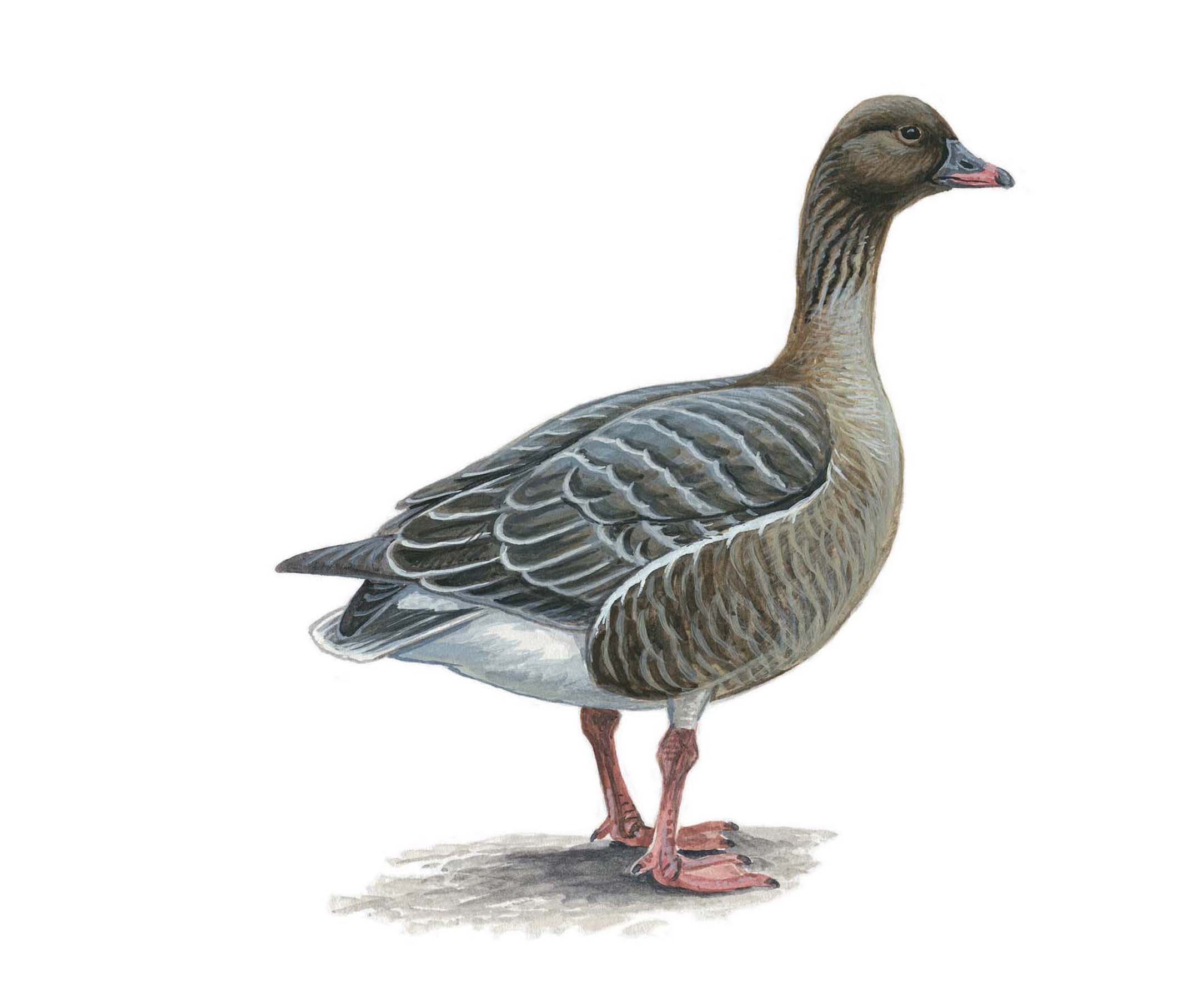
Pink-footed Goose
Around 85% of the world’s population of Pink-footed Geese spend winter with us feeding on estuaries and farmland. Look for their dark head and neck, grey-brown plumage and pink feet and legs. They fly in very large – and loud – flocks!
Listen to a Pink-footed Goose
Andrew McCafferty (xeno-canto)
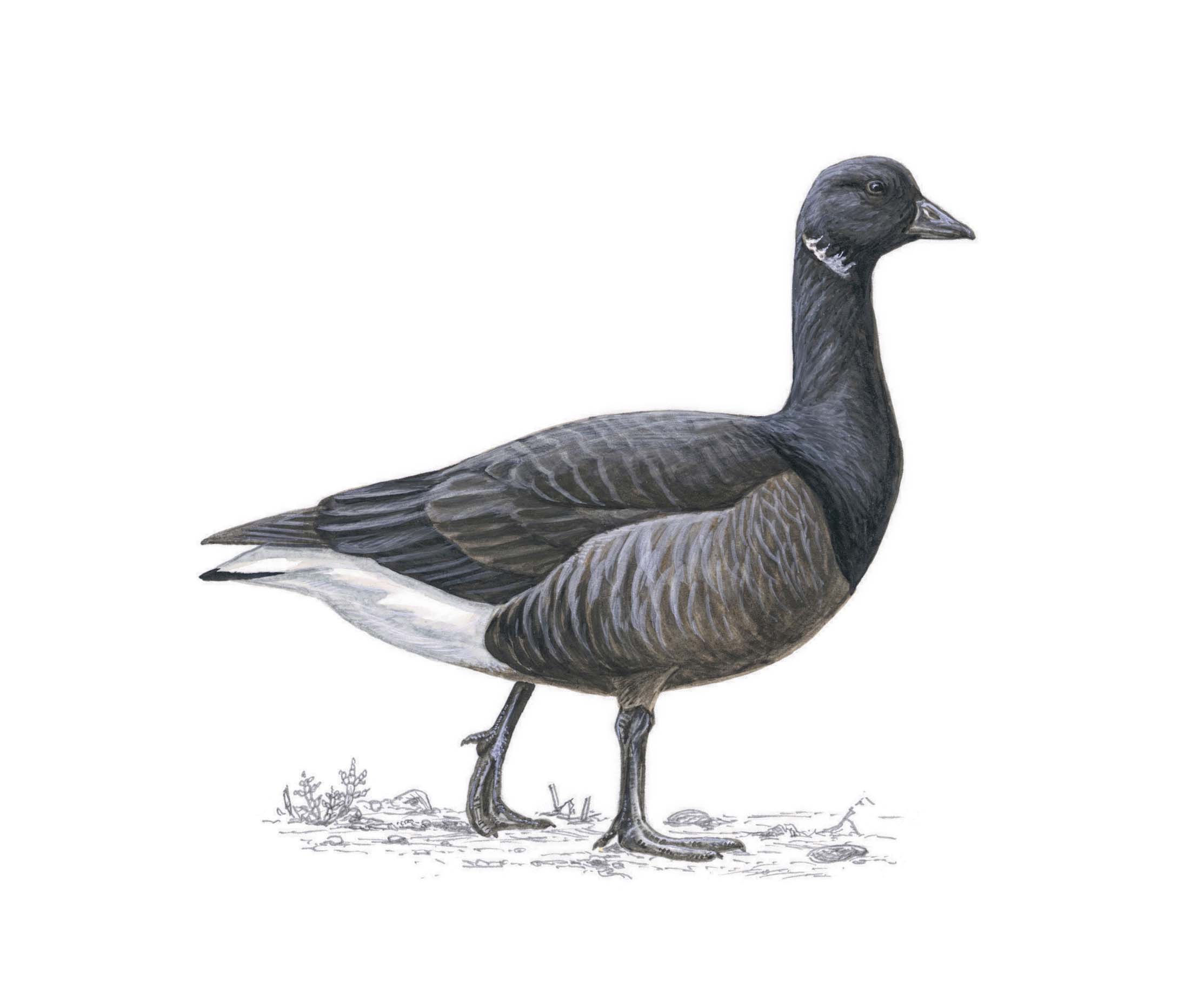
Brent Goose
Similar size to a Mallard. Very dark with a small white neck patch. There are two sub-species: the dark-bellied (pictured) fly from Siberia and Russia while the pale-bellied breeds in Greenland and Spitsbergen. They fly in wavering lines.
Listen to a Brent Goose
David Farrow (xeno-canto)
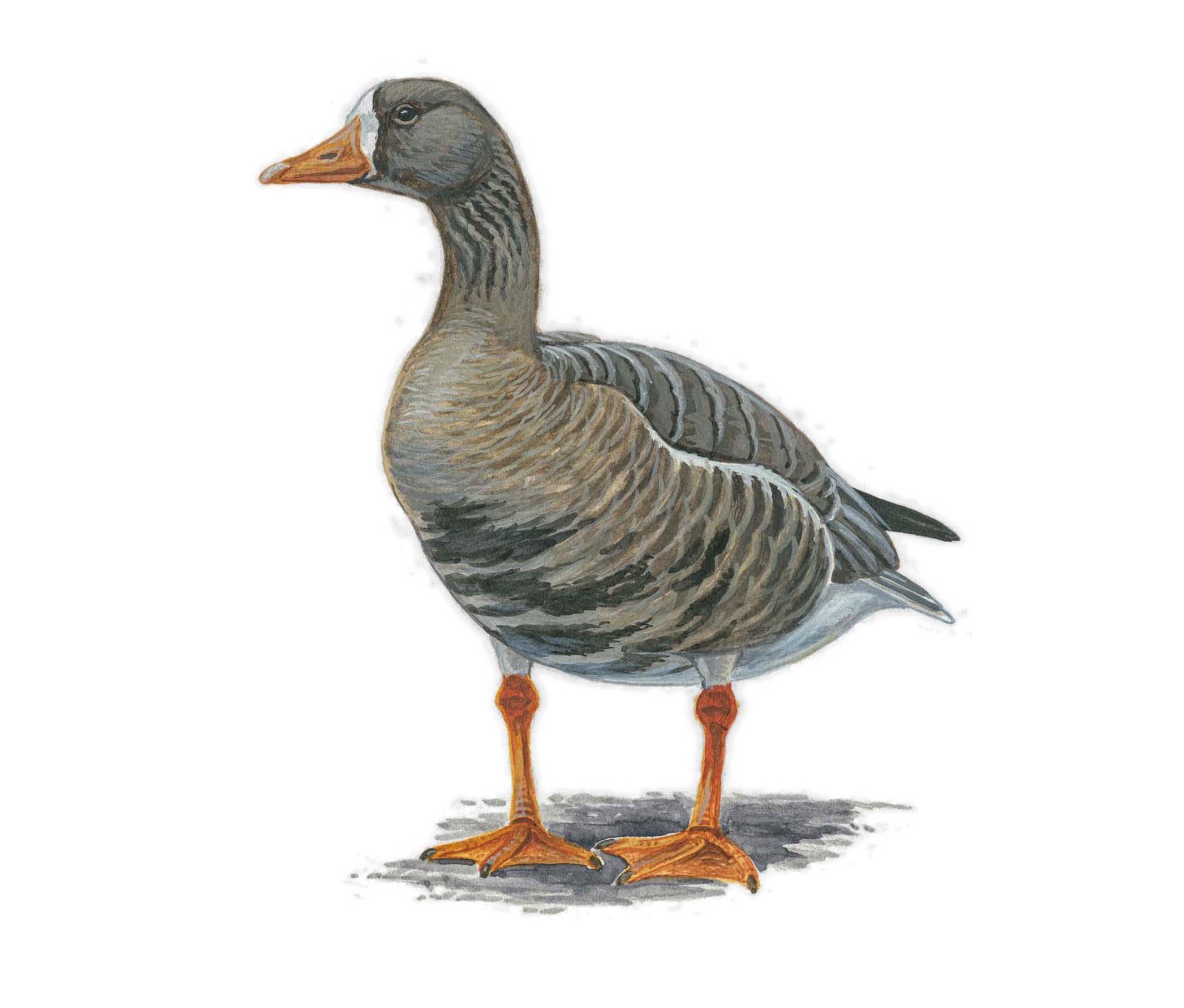
White-fronted Goose
Smaller than a Mute Swan. White patch on the face and black stripes on the belly. Subspecies have different bill colours: birds from Greenland (pictured) have orange bills, Siberian birds have pink bills. Both have orange legs and grey-brown bodies.
Listen to a White-fronted Goose
Matthias Feuersenger (xeno-canto)
Greenland White-fronted geese are rare winter visitors to the UK. One of the places they come back to year after year is the RSPB’s Loch Lomond nature reserve. The reserve team work hard to make it a place where the geese can feed and rest up, ready to head North for the breeding season. Join Warden Luke Wake to find out more. Video: The RSPB
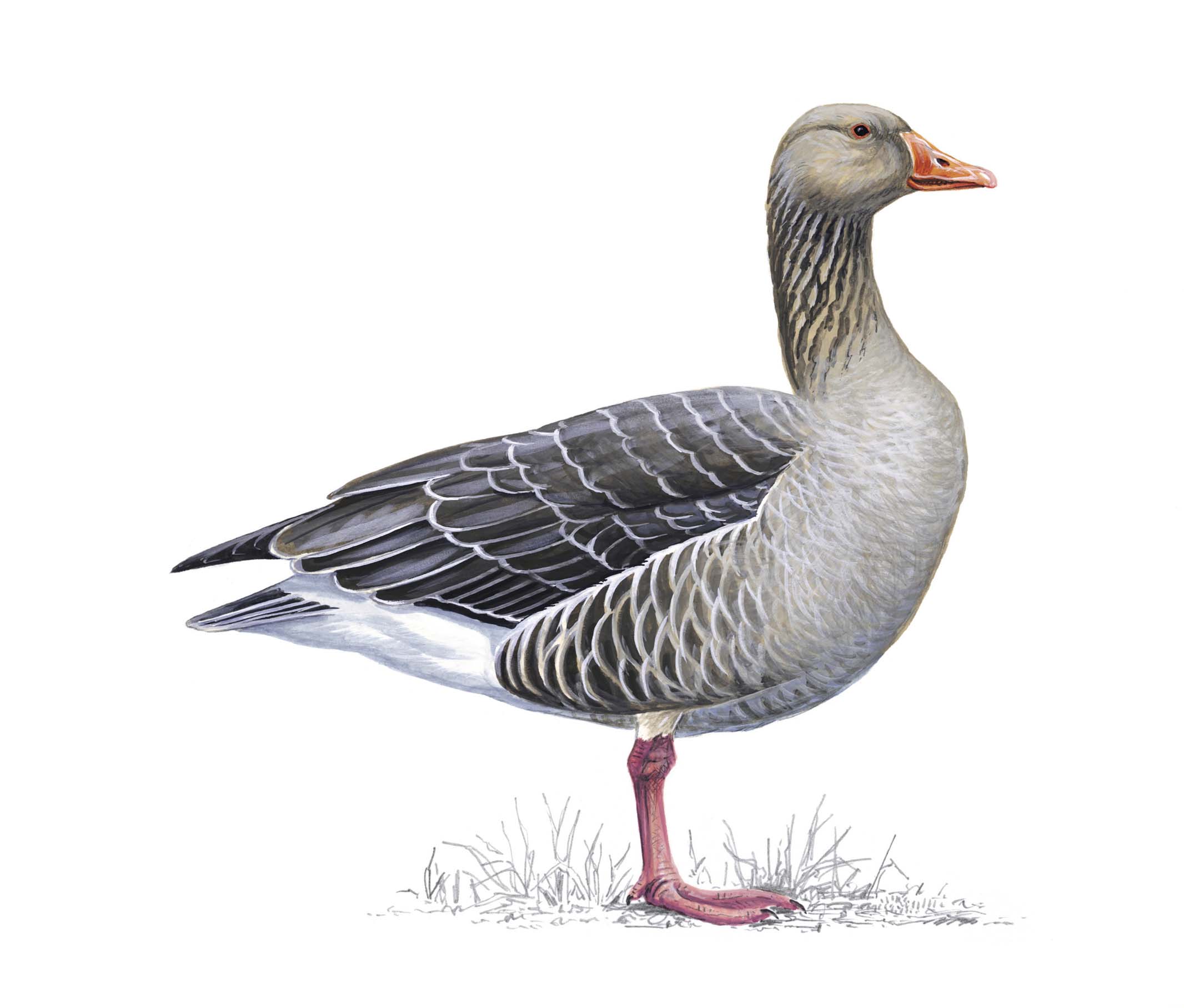
Greylag Goose
A large goose with a grey-brown barred back, a pale grey breast and mottled belly. They have white feathers underneath the tail, a large orange bill and light pink legs and feet. Seen feeding on farmland before roosting on estuaries and freshwater lakes.
Listen to a Greylag Goose
Patrik Åberg (xeno-canto)
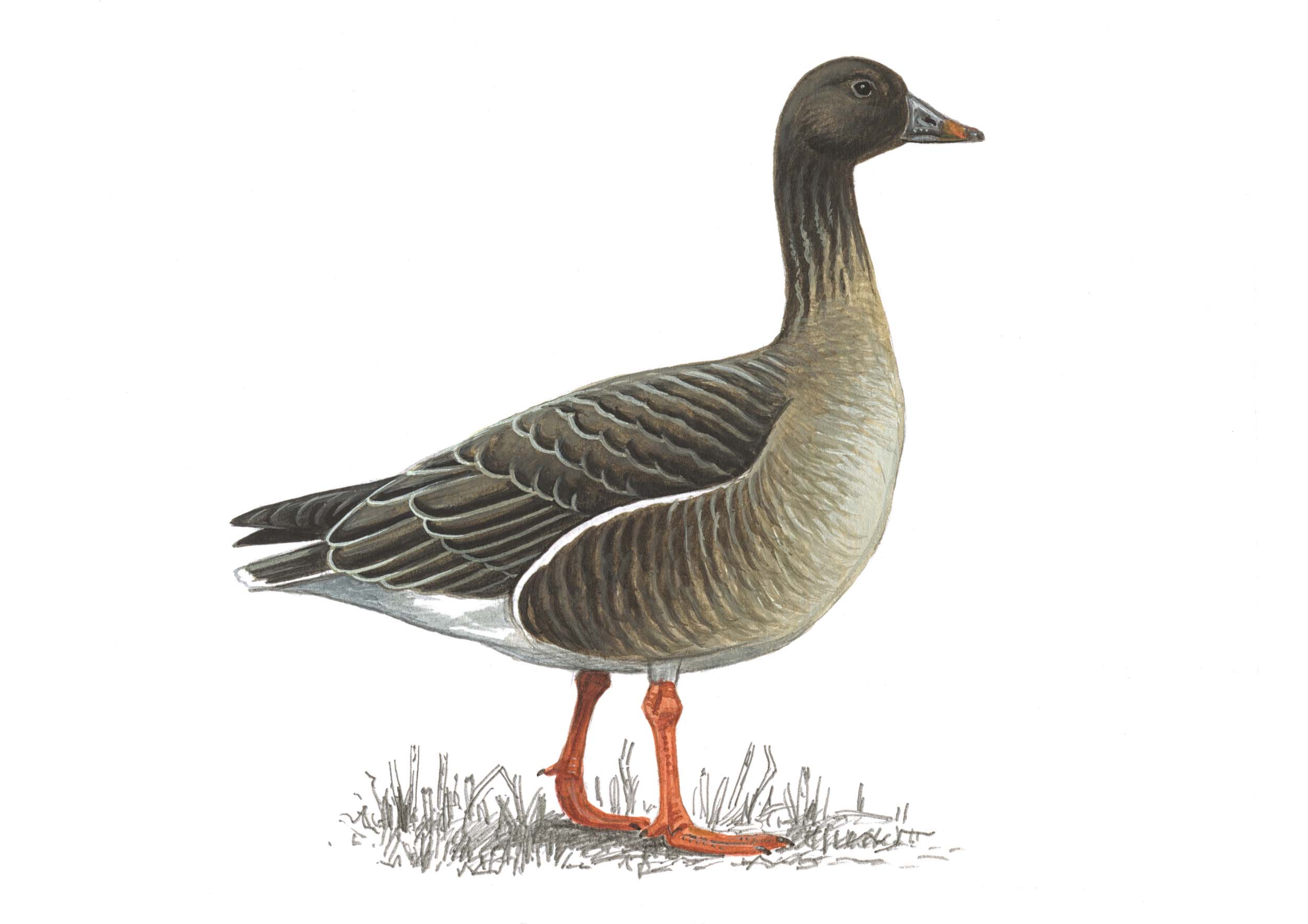
Tundra Bean Goose
Slightly larger than a Pink-footed, look out for orange legs, brown body and a dark sooty-brown head. The breast has fine barring with a white line along the edge of the folded wings. Their short bill has a yellow-orange patch towards the tip.
Listen to a Tundra Bean Goose
Peter Boesman (xeno-canto)
Illustrations: Mike Langman (rspb-images.com)

See them for yourself
Many RSPB nature reserves provide a winter home for geese. Head to our website to find out where and when to see these special species.
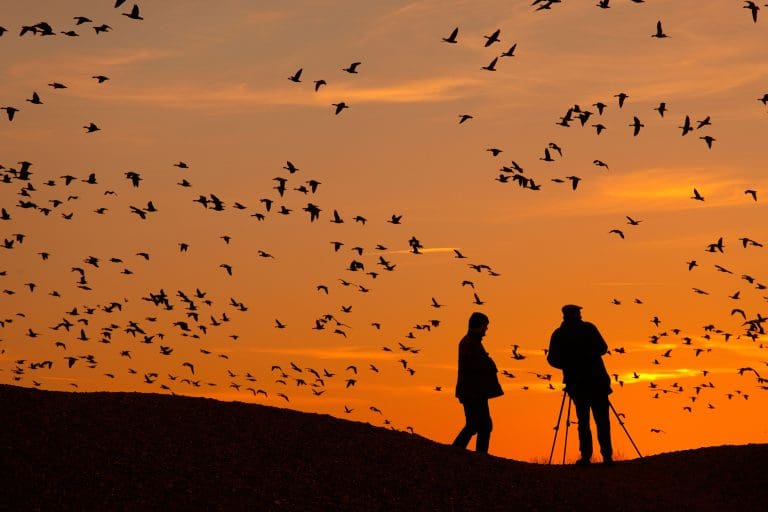
Watching Pink-footed Geese at dawn on the Norfolk coast. Photo: Ernie Janes (Alamy Stock Photo)
You might also like
How to identify warblers
Answering your photography questions