

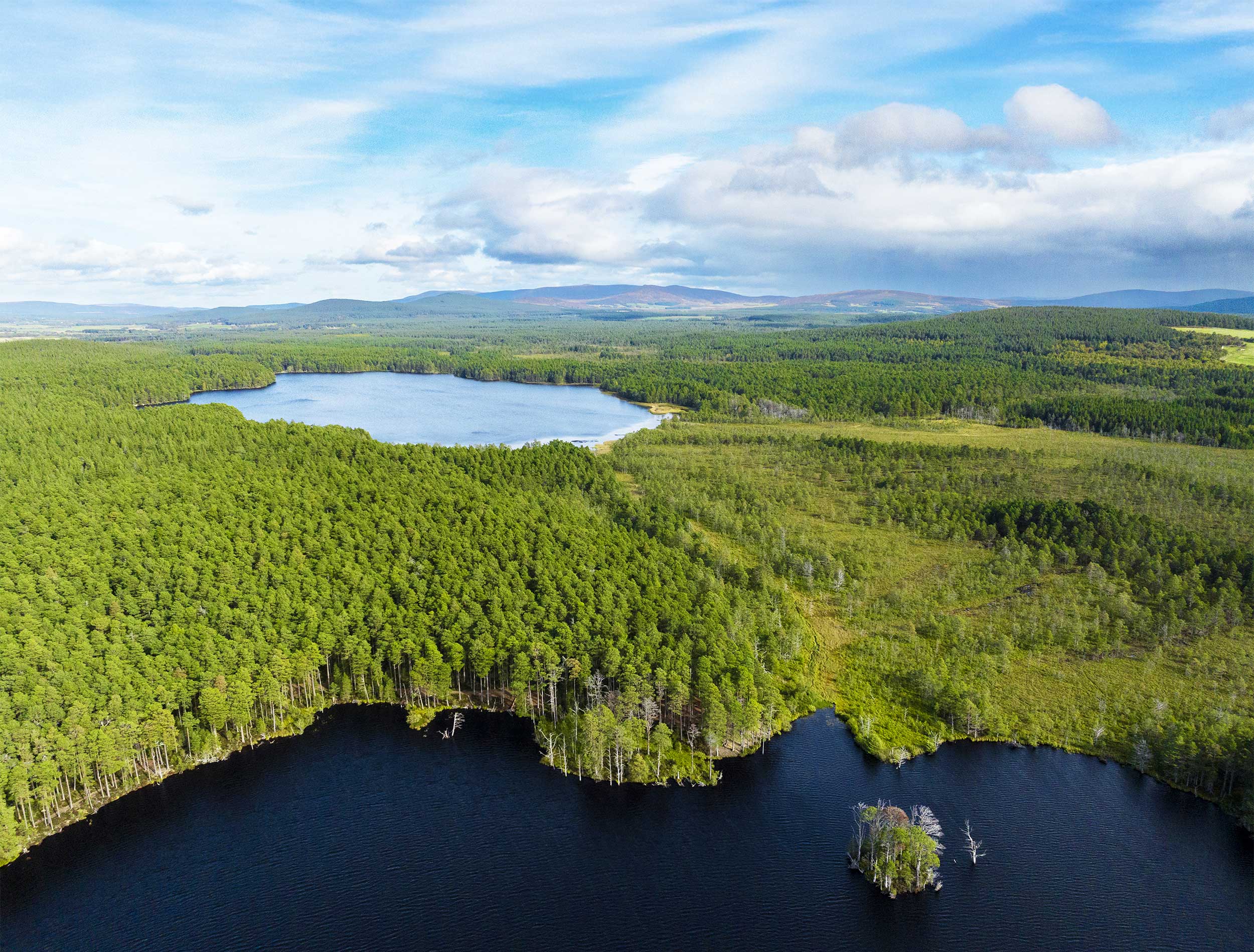
I’m at RSPB Abernethy nature reserve within Abernethy’s Caledonian pine forest, part of the Cairngorms National Park. The August air is warm with the smell of sun-baked Scots Pine needles. Chaffinches flit through the canopy, their calls the only interruption to the hush of swaying branches.
RSPB Site Manager Jess Tomes welcomes me inside the Loch Garten Nature Centre. Overhead, screens show hidden nest camera footage of some of the reserve’s iconic raptor inhabitants: Osprey and White-tailed Eagle. “We call Loch Garten – situated within the nature reserve – the ancestral home of the Osprey because this is where the fight for their survival in the UK was spearheaded,” says Jess.
Hopeful to catch a glimpse of these birds, we move to the windows overlooking a stretch of bog woodland, a niche habitat unique to Caledonian forest. It looks almost primeval, as if dinosaurs might roam between the gnarly Scots Pines that grow sparse and stunted in the waterlogged soil.
“We haven’t seen the Osprey today,” says Visitor Experience Manager Clark Evans, gesturing towards their nest about 200m away – a giant bowl of sticks atop a towering tree. “The female has likely begun her migration back to West Africa, Portugal or Spain.” A Goshawk is perched at the nest; impressive but decidedly the wrong bird. Scanning left, two more trees hold remnants of Osprey nests from 1958 and the 1980s. Three eyries side by side – a timeline of the species’ remarkable recovery.
Hear the Osprey’s piercing call
Ospreys taking flight
Ospreys were persecuted to extinction as a UK breeding bird in 1916. “Historically, egg collectors and hunting hindered populations from taking flight,” Jess explains. Sporadic breeding attempts had been recorded in the Scottish Highlands since, but none re-established a returning summer breeding population until 1954, when a pair successfully nested on the south shore of Loch Garten, Abernethy.
Despite the 1954 Protection of Birds Act prohibiting the collection of wild bird eggs in the UK, thieves continued to target the nest. In 1958, after the returning pair’s nest was robbed again, they relocated and built a frustration eyrie – a new nest sometimes constructed after a failed breeding attempt. The site of this nest can still be seen from the Nature Centre.
The Osprey’s vulnerability and resilience inspired George Waterston, then RSPB Secretary for Scotland, to launch Operation Osprey – the RSPB’s first conservation project in the Cairngorms. Committed to safeguarding the species, he rallied like-minded local landowners, gamekeepers, ornithologists, volunteers and government bodies to conduct a 24-hour nest watch. The team wrapped barbed wire around the tree trunk and constructed a nearby observation post to deter thieves.
‘We’ve been showing supporters Ospreys here for over 60 years; they come back year-on-year, just like the birds’
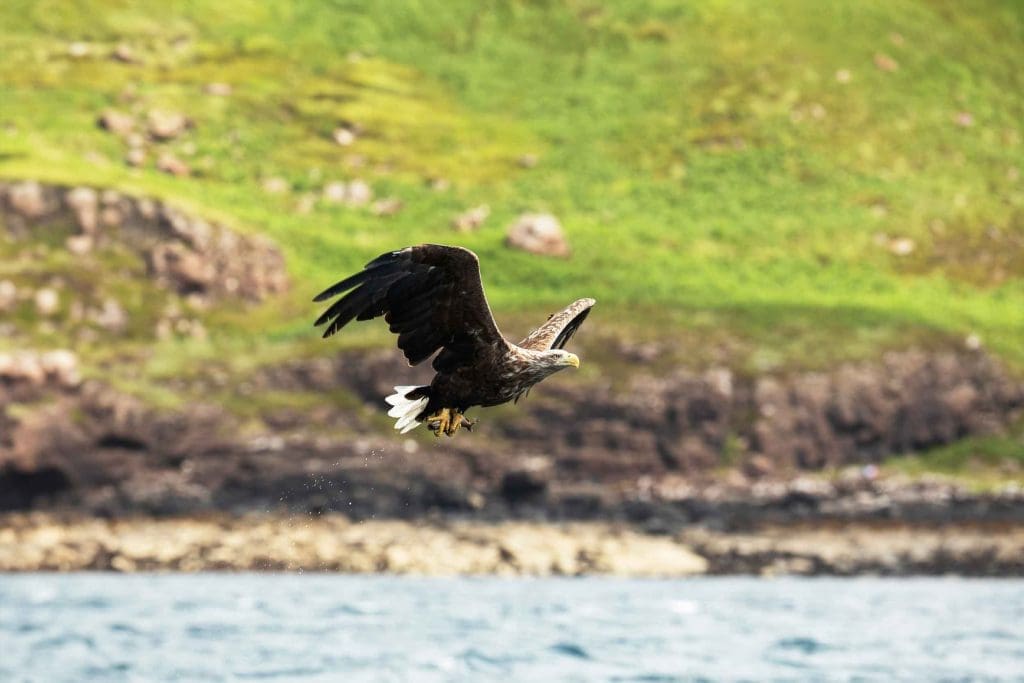



In 1959, the Osprey successfully hatched three chicks and Waterston advocated opening the site for public viewing. “This was a radical idea at the time, but he was confident visibility would engender public support, making people care about the birds’ fate,” Jess adds. So, visitors were invited to a makeshift hide built where the current Nature Centre stands today. In seven weeks, 14,000 people visited. “It was one of the UK’s earliest examples of eco-tourism, demonstrating public engagement could reinforce conservation,” Jess says with a smile.
From then on, the birds nested with varied success. In 1976, the RSPB purchased Loch Garten and the active nest area, the first of 14 land acquisitions here. But egg theft persisted into the 1990s despite the 24-hour watch and later installation of CCTV. In 1980, the Ospreys moved their eyrie to a nearby tree which was then felled by vandals in 1986. The tree was restored and fitted with an artificial nest, which the Ospreys occupied for years before moving to a third neighbouring tree. There, they adopted another artificial nest – their current nest location – also visible from the Nature Centre.
Amazingly, the Osprey population grew despite these challenges. Today, over 350 breeding pairs soar across the UK thanks to the combined efforts of Operation Osprey, natural repopulation and subsequent reintroduction programmes. It’s a powerful legacy that demonstrates how dedicated conservation, bolstered by public support, delivered one of the UK’s greatest wildlife revival stories. “People still return here saying they remember visiting as children,” Jess reflects. “We’ve been showing supporters Ospreys here for over 60 years; they come back year-on-year, just like the birds.”
Visitor’s guide: RSPB Abernethy
Getting there
Take Bus Service 37, 37A or X37; the stop is Osprey Centre Road End. Then follow a footpath to the reserve for 1.6 miles. The reserve is on Route 7 of the National Cycle Network.
Entry
Free entry and parking for RSPB members; £6 entry for non-members.
Seasonal highlights
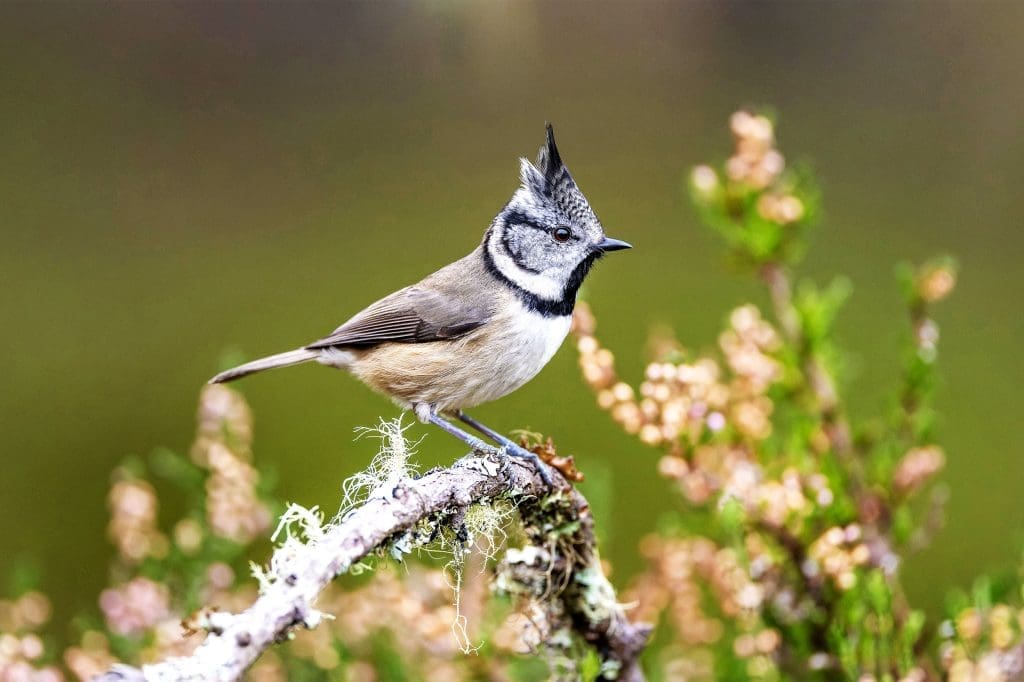
Ospreys nesting; Great Spotted Woodpeckers drumming on tree trunks; Crested Tits hanging from branches; Four-spotted Chasers and White-faced Darters on the wing; delicate flowers on Creeping Lady’s-tresses orchids; Crossbill flocks flitting through the trees; Goldeneye on the lochs; and Red Squirrels foraging.
Accessibility
Parking: three Blue Badge spaces.
Accessible toilets: Changing Places Toilet at car park (available for Radar key holders) and accessible toilet at the Nature Centre (during centre opening hours only).
Wheelchairs: Some uneven surfaces on the paths. An off-road mobility scooter and a rugged manual assisted wheelchair are available for hire.
Dogs: Between 1 April and 31 August, dogs must be kept on a lead and away from the loch to protect ground-nesting birds. Assistance dogs welcome.

Forest restoration at scale
As UK Osprey numbers stabilised, the focus at Abernethy turned to restoring the Caledonian pine forest, the largest surviving fragment of the once named Great Wood of Caledon. Only 1% of this ancient forest remains and, as Jess and I set off onto the nature reserve, I begin to gauge the scale and ambition of this habitat restoration work.
RSPB Abernethy is the second-largest RSPB nature reserve in the UK with the biggest altitudinal range. It stretches from 200m above sea level at the Loch to the 1,309m summit of Ben Macdui. The site is roughly equal thirds montane plateau, peatland bog and Caledonian forest.
As we walk, our footsteps hushed along the pine needle path, we hear the tittering of Goldcrests high up in a nearby Scots Pine. Caledonian forest naturally consists of Scots Pine and broadleaf species such as Aspen, birch, Rowan and willow, but historically much of Abernethy was managed for timber production. Industrial forestry practices created a pine monoculture, lacking habitat variety and biodiversity.
Jess explains how the team now plant selectively and reduce canopy cover to help saplings within some areas of former plantation and forest edges to establish seed sources for broadleaf species. This approach re-establishes forest growth back up the hills and encourages undergrowth such as Juniper and Blaeberry, which are vital for woodland wildlife.
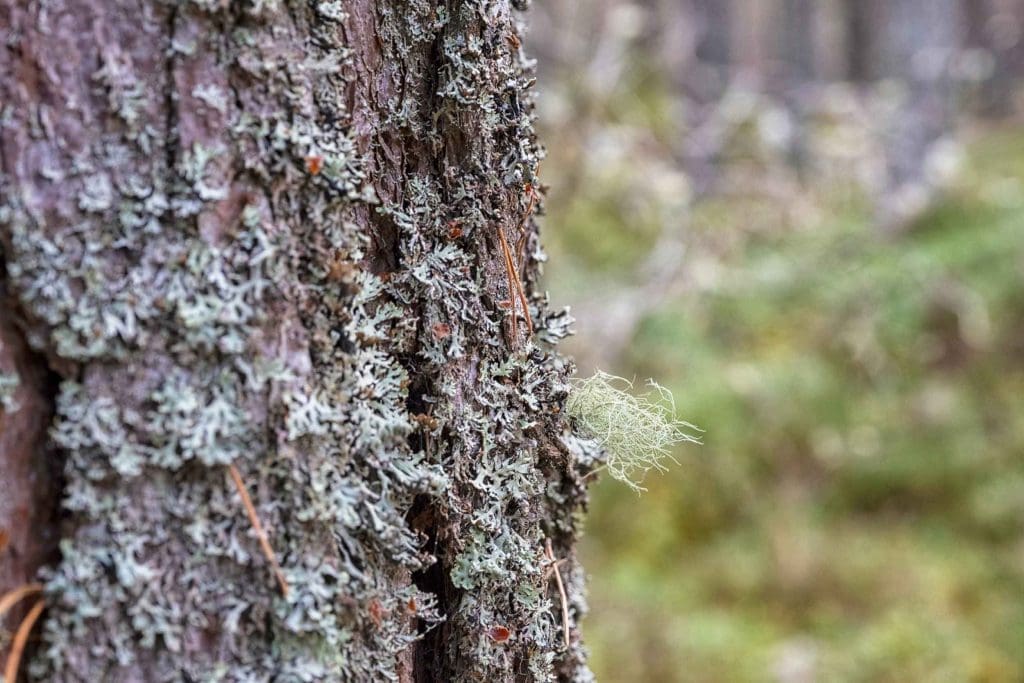
We pass a fallen Scots Pine, its deadwood corpse slowly sinking into the forest floor, and Jess motions to shelves of bracket fungi on the rotting wood. “Preserving and creating deadwood re-naturalises the ex-plantation. Over 2,000 UK invertebrate species rely on deadwood, including the rare Pine Hoverfly, which we’ve supported here since 2017.”
‘Seeing the different emergences along these trails makes me want to come back each day to discover something new’




Sharing spaces
Half-eaten pinecones litter the Two Lochs trail, evidence of the presence of Red Squirrels and Crossbills. To the left, the forest opens to a view of Loch Garten and Bynack More, one of four Munros on the nature reserve. Come autumn, the arrival of Greylag Geese promises a noisy spectacle across the Loch. But today my attention is drawn to the Coal Tits in the lattice of branches nearby. And amongst them, a Crested Tit – its punk-like crest unmistakable. In the UK, these birds are restricted to a small area of northern Scotland, so this is a memorable first encounter for me.
Listen to the warble of the Crossbill and the lively trill of the Crested Tit
As we walk along to the second loch, Mallachie, I spot nest boxes at the water’s edge, designed specially for Goldeneye. The species is typically a winter migrant to the UK, but a small breeding population has existed within the reserve since the 1970s. The peaty brown waters are quiet and the distant ‘tchick tchick’ of a Great Spotted Woodpecker draws us along the forest path fringed with fungi such as Fly Agaric and Angel Wings.
Jonny, an RSPB Ranger, appears, litter picker in hand. “It’s a real treat watching the seasons change here,” he enthuses. “Seeing the different emergences along these trails makes me want to come back each day to discover something new.”
Jonny patrols the paths regularly to monitor responsible public use. “Disturbance and wildfires pose a devastating threat to this landscape,” he explains. “One hundred thousand visitors frequent the reserve’s forested area annually, and countless more on the montane plateau above.” The RSPB encourages walkers and dogs to keep to paths across the Cairngorms to protect threatened ground-nesting birds such as Dotterel and Capercaillie. The vastness of the reserve means managing for visitors can be challenging, but the RSPB is improving paths and signage to promote responsible access.
RSPB Abernethy’s reserve staff and volunteers are working hard, and having fun, restoring bog woodland. Video: The RSPB
The bigger picture
Back at the Nature Centre, Jess points out the site map, putting the reserve’s enormity into perspective. “It’s almost the size of Glasgow,” she exclaims, “and a core part of the Cairngorms Connect partnership, a 200-year plan to restore over 60,000 hectares across the Cairngorms National Park.” It’s the UK’s biggest landscape restoration project – a visionary collaboration between the RSPB, WildLand Limited, NatureScot, and Forestry and Land Scotland.
Here habitat-scale conservation includes controlled cattle grazing and cutting regimes to help understory plants such as Blaeberry and Cowberry. This supports biodiversity by providing food and shelter. Jess explains, “Many species benefit, including Red-listed Capercaillie, which have shown a promising response in areas where we’re restoring vegetation structure.” Long term, the aim is to rebuild and connect natural systems so that minimal conservation intervention is required by 2216.
And standing here, it’s hard not to feel hopeful; a similar ambition was realised for the Osprey. While I didn’t see one of these birds today, Clark has watched them thrive over the years, “The Osprey activity we’ve seen has been incredible. Eggs hatched, chicks fledged, rivals fought… fish were thrown!” he laughs, “reminding us of the bigger picture: healthy competition within the species is a sign of their successful recovery.”
The Ospreys’ return is evidence that by combining science, persistence and passion, we have the potential to restore a species, a habitat, or even a landscape, and ensure the future of nature’s recovery.

Plan a day out at an RSPB nature reserve
Whether you want to write poetry inspired by nature, enjoy a walk with an expert guide, go pond-dipping with the family, RSPB nature reserves have something on offer for everyone. Covering the length and breadth of the country, the RSPB’s nature reserves are a great place to visit all year round and make some memories.

Explore the vast landscape of RSPB Abernethy. Photo: RSPB/Ben Andrew
You might also like

How to protect ground-nesting birds

Power move: how do Ospreys hunt?


