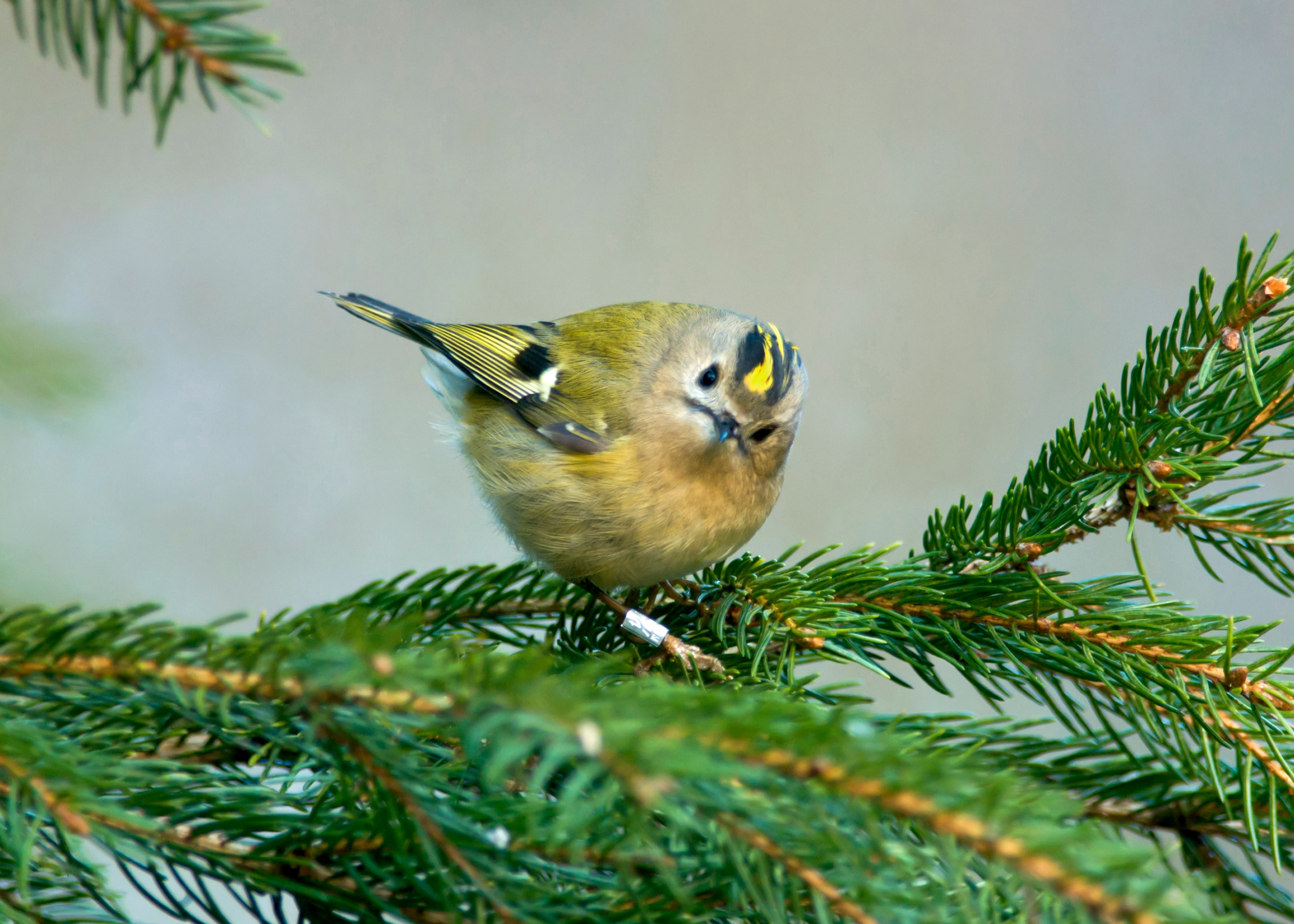
Along with the Firecrest, the Goldcrest is the UK’s tiniest bird. Weighing in at just 6g (six paperclips) it’s a member of the kinglet family. Regulus regulus – their latin name – means ‘little king’ for its gold crown.
Olive green and grey with large eyes, Goldcrests’ punky crest (more orange in males) highlights a thin black cap that looks shaved. Green-listed and widespread, you’re likely to hear their ‘wheedling’ song almost anywhere (it sounds like a squeaky wheelbarrow on repeat).
Mortality for our smallest songbird can be up to 80% in cold winters; they can lose 20% body fat on a winter’s night. These busy and agile birds must constantly feed during daylight. Two annual broods of up to 12 eggs help population recovery. Orange-sized, hammock-like nests are usually constructed near the ends of conifer branches. Thickly lined with feathers, they are reinforced with spider silk.
Hear the song of the Goldcrest
Mortality for our smallest songbird can be up to 80% in cold winters; they can lose 20% body fat on a winter’s night. These busy and agile birds must constantly feed during daylight. Two annual broods of up to 12 eggs help population recovery. Orange-sized, hammock-like nests are usually constructed near the ends of conifer branches. Thickly lined with feathers, they are reinforced with spider silk.
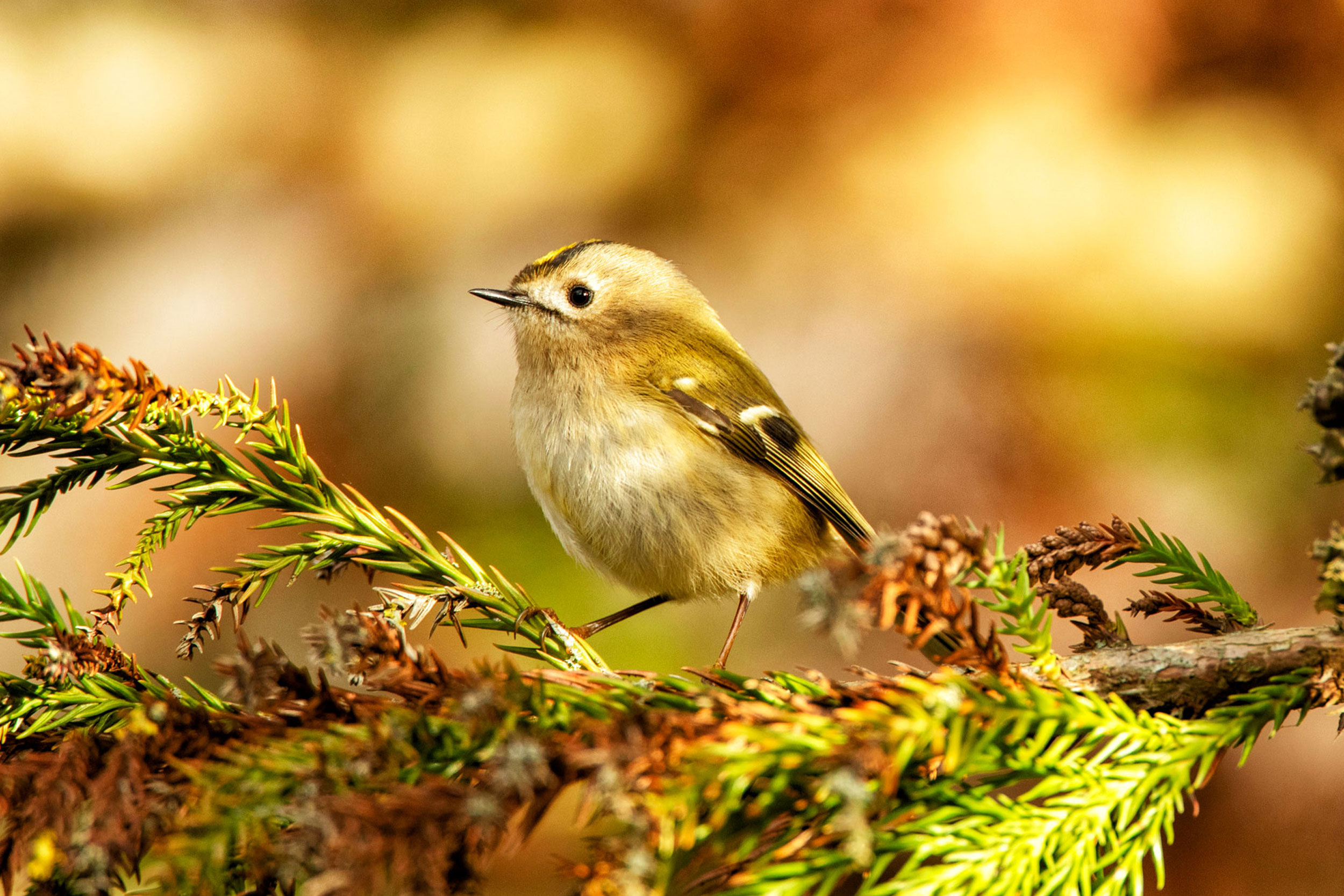
Often seen in mixed flocks with tits and warblers, look for these birds in the treetops of conifers, mixed woodland and other mature trees. When they come down to lower branches, they can be surprisingly confiding.
Each autumn, resident birds are joined by migrant birds from Scandinavia and Russia. In folklore they were known as ‘Woodcock Pilots’ from the old belief that they crossed the North Sea on the backs of that larger migrant.
Firecrests, rarer and predominantly found in southern England, have a blacker edge to a more flame-coloured crest and a dramatic black eye stripe, giving them a fierce expression. The Goldcrest’s face is plainer and more ‘worried’ or surprised in expression.
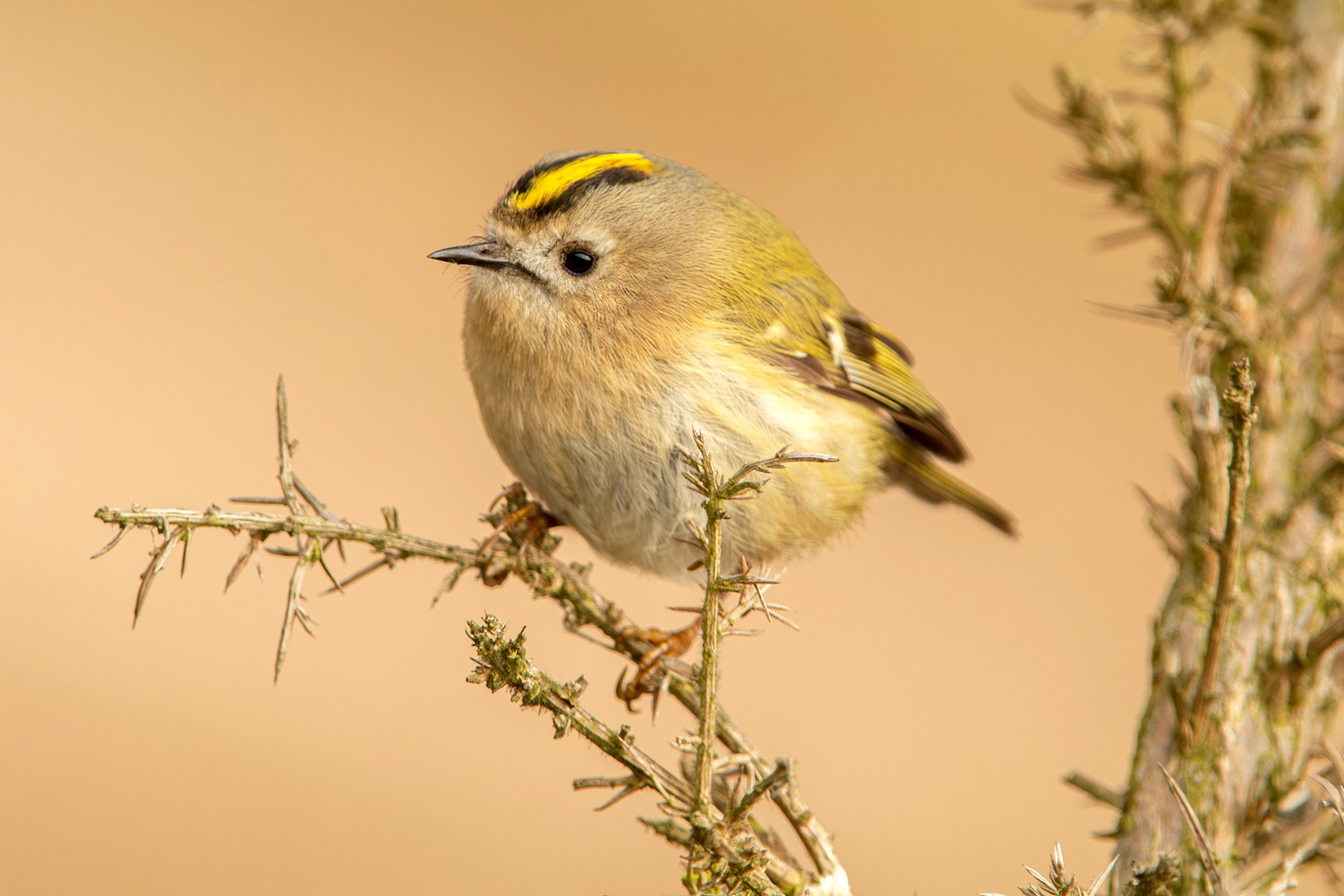
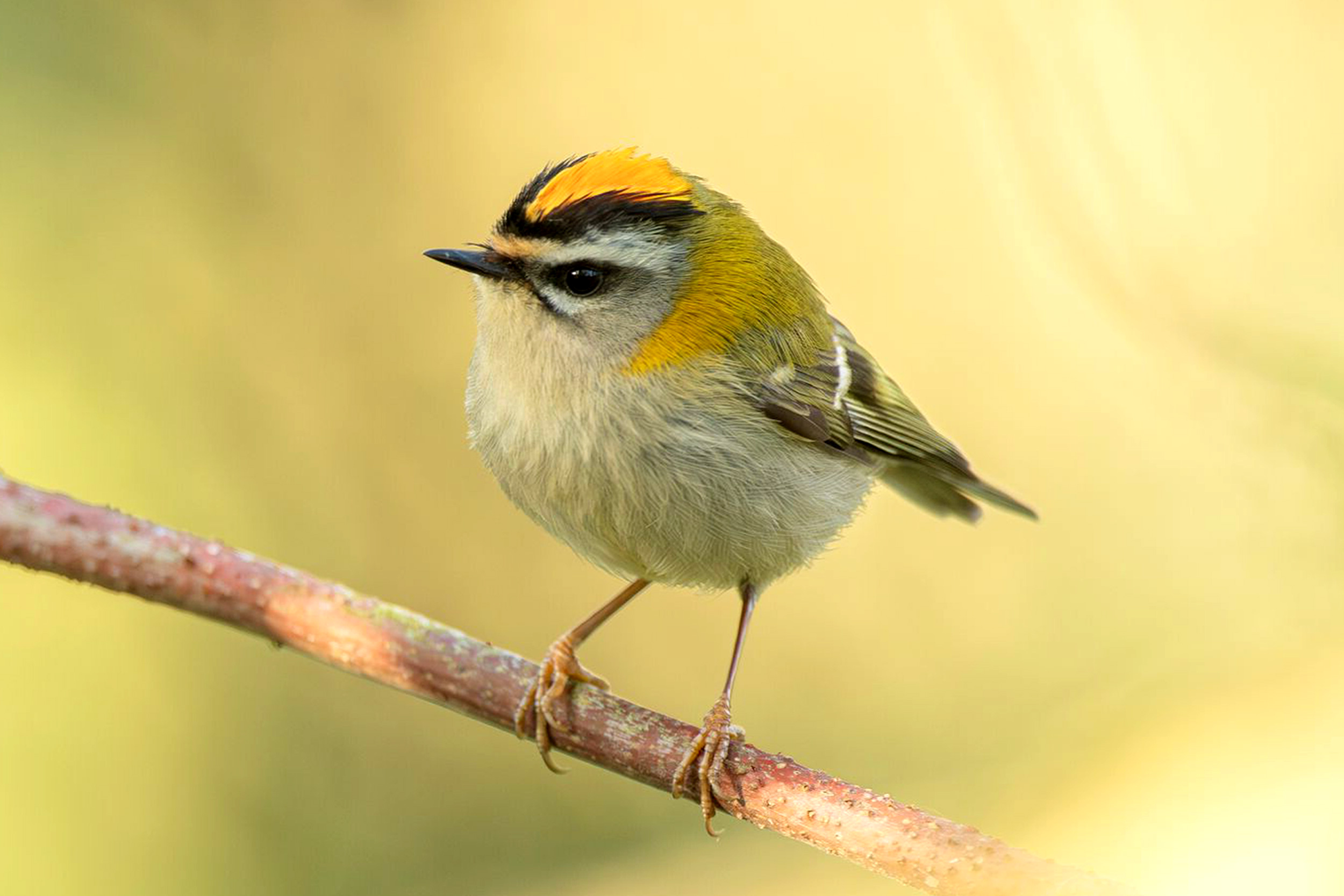
Goldcrest (left) and Firecrest (right). Photos: RSPB/Ben Andrew
You might also like
Identifying birds’ nests
Life on the Red List